Japanese Culture
Bonsai (盆栽): The Kanji, the Scroll, and the Display
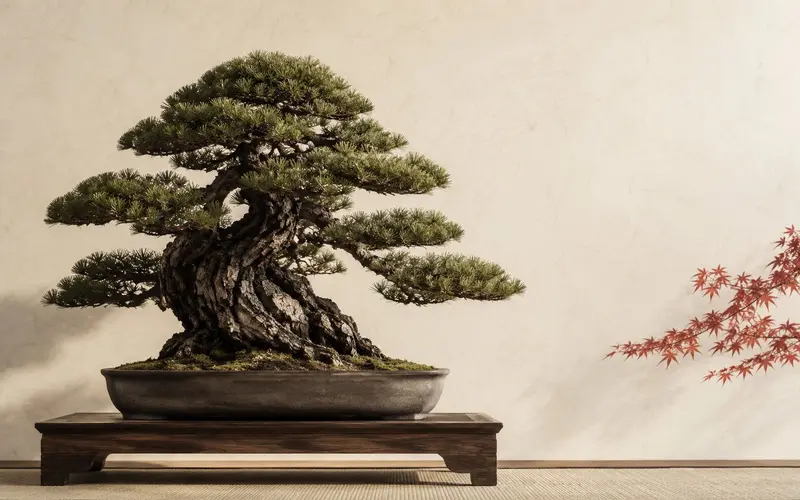
Bonsai means 'tray planting.' What the two kanji say, how to brush them, and why a fine tree is traditionally shown in an alcove beside a hanging scroll.
10 articles with this tag.
Bonsai means 'tray planting.' What the two kanji say, how to brush them, and why a fine tree is traditionally shown in an alcove beside a hanging scroll.
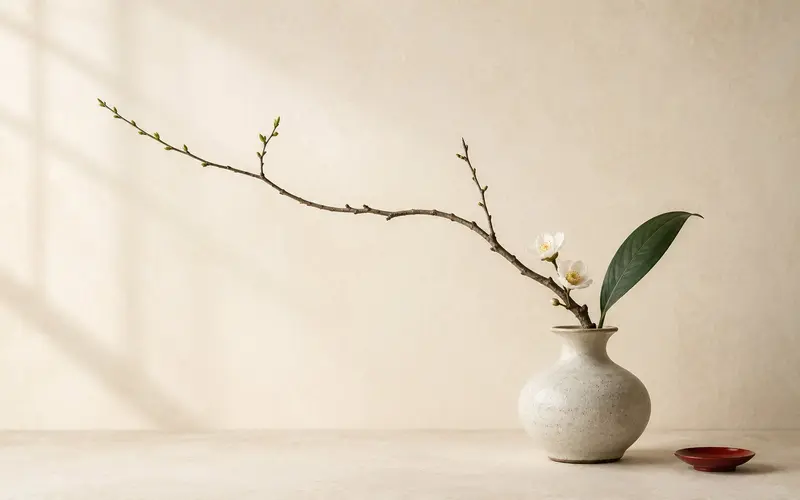
In a Japanese alcove, flowers and a hanging scroll are chosen together. How ikebana and calligraphy share the tokonoma, and how to pair them.
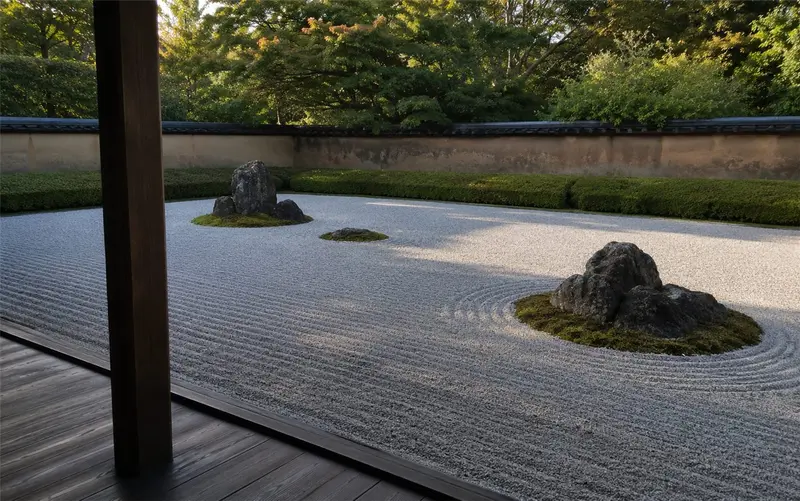
Gardens and ink painting share one word, sansui, and one way of seeing. How to read a garden like a scroll, what its plaques say, and the main types.
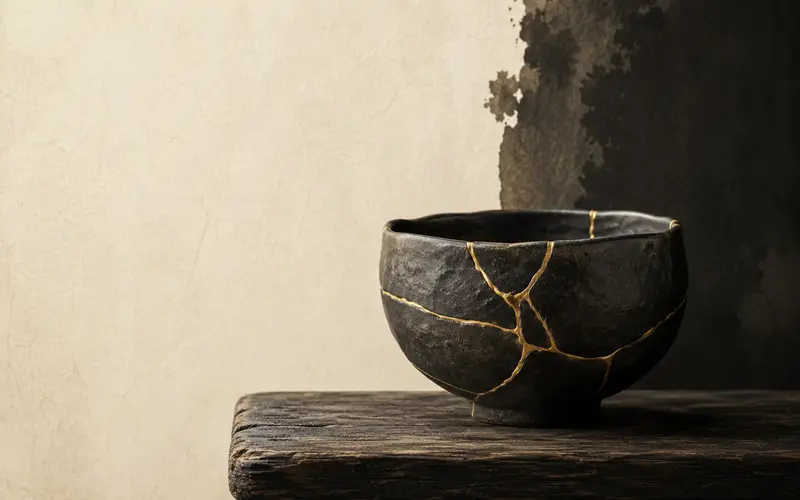
The gold line of kintsugi is painted with a brush along a crack no one chose. What 金継ぎ means, how the repair is done, and what it shares with calligraphy.
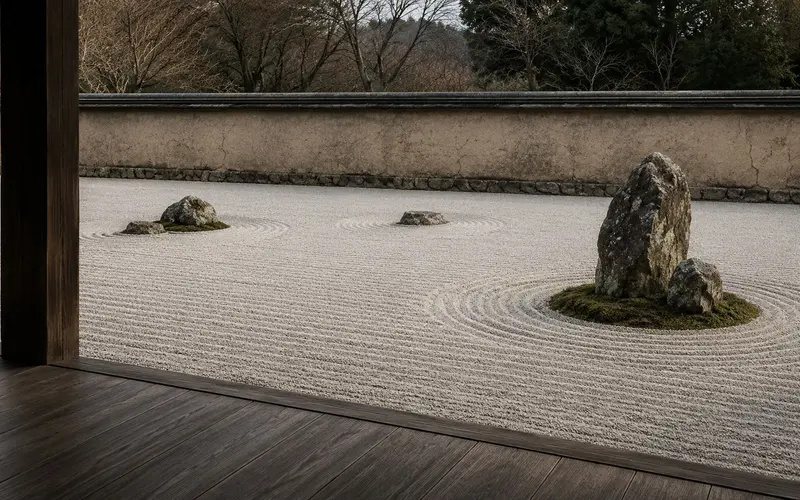
Zen rock gardens and Zen calligraphy grew up in the same temples. How karesansui works, the scrolls and ensō that hang beside it, and how to write 枯山水.
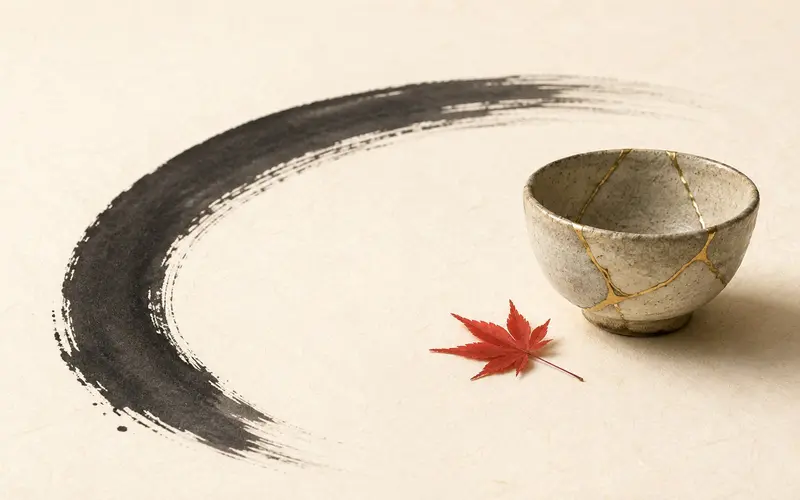
A clear, accurate glossary of 14 Japanese aesthetic terms — wabi-sabi, ikigai, ma, yūgen, mono no aware, kintsugi, and more — with the myths corrected.
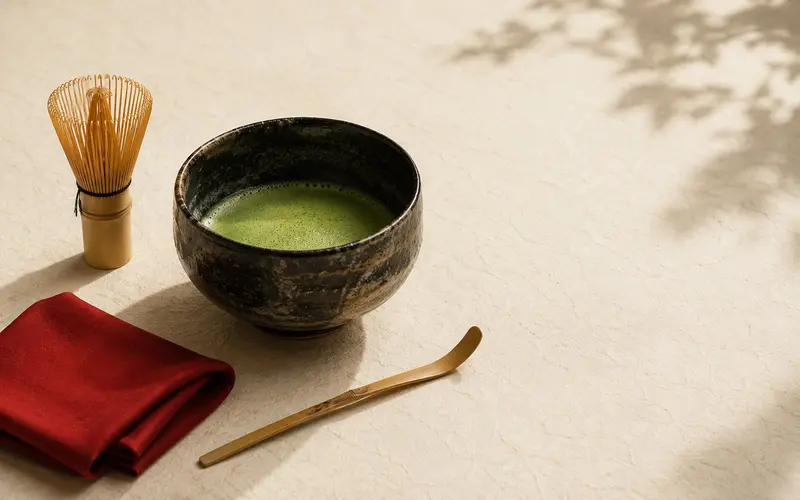
The Japanese tea ceremony (sadō) was never really about the tea. What chanoyu actually is: a discipline of hospitality, impermanence, and one unrepeatable meeting.
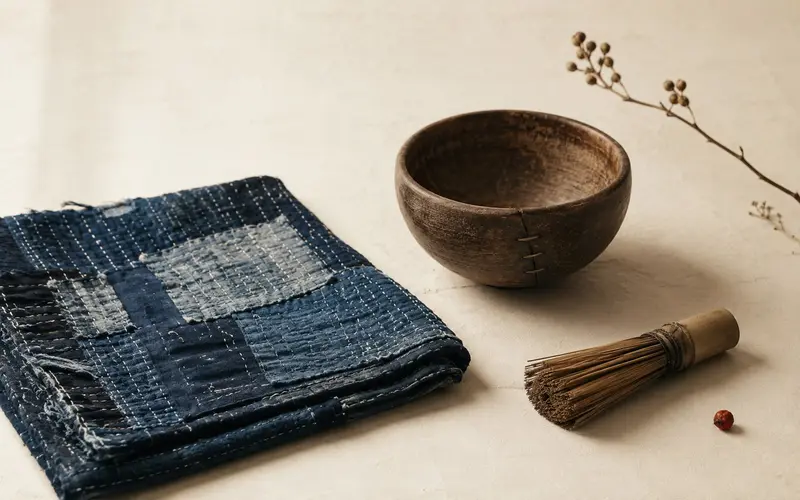
Mottainai is usually flattened to 'don't waste.' It really means the intrinsic worth of a thing is being lost — closer to grief than to thrift. Explained.
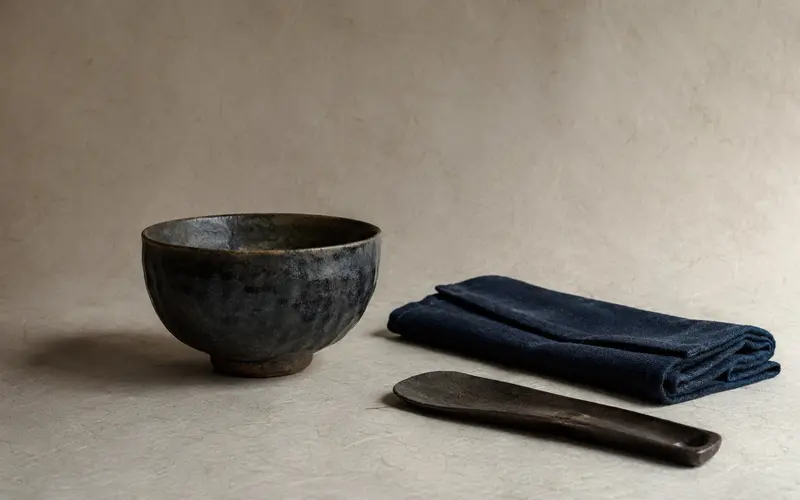
Shibui is Japan's understated, refined beauty — related to wabi-sabi but not the same thing. The difference, and why the word began as a sour taste.
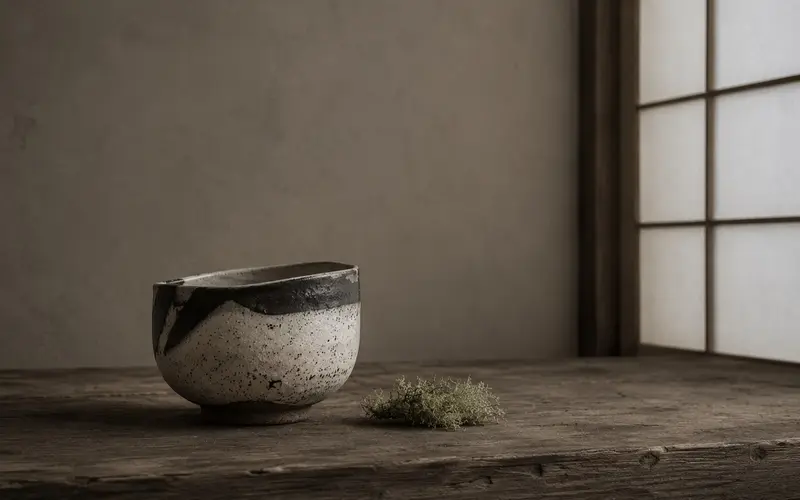
Wabi-sabi is Japan's aesthetic of imperfect, impermanent beauty — and the West mostly gets it wrong. What it really means, from tea room to brush.