Archives
All the articles I've archived.
-
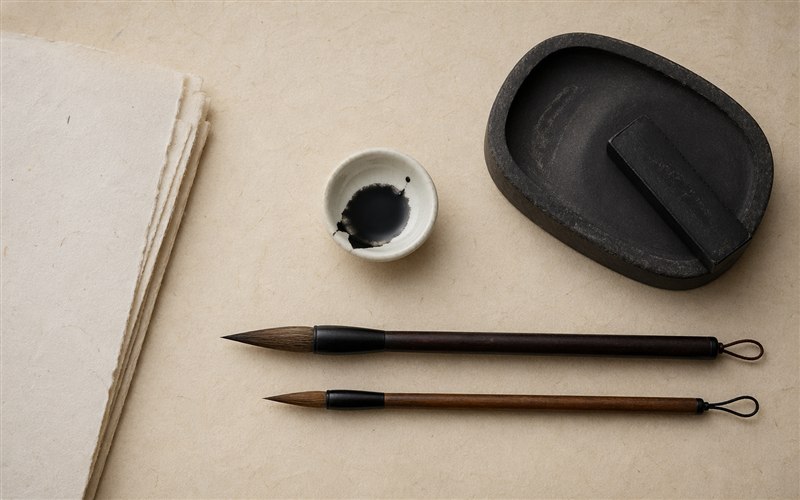
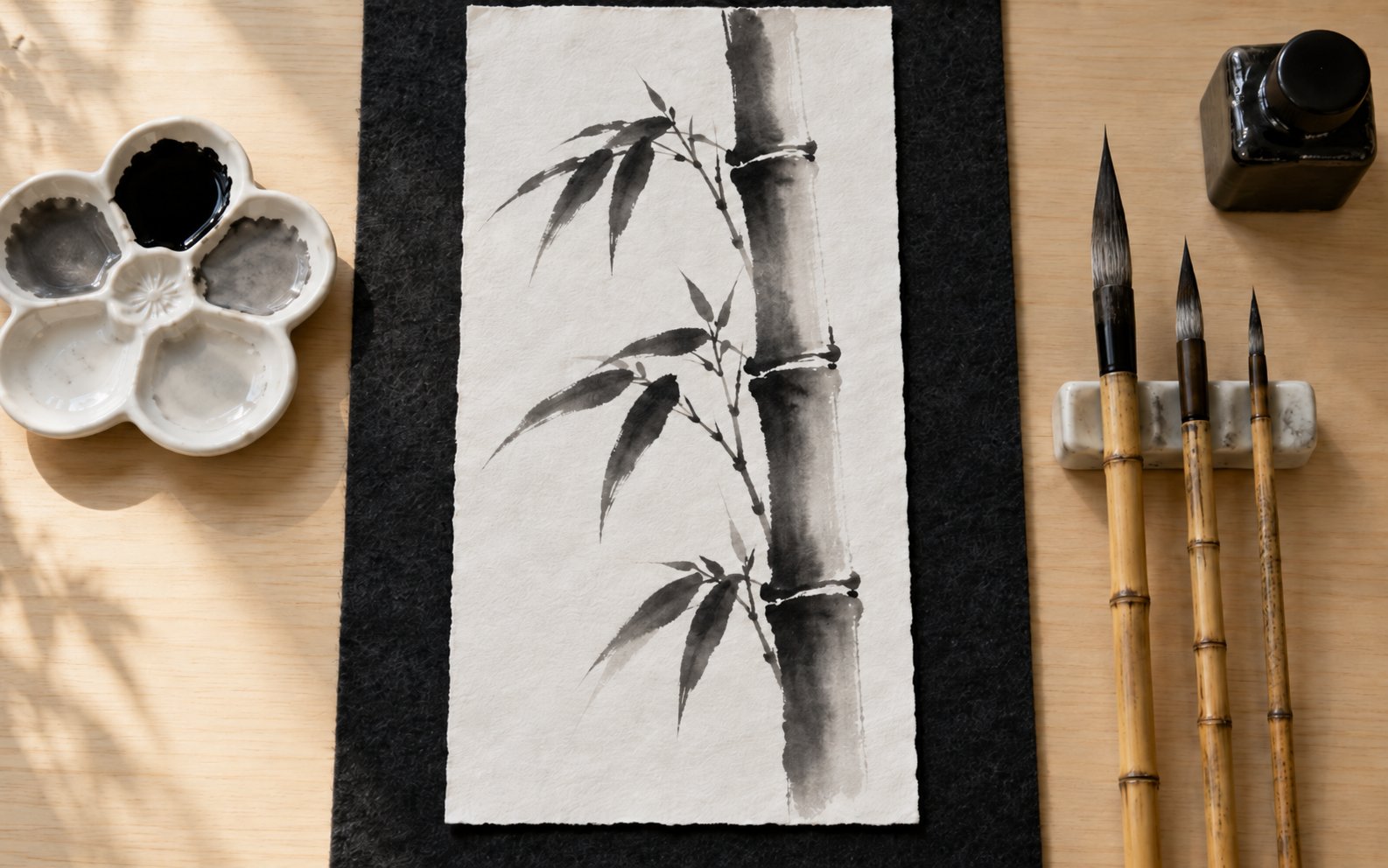
Best Sumi-e Starter Kit for Beginners (2026): Build Your Own From $46
By K. YamaUpdated:There is no good all-in-one sumi-e kit on Amazon, so build one. A Japanese calligrapher on the brushes, ink, palette, paper and book a beginner in Japanese ink painting actually needs.
Continue reading → -
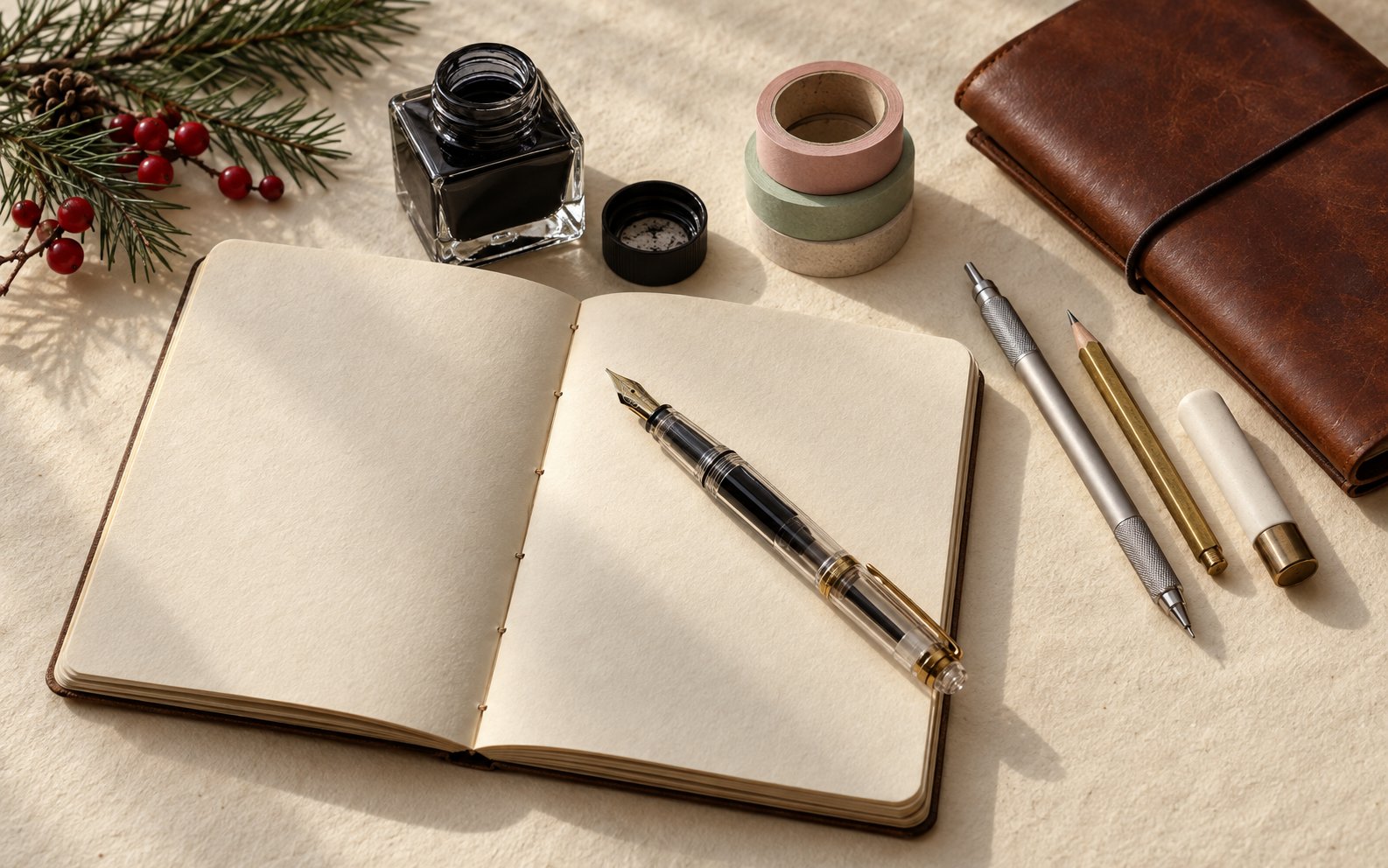
Best Japanese Stationery Gifts (2026): 15 Picks From $6 to $58
By K. YamaUpdated:Japanese stationery is the everyday luxury almost everyone loves. A Japanese calligrapher's 15 picks, from a $6 eraser to a leather Traveler's Notebook, plus four ready-made bundles.
Continue reading → -
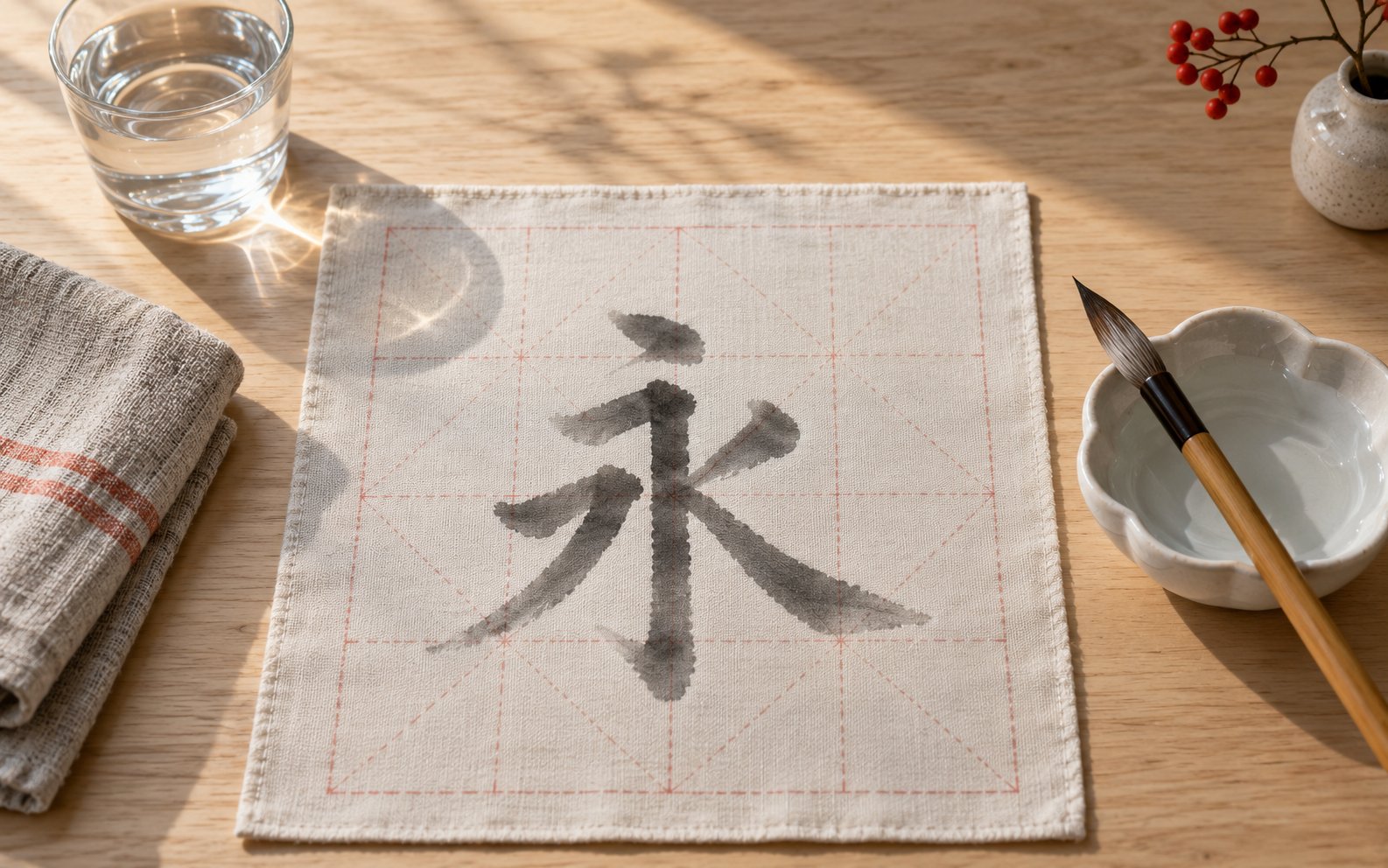
Best Water Calligraphy for Adults (2026): Buddha Board vs Water-Writing Cloth
By K. YamaUpdated:Brush practice with nothing but water: no ink, no stains, no waste. A Japanese calligrapher on the Buddha Board, water-writing cloths and water brushes, and which one actually improves your shodō.
Continue reading → -
Best Blank Hanging Scrolls for Calligraphy (2026): Hang Your Own Kakejiku
By K. YamaUpdated:Your best character deserves better than a drawer. A Japanese calligrapher on the blank hanging scrolls worth buying, how to write on one without ruining it, and how to hang it.
Continue reading → -
Best Japanese Calligraphy Gifts Under $50 (2026 Holiday Guide)
By K. YamaUpdated:Fifteen gifts a Japanese calligrapher would actually be glad to receive, every one under $50 and on Amazon: brush pens, ink stones, the one book, a kintsugi kit, and three bundles that make a complete present.
Continue reading → -
Best Sumi Ink Sticks for Beginners (2026): From $9 to Kobaien
By K. YamaUpdated:Grinding your own ink is the moment shodō stops being a hobby and becomes a practice. A Japanese calligrapher on the four ink sticks worth buying, from a $9 starter to Kobaien.
Continue reading → -
Kanji Meanings for Calligraphy: 42 Characters Explained
By K. YamaUpdated:Every kanji in our single-character series, grouped by theme — nature, virtues, Zen, the warrior — with its real meaning and a link to the full guide on how to write it.
Continue reading → -
Best Japanese Writing Practice Books (2026)
By K. YamaUpdated:Genkōyōshi notebooks, kana and kanji workbooks, and one brush-calligraphy manual — a Japanese calligrapher's picks for practising Japanese handwriting on paper.
Continue reading → -
Best Calligraphy Felt Mat and Paperweight (2026)
By K. YamaUpdated:The two cheapest tools in Japanese calligraphy are the two most often skipped. A calligrapher on which felt mat (shitajiki) and paperweight (bunchin) to buy.
Continue reading → -
Best Japanese Calligraphy Set for Kids (2026)
By K. YamaUpdated:A Japanese calligrapher on the calligraphy sets that actually work for children — water-writing kits for under-8s, real ink sets for 8+, and what to avoid.
Continue reading → -
Best Japanese Brush Pens for Calligraphy (2026)
By K. YamaUpdated:A Japanese calligrapher compares the four brush pens (fude pen) actually worth buying — Tombow, Pentel, Kuretake — and explains what a brush pen can and can't teach you.
Continue reading →
-
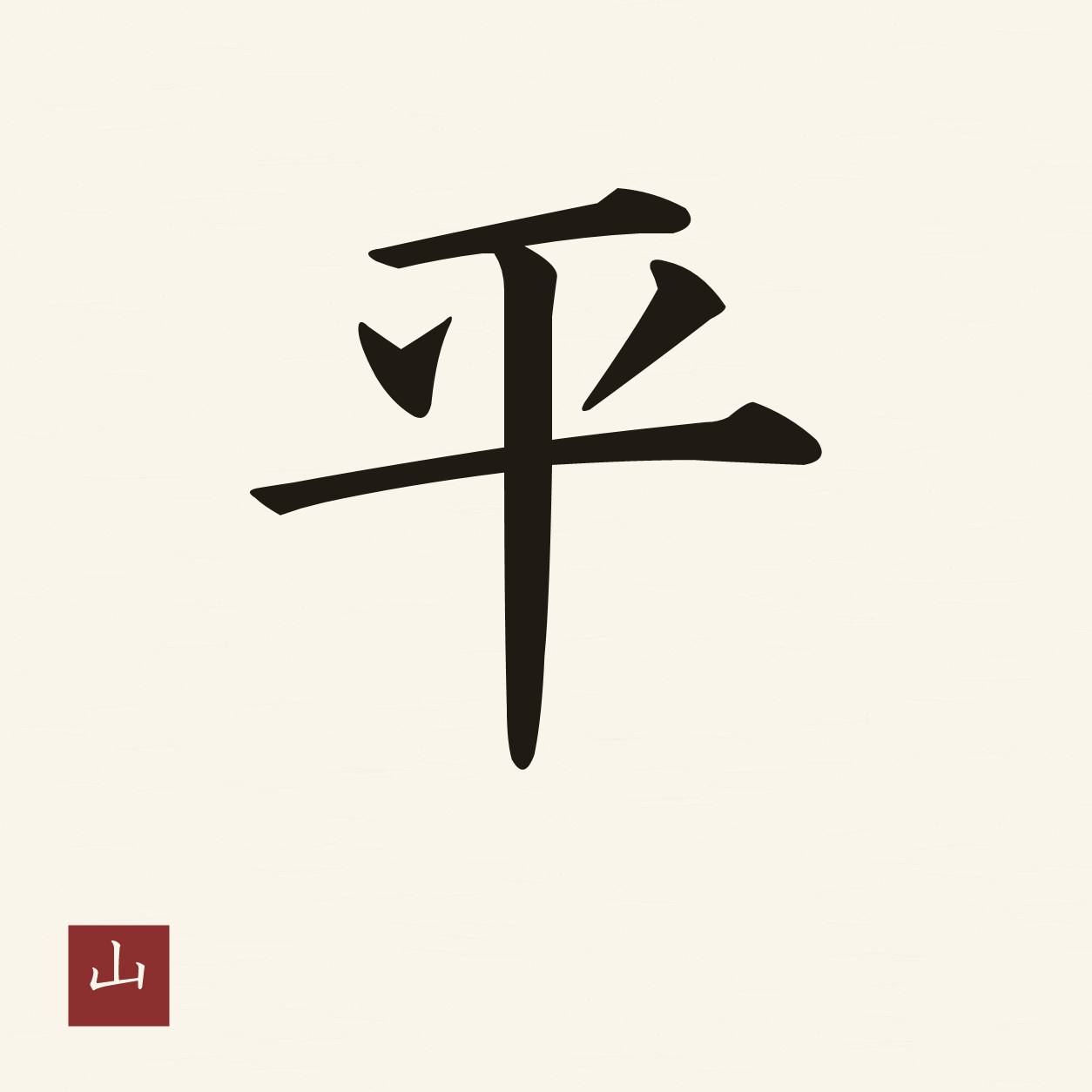
Peace Kanji (平): Calm, Even & How to Write It
By K. Yama平 means flat, level, even — and from there, calm and peace. The 平 in 平和 (peace), 平等 (equality), and 平安 (the Heian era), and how to write it.
Continue reading → -
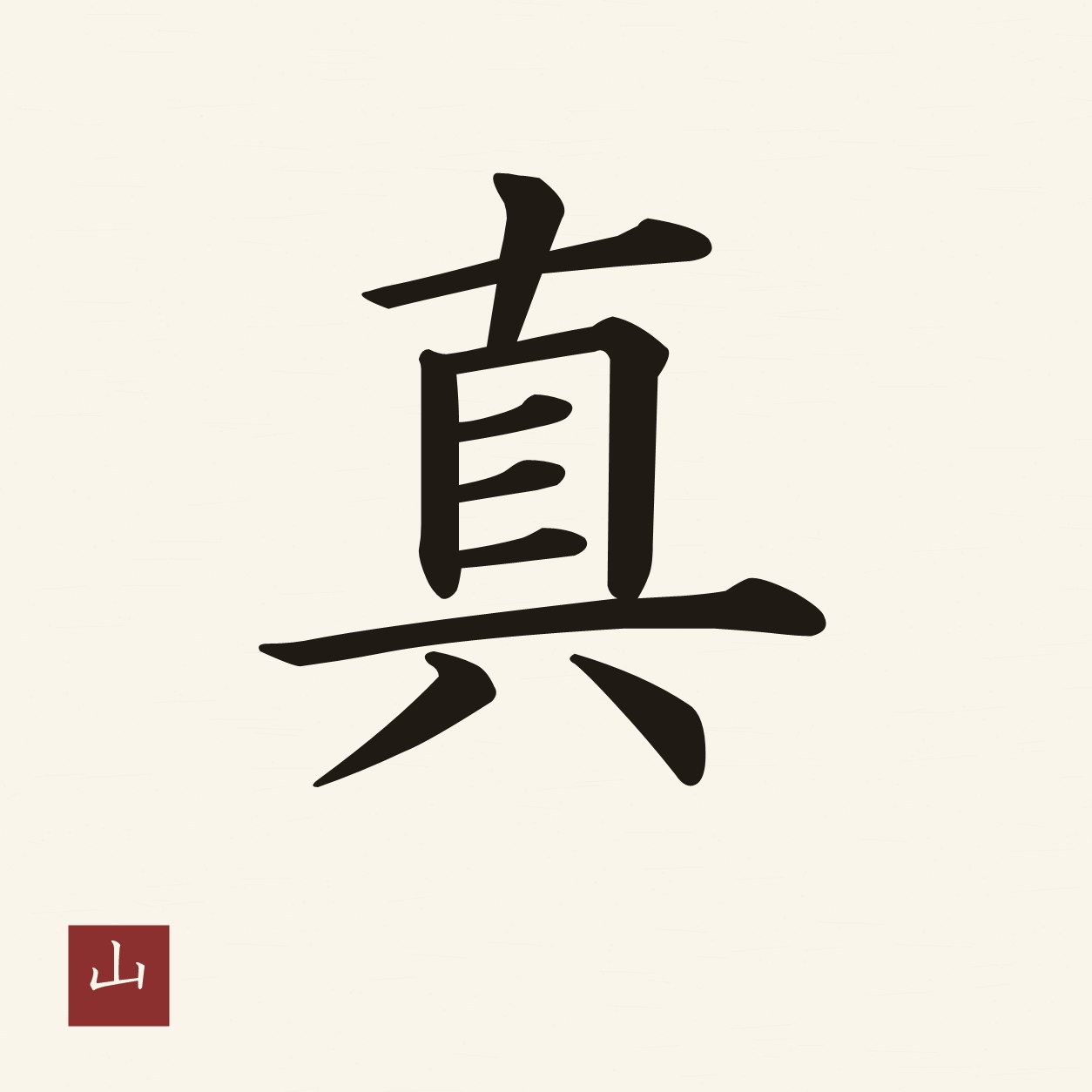
Truth Kanji (真): Real, Genuine & How to Write It
By K. Yama真 means true, real, genuine — the opposite of fake. Why it hides in 写真 (photograph) and 真面目 (earnest), how it differs from 誠, and how to write it.
Continue reading → -
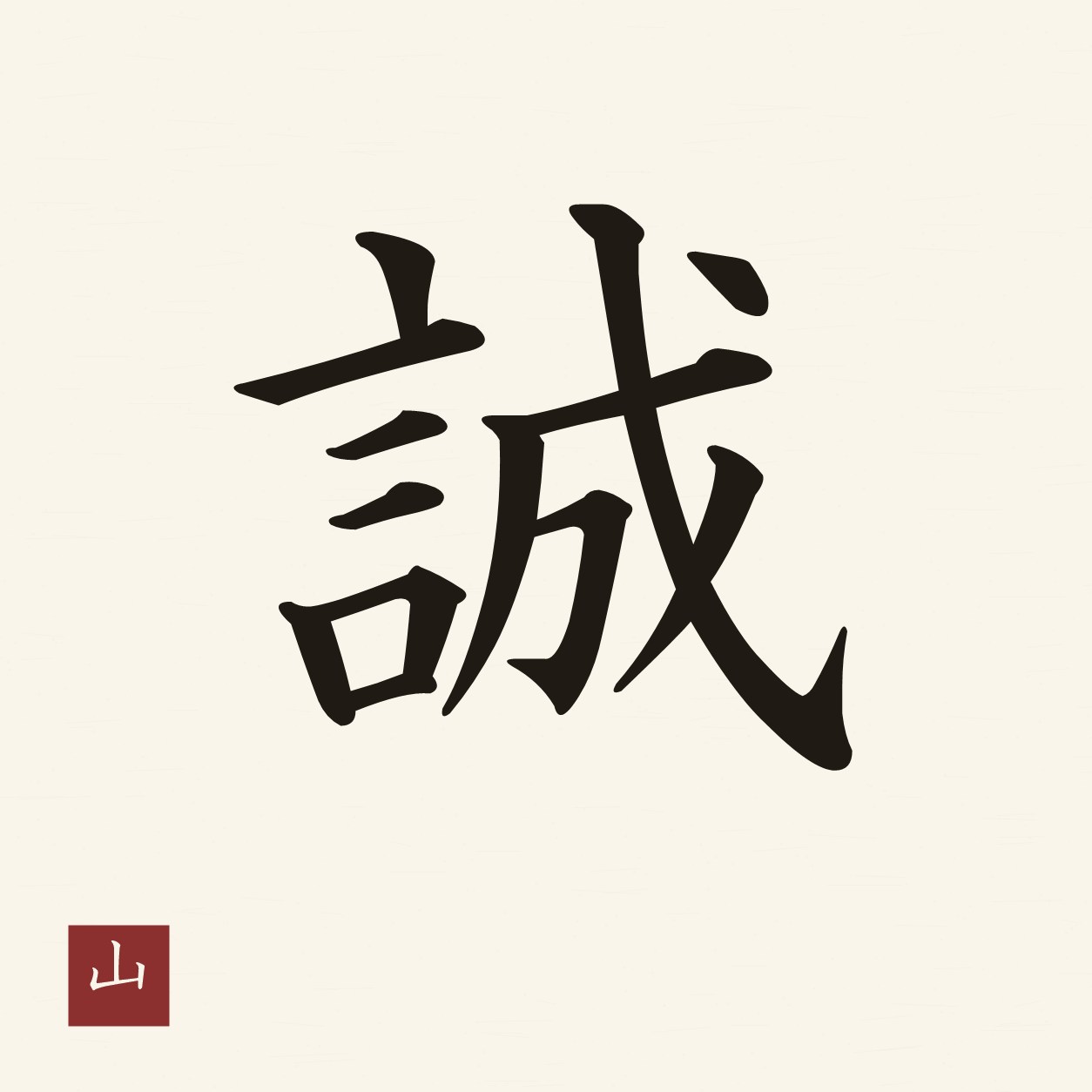
Sincerity Kanji (誠): Makoto, Honesty & How to Write It
By K. Yama誠 is words made real — makoto, the union of saying and doing. The Shinsengumi flew it on their banner. What sincerity means in Japan, and how to write 誠.
Continue reading → -
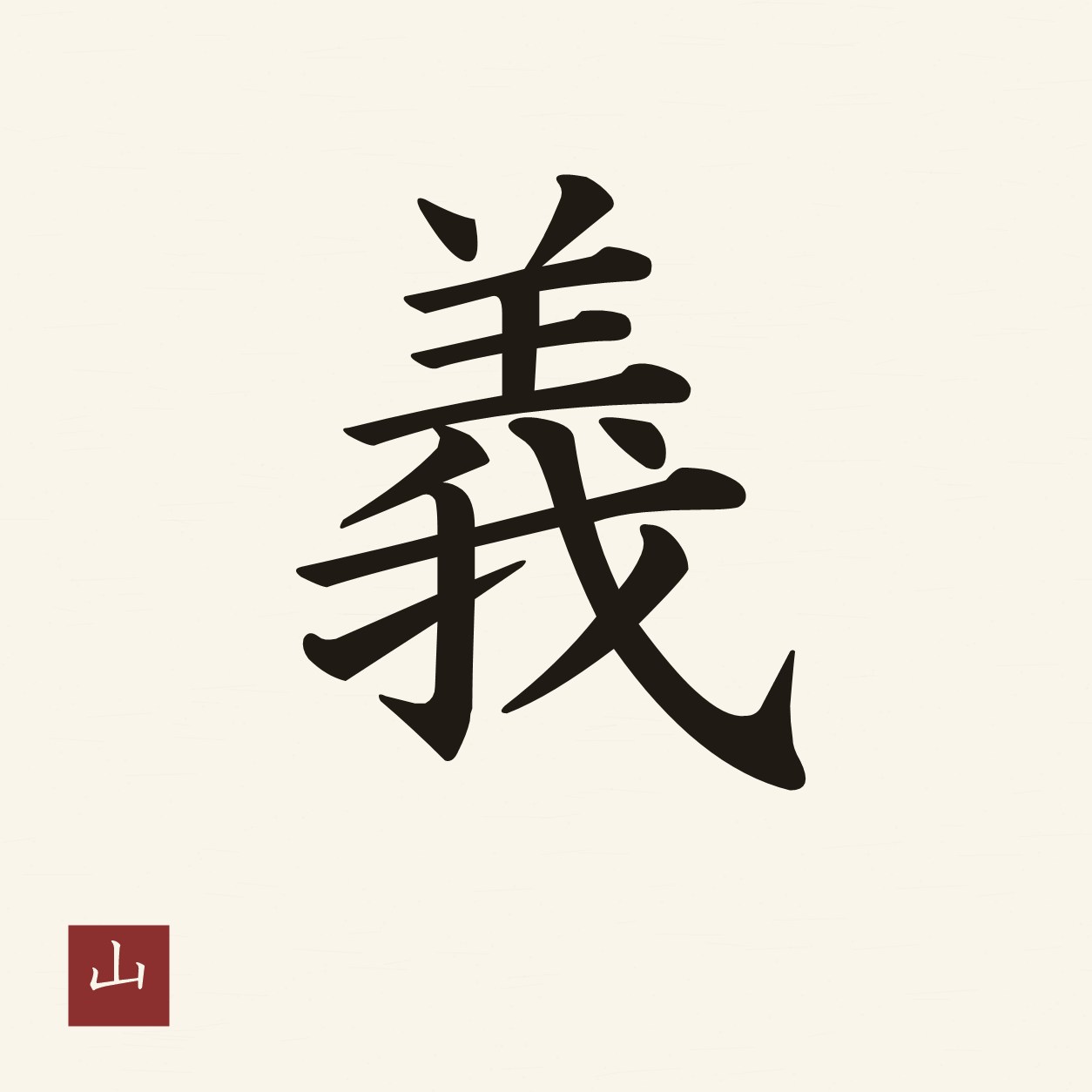
Righteousness Kanji (義): Honor, Duty & How to Write It
By K. Yama義 is the samurai's first virtue: righteousness, honor, duty — doing what is right whatever it costs. From the 47 rōnin to 義理, what 義 means and how to write it.
Continue reading → -
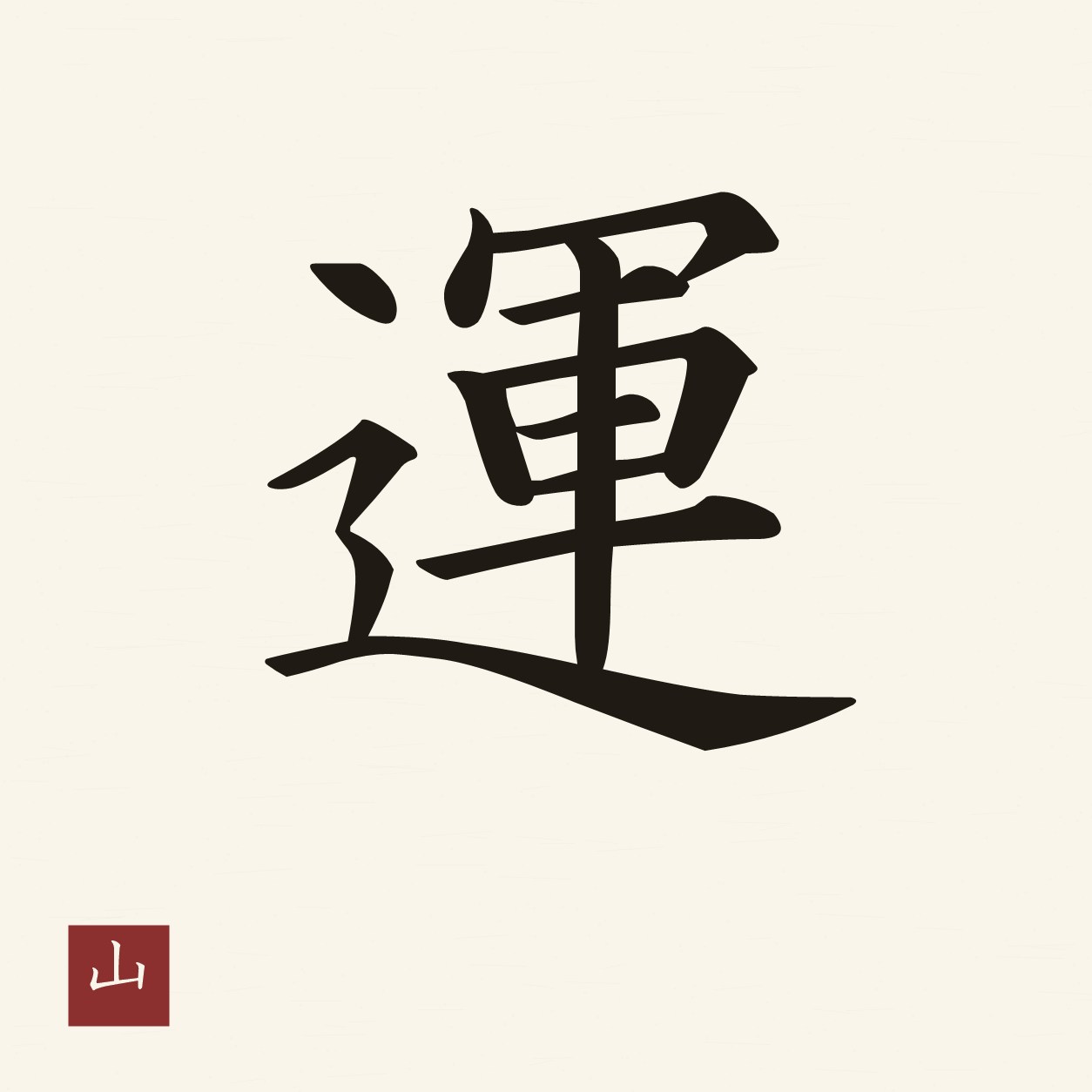
Luck Kanji (運): Fortune, Fate & How to Write It
By K. Yama運 means luck and fate — but began as 'to carry.' How fortune's movement turned a transport word into the kanji on every 開運 charm, and how to write 運.
Continue reading → -
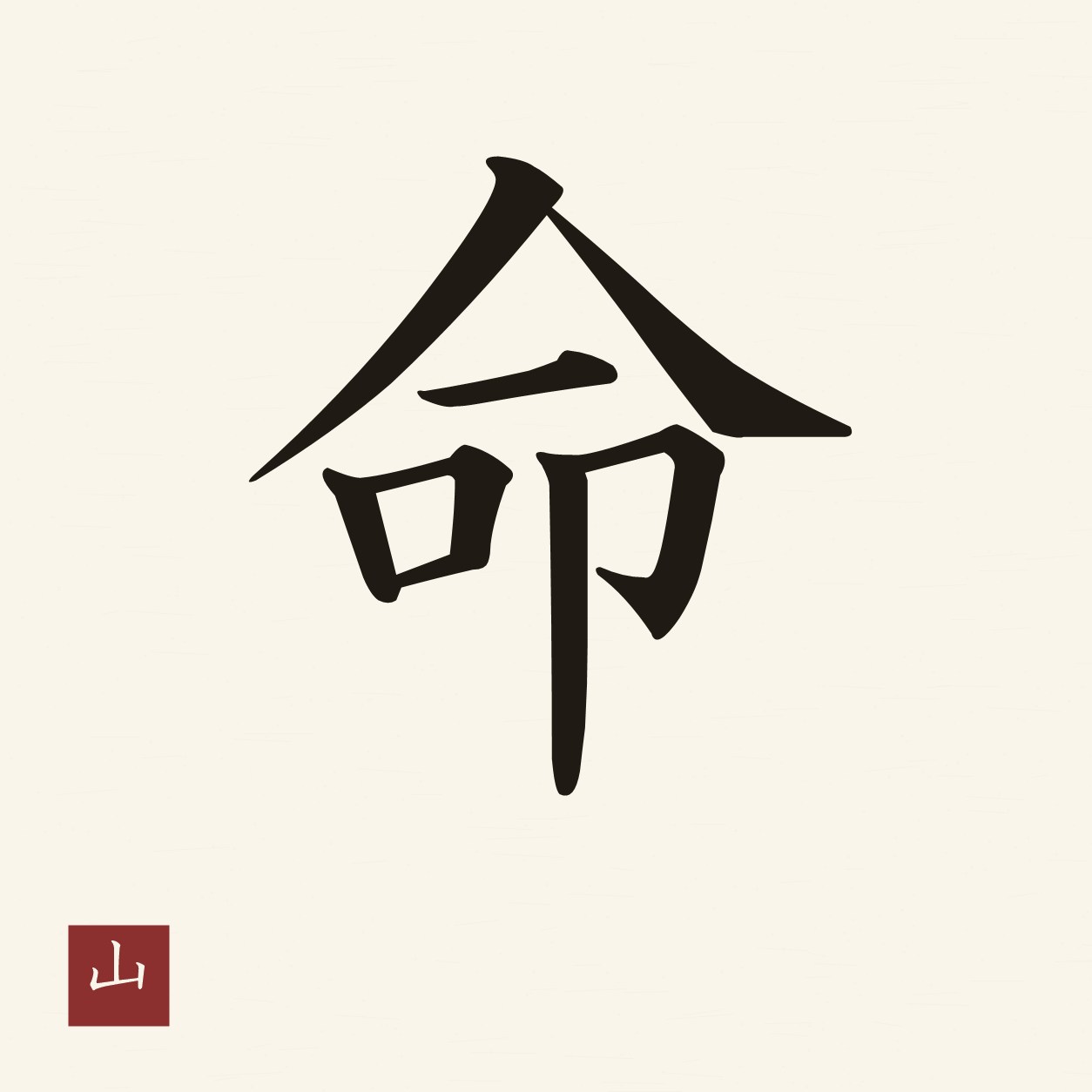
Life Kanji (命): Life, Fate & How to Write It
By K. Yama命 is the weightiest word for life in Japanese — the life you could lose — and also a command and one's fate. From 一生懸命 to 運命, what 命 means and how to write it.
Continue reading → -
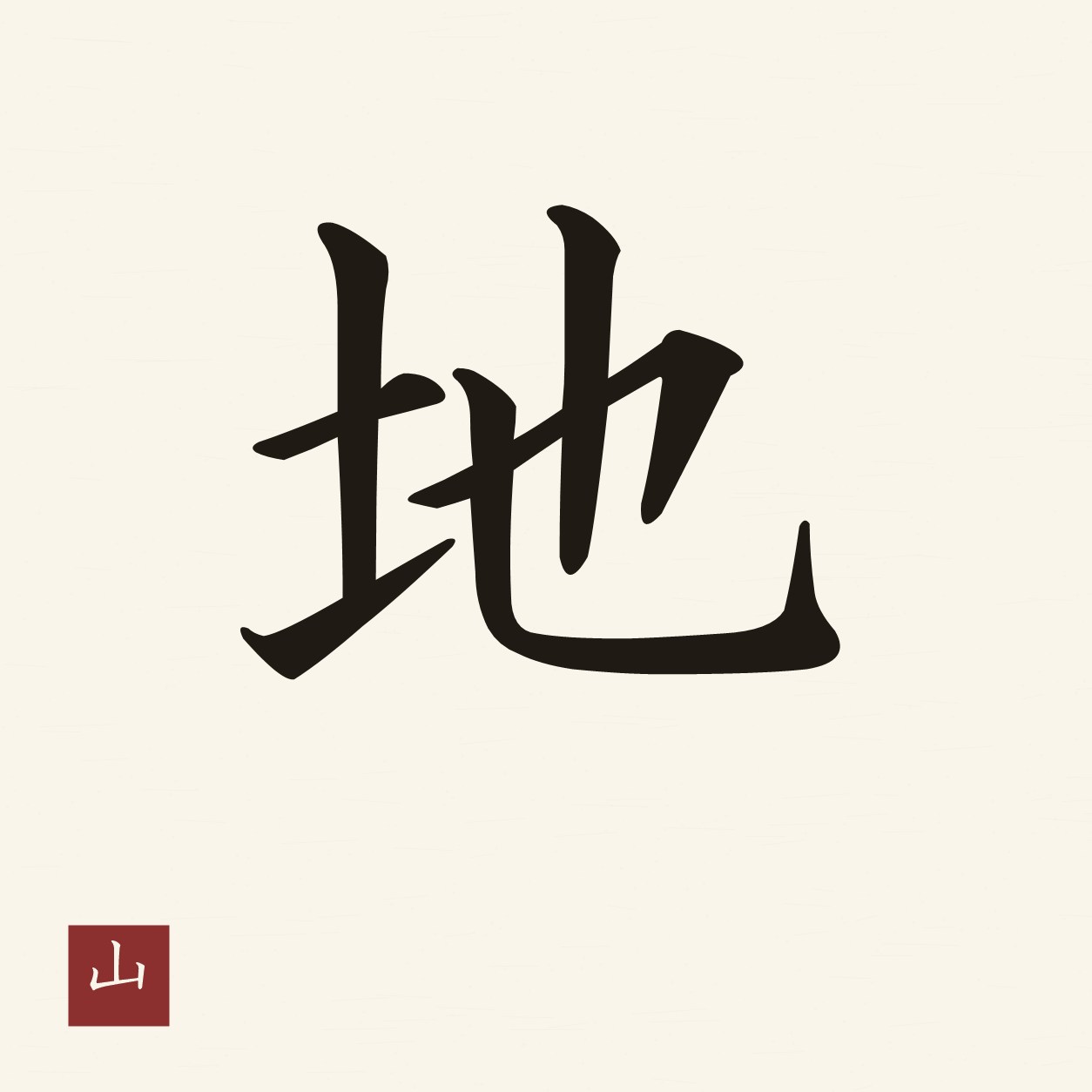
Ground Kanji (地): Earth, Land & How to Write It
By K. Yama地 is the ground, the land, the earth as a place — from 地球, the planet, to 地震, an earthquake. How 地 differs from 土, what it means, and how to write it.
Continue reading → -
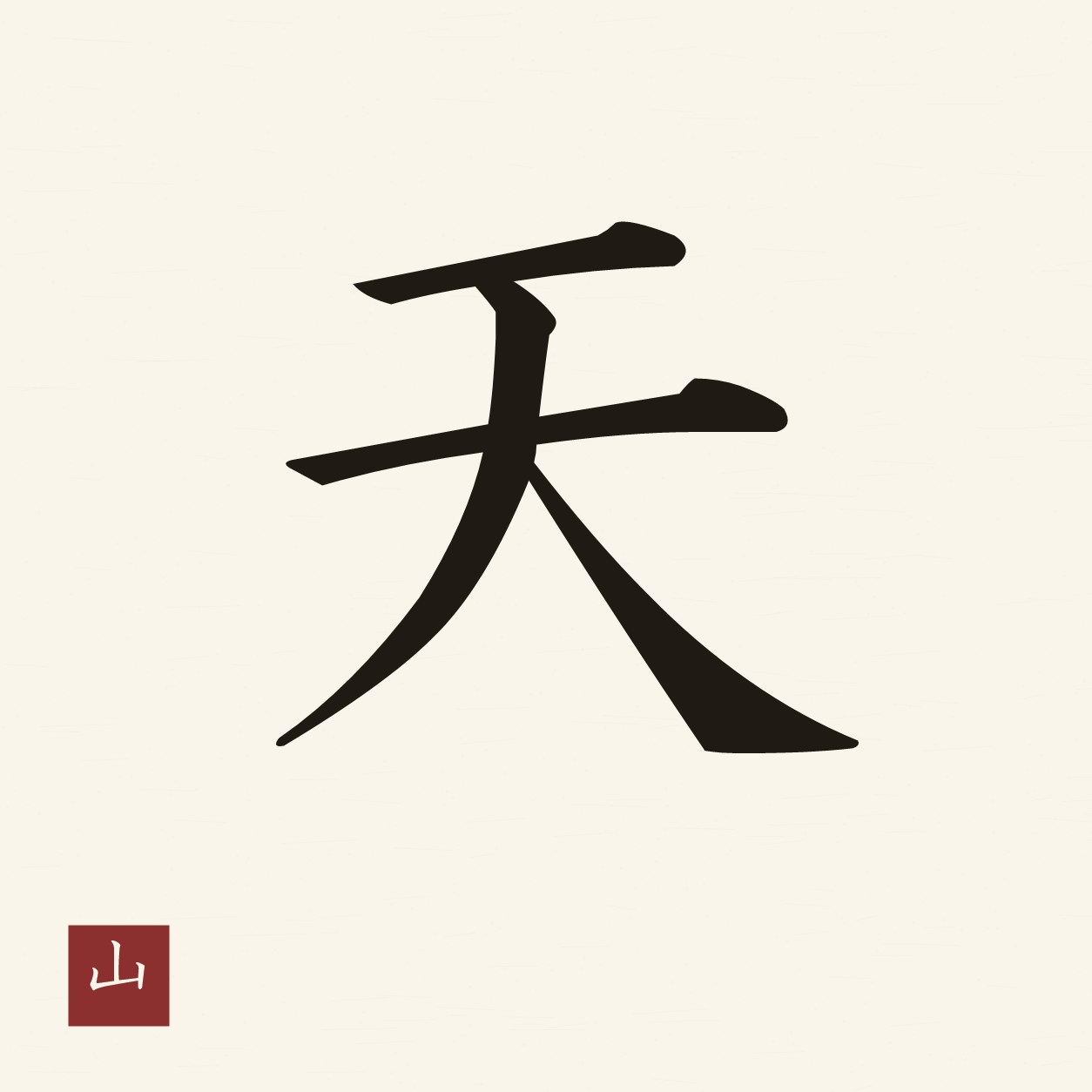
Heaven Kanji (天): Sky, Heaven & How to Write It
By K. Yama天 is one line drawn above a standing person — the sky overhead, heaven, the divine, and fate. What 天 means from 天気 to 天皇, and how to write it.
Continue reading → -
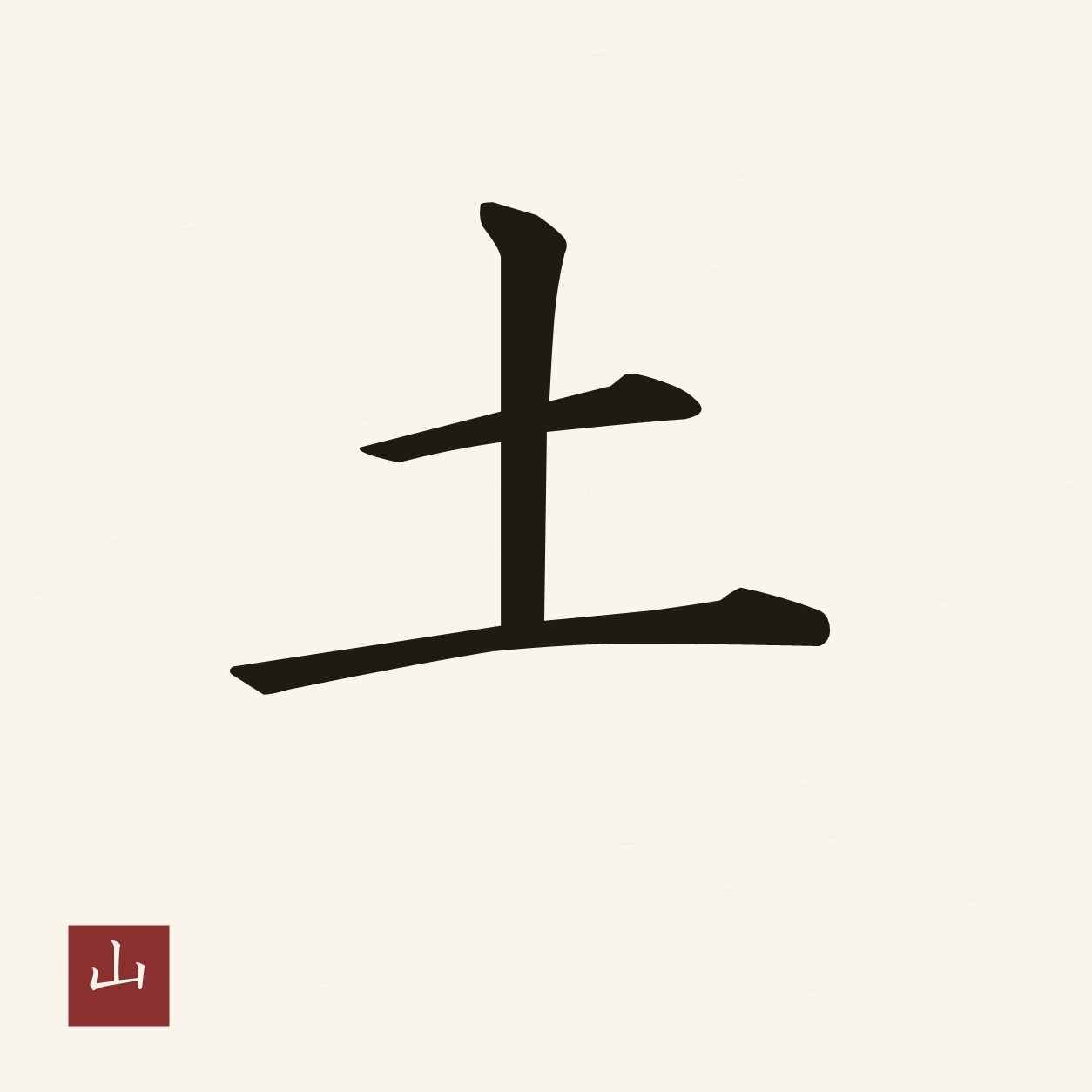
Earth Kanji (土): Soil, the Ground & How to Write It
By K. Yama土 means soil, earth, and the ground — the Earth element and Saturday. Lengthen one stroke and it becomes 士, samurai. What 土 means, and how to write it.
Continue reading → -
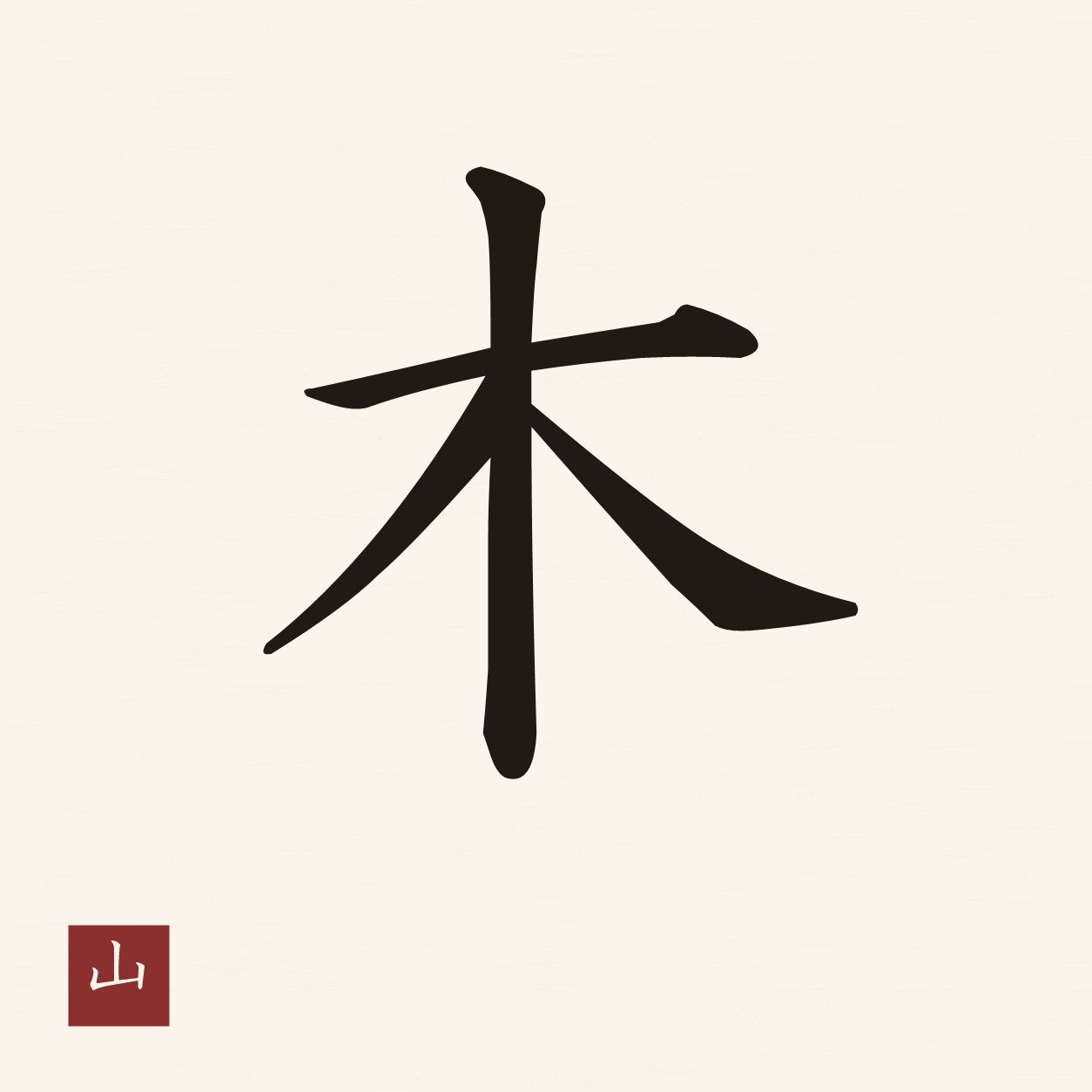
Tree Kanji (木): Meaning, Wood & How to Write It
By K. Yama木 is a tree pressed flat — trunk, branches, and roots in four strokes. How it stacks into 林 and 森, what the Wood element means, and how to write it.
Continue reading → -
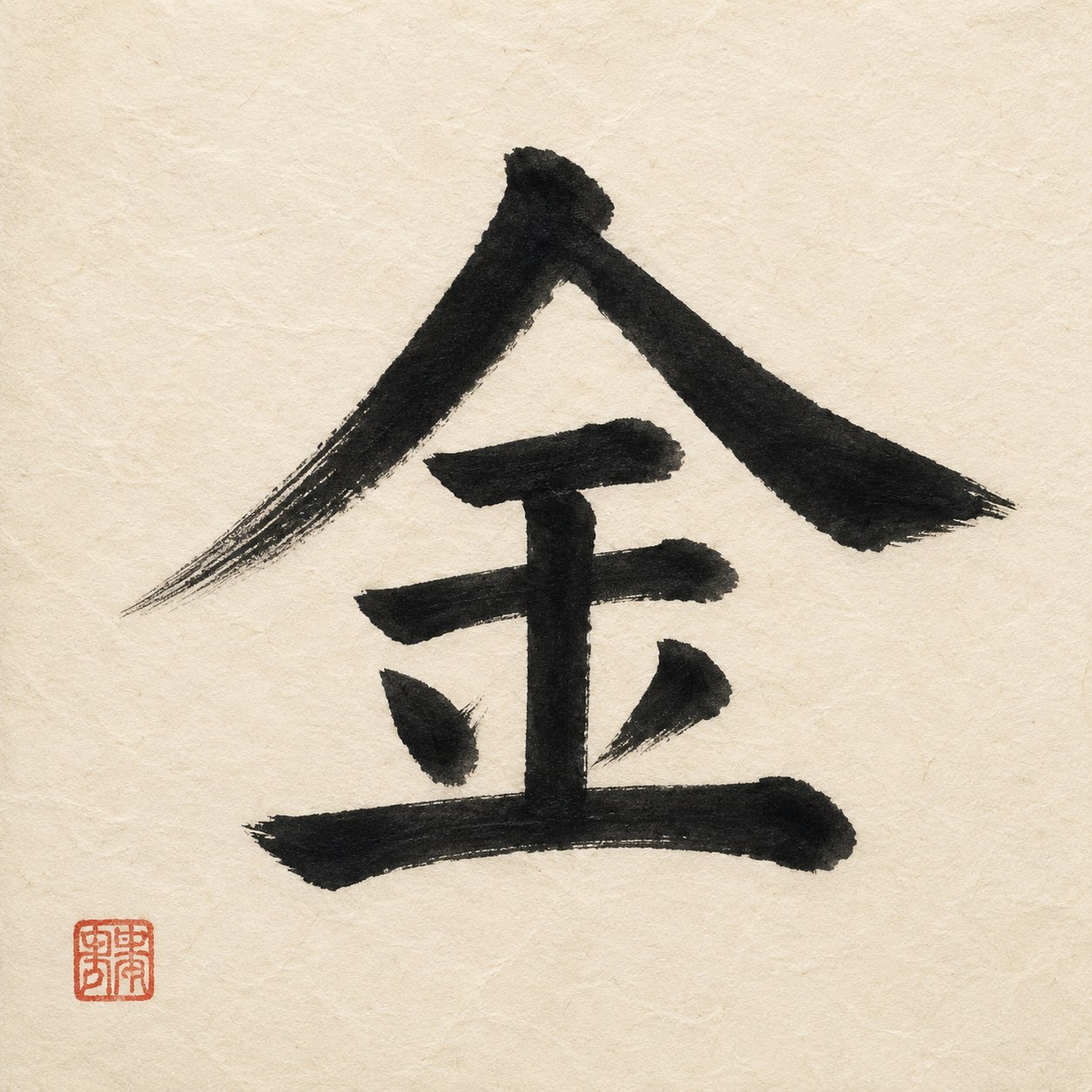
Gold Kanji (金): Gold, Money, Metal & How to Write It
By K. Yama金 means gold, money, and metal all at once — the parent of iron and silver, the metal of the five elements, and the gold of kintsugi. Its meaning and how to write it.
Continue reading → -
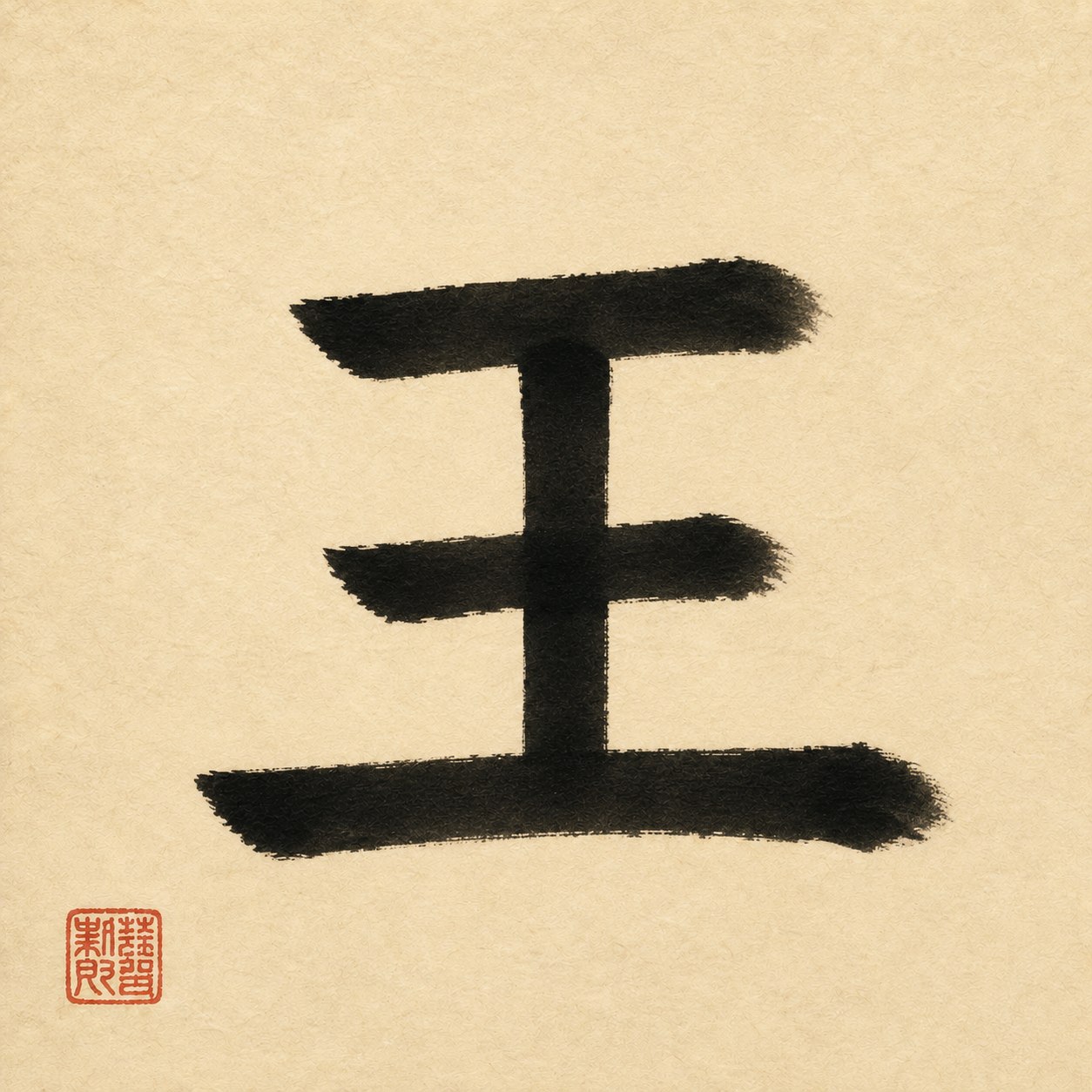
King Kanji (王): Meaning, the Three Lines & How to Write It
By K. Yama王 is three lines joined by one stroke — heaven, earth, and humanity, bound by the king who connects them. The real meaning, the axe behind it, and how to write it.
Continue reading → -
Left-Handed Japanese Calligraphy: Yes, You Can (Here's How)
By K. YamaCan you do Japanese calligraphy left-handed? Yes. Why shodō is taught right-handed, why the brush makes switching easier than a pen, and how a lefty should practise.
Continue reading → -
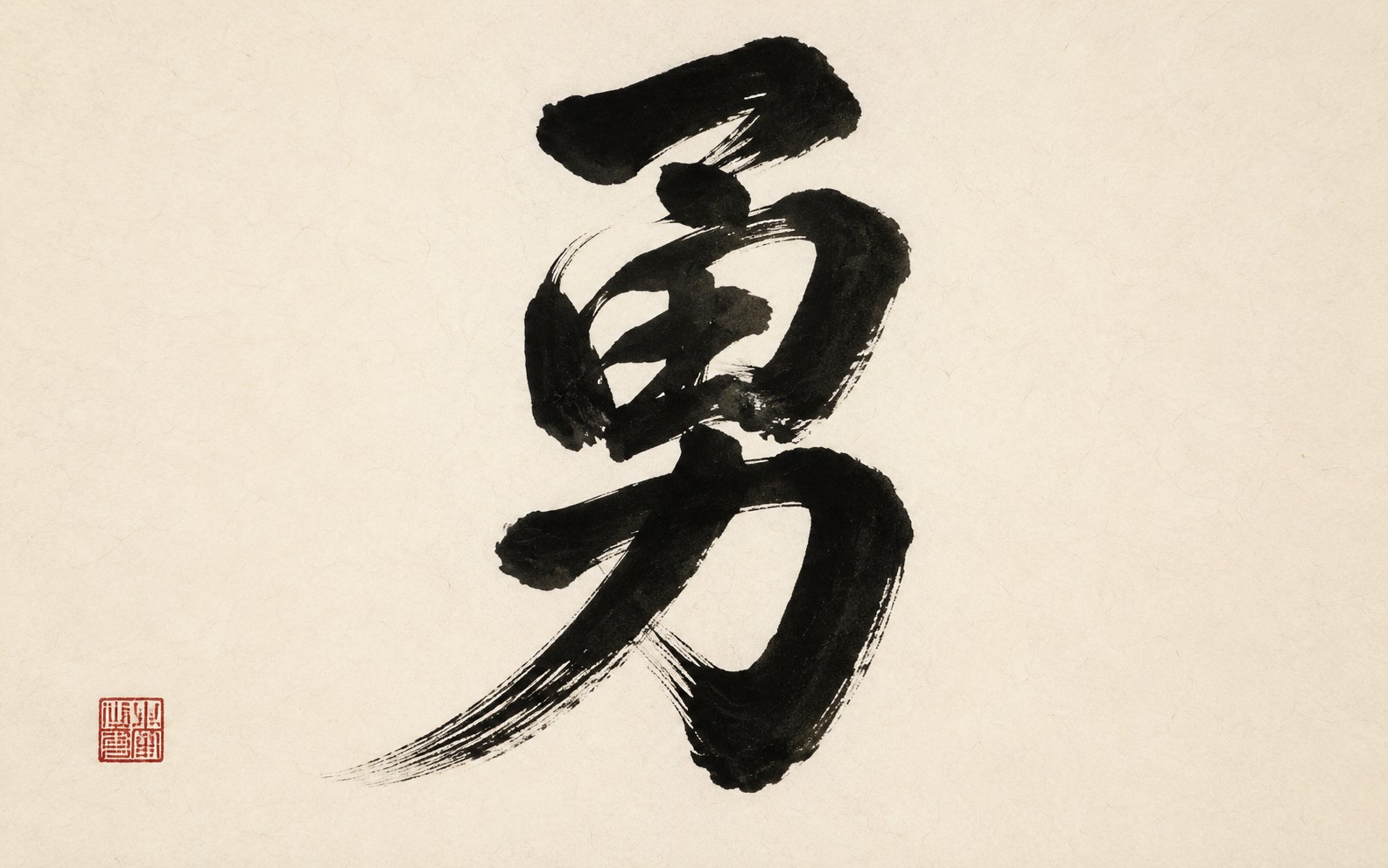
Courage Kanji (勇): Bravery, the Samurai Virtue & How to Write It
By K. Yama勇 means courage — and, like 勝, it is built on 力 (strength) at its base. The samurai virtue of brave action, the hero's character, and how to write it.
Continue reading → -
How to Read a Japanese Calligraphy Scroll (and Its Red Seals)
By K. YamaUpdated:A hanging scroll reads top-to-bottom and right-to-left, and ends in red. How to read a Japanese calligraphy scroll, and what those vermillion seals actually mean.
Continue reading → -
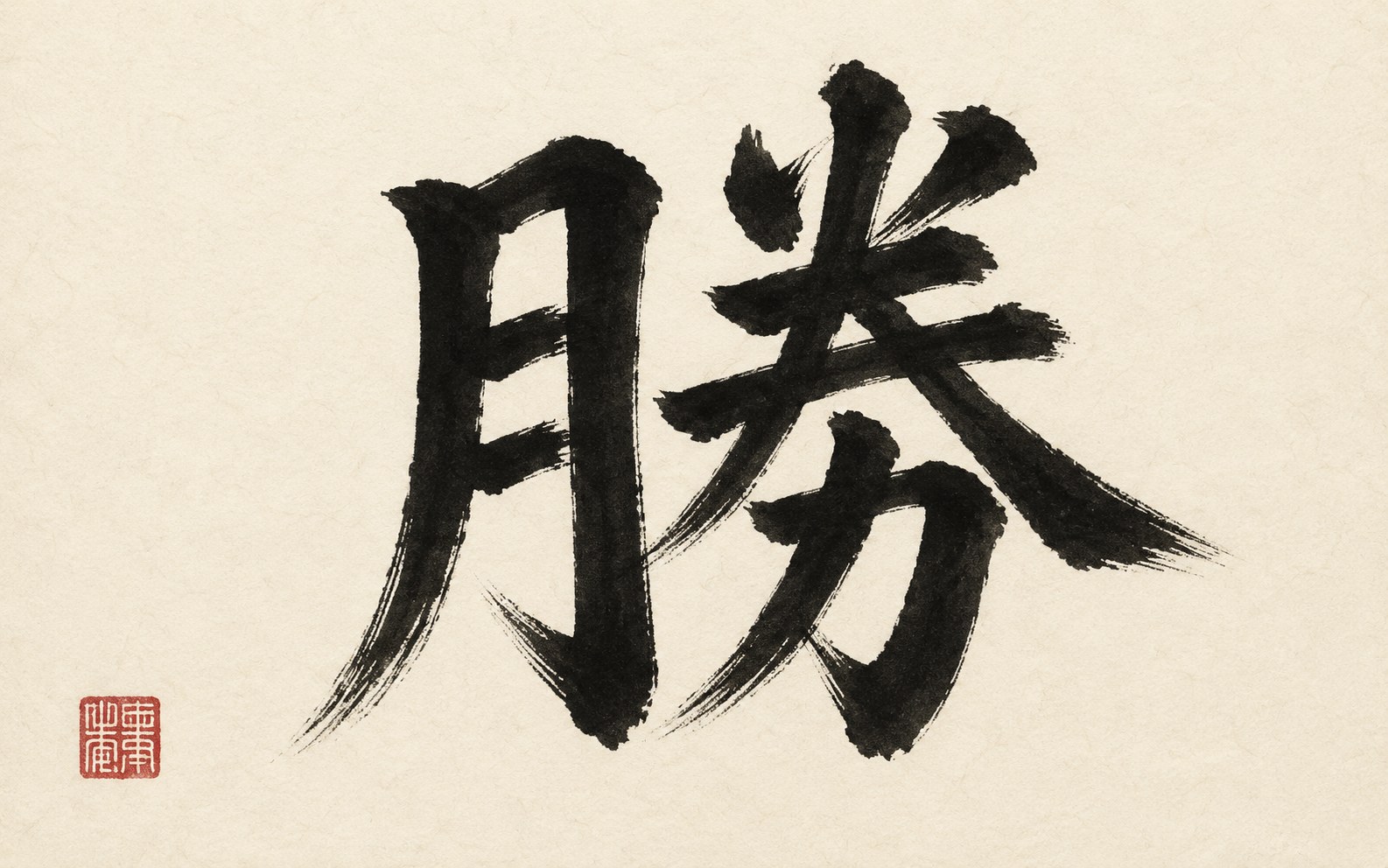
Victory Kanji (勝): Meaning, Winning & How to Write It
By K. Yama勝 means to win — and it carries the character for strength (力) at its base. Victory through power: what 勝 means, the phrase 必勝, and how to write it.
Continue reading → -
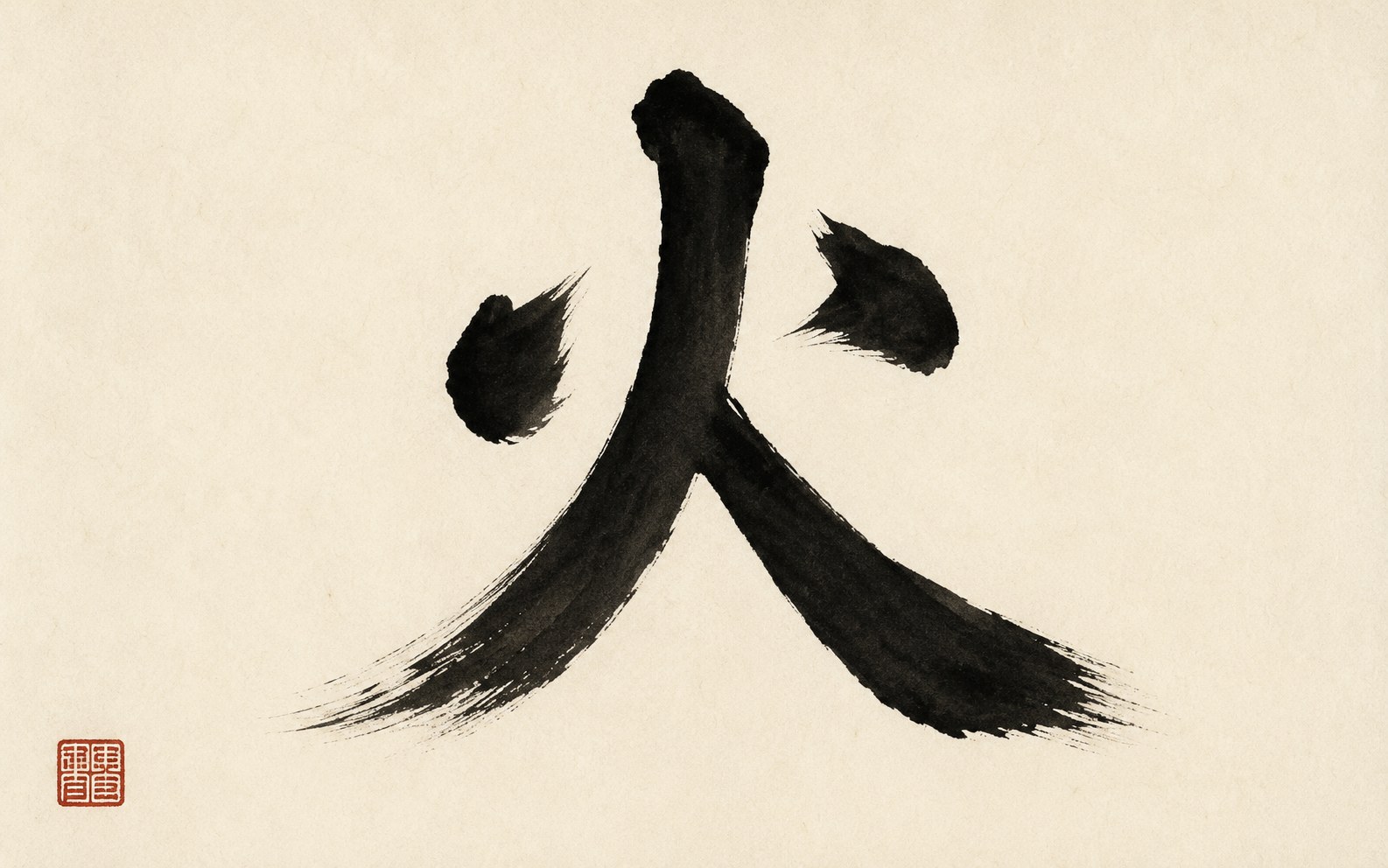
Fire Kanji (火): Meaning, the Elements & How to Write It
By K. Yama火 is a flame you can still see: a tongue of fire with two sparks. What 'fire' means across the Japanese elements, from volcanoes to fireworks, and how to write it.
Continue reading → -
Japanese Gardens (日本庭園): The Types and the Hidden Rules
By K. YamaA Japanese garden is not a garden with a red bridge. It is idealised nature, utterly controlled to look natural. The real types, and the rules you can't see.
Continue reading → -
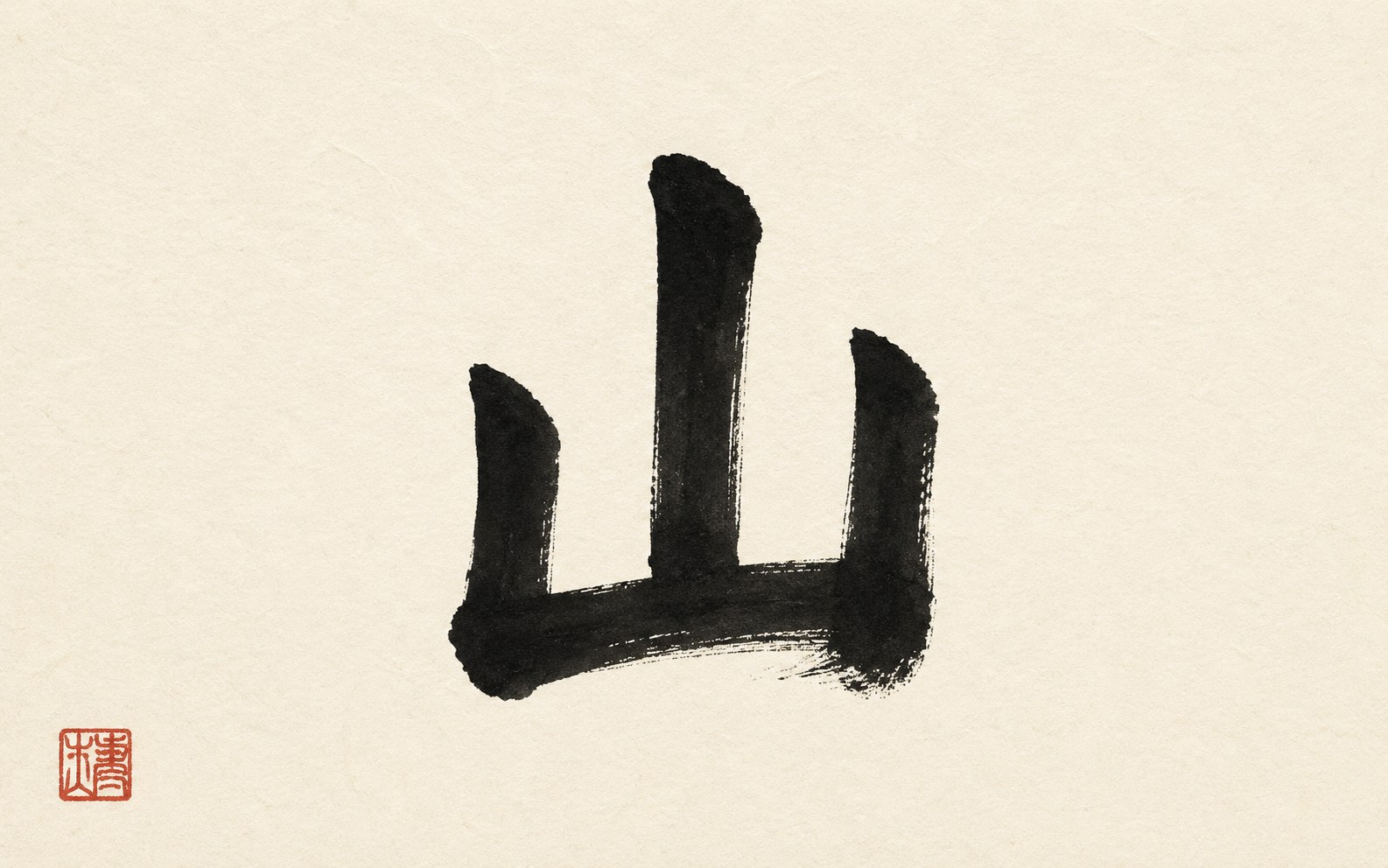
Mountain Kanji (山): Meaning, Mount Fuji & How to Write It
By K. Yama山 is the clearest picture in the whole writing system: three peaks you can still see. What 'mountain' means in a land where mountains are gods, and how to write it.
Continue reading → -
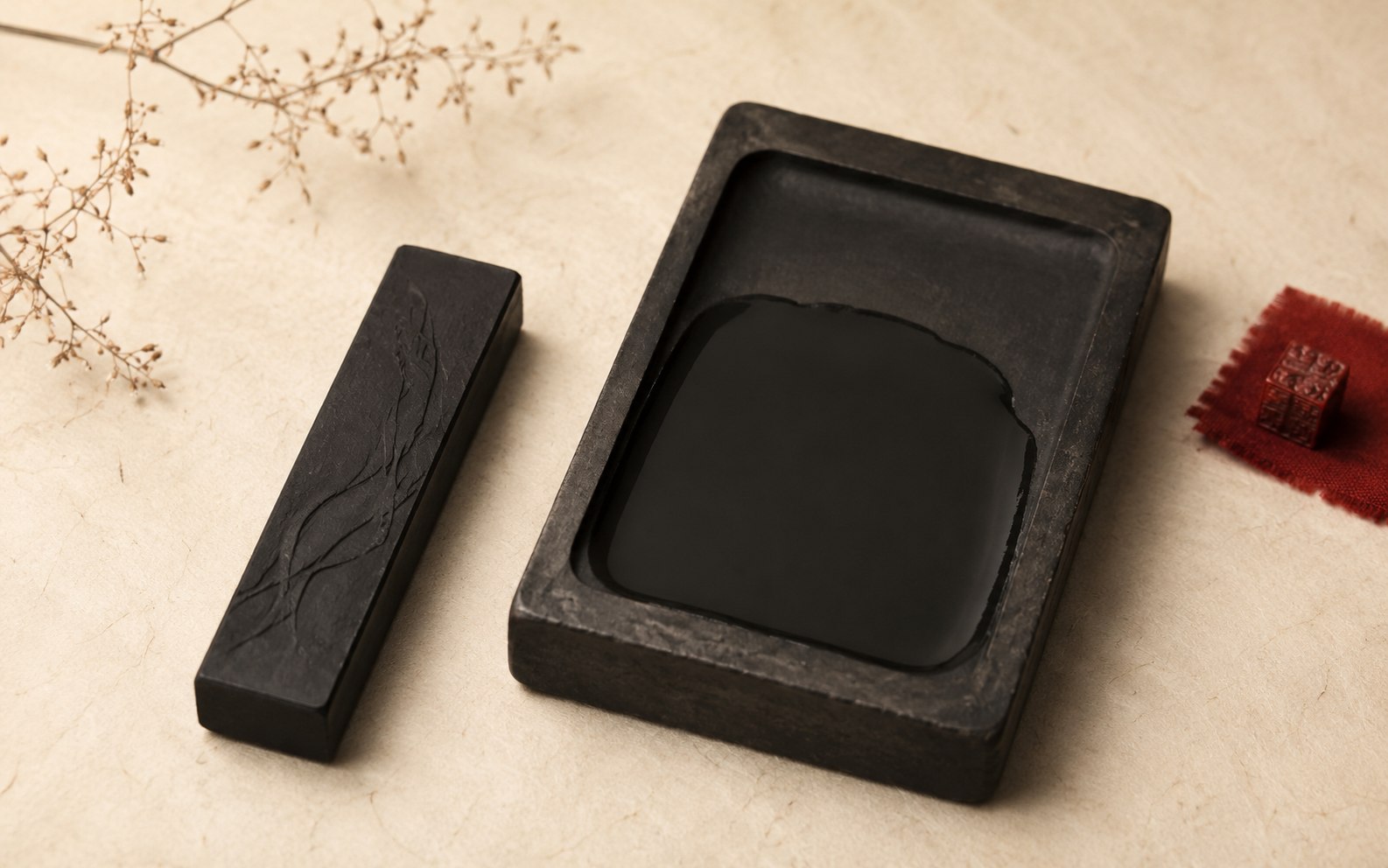
How to Grind Sumi Ink on an Inkstone (and Why Bother)
By K. YamaUpdated:Grinding your own ink takes ten minutes and changes everything. How to grind a sumi inkstick on a suzuri — and why calligraphers still do it by hand.
Continue reading → -
How to Clean & Care for a Japanese Calligraphy Brush
By K. YamaDried ink is what kills a calligraphy brush. How to clean, reshape, and store a fude so a good brush lasts years instead of being ruined in a month.
Continue reading → -
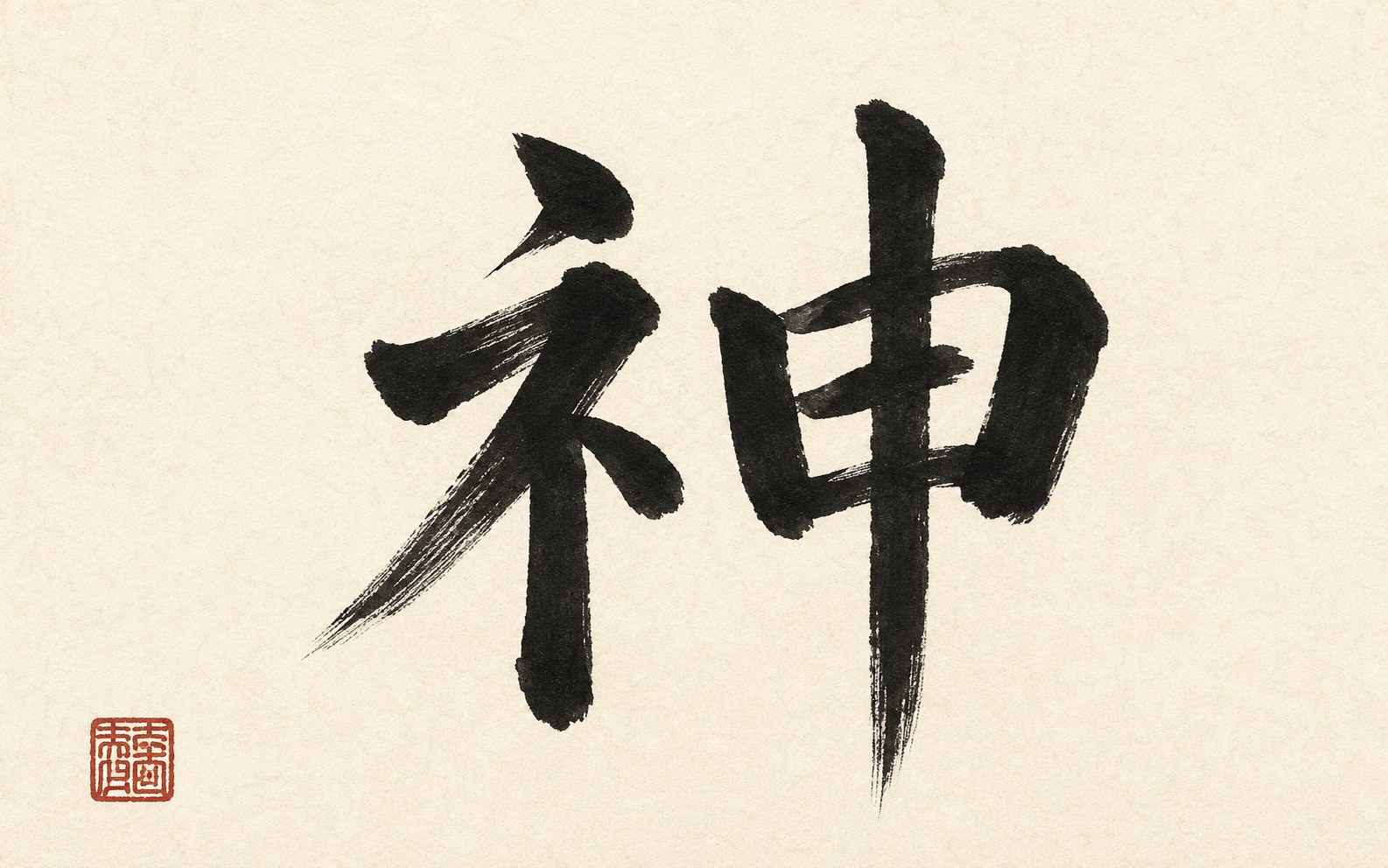
God Kanji (神): The Meaning of Kami and How to Write It
By K. YamaThe kanji 神 joins an altar to an old lightning bolt: the divine shown as awesome power. What kami really means, from Shinto shrines to the thunder god.
Continue reading → -
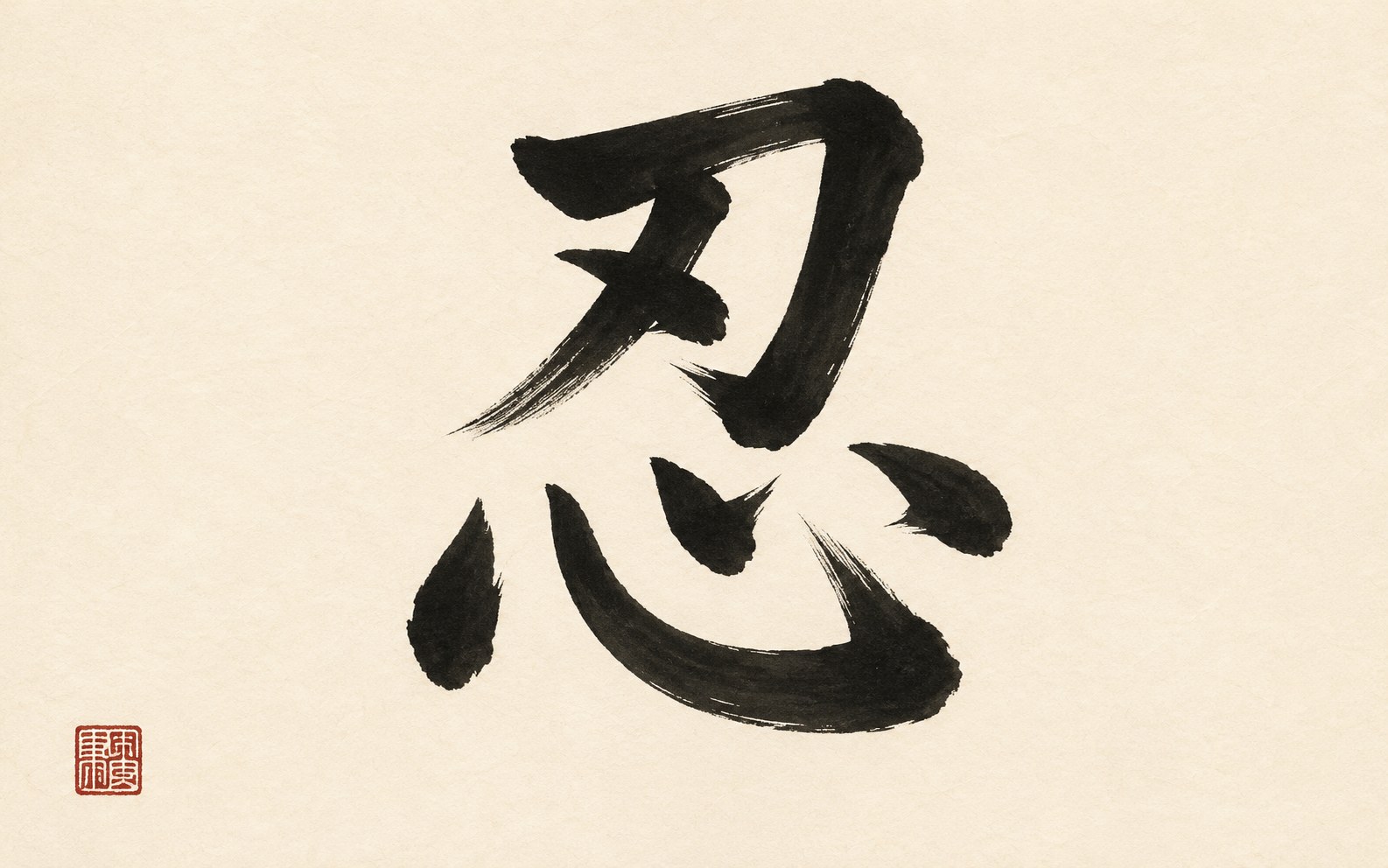
Endurance Kanji (忍): Perseverance, the Ninja & How to Write It
By K. YamaThe kanji 忍 sets a blade over a heart: to endure is to bear what cuts. It names the ninja, the quiet virtue of forbearance, and a sharper, darker edge.
Continue reading → -
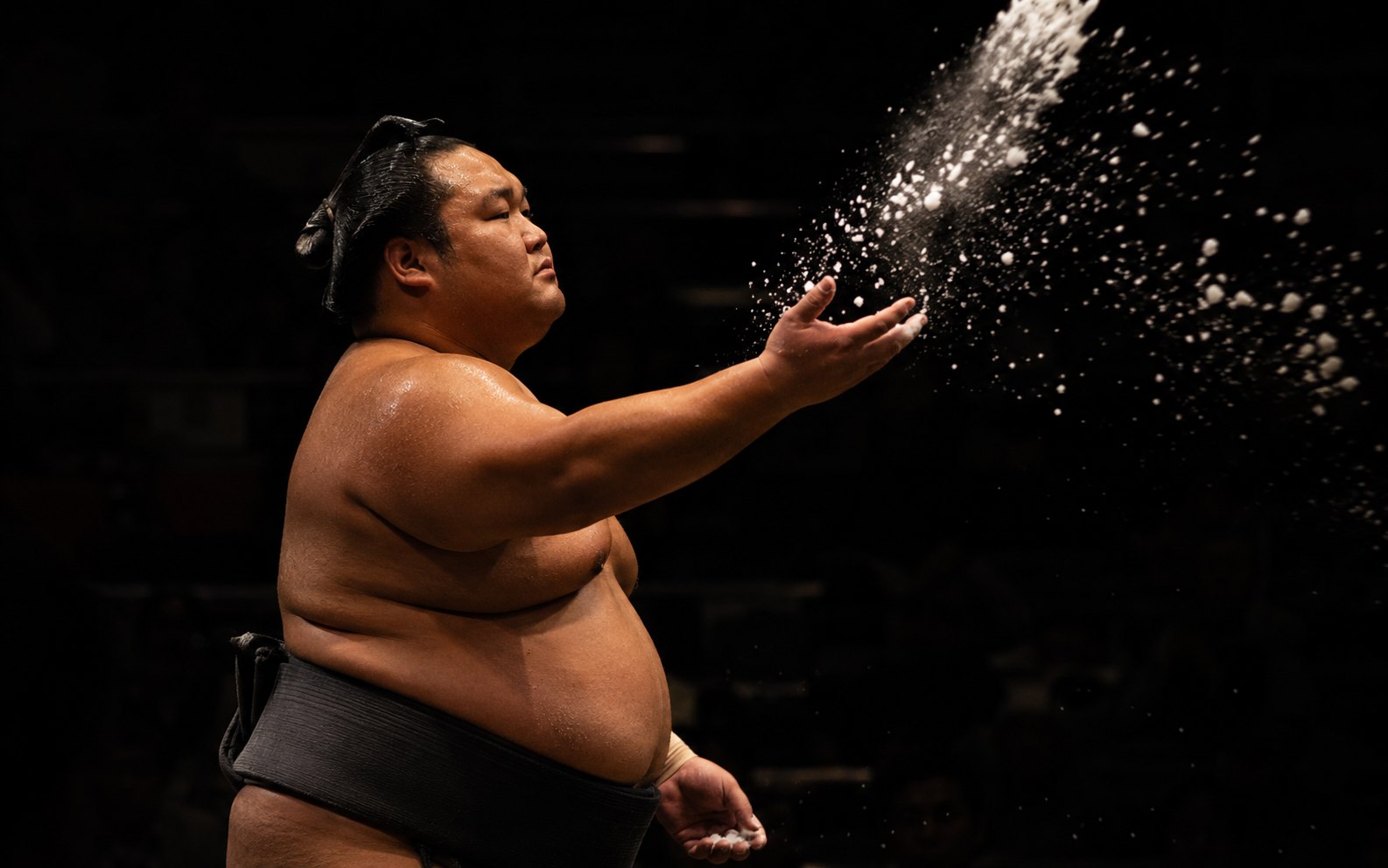
Sumo (相撲): The Ancient Ritual Behind Japan's Sport
By K. YamaThe bout lasts seconds; the ritual takes centuries. Why sumo is a Shinto rite in disguise — the salt, the sacred ring, and the wrestling that came last.
Continue reading → -
Shinto (神道): What the 'Way of the Kami' Really Is
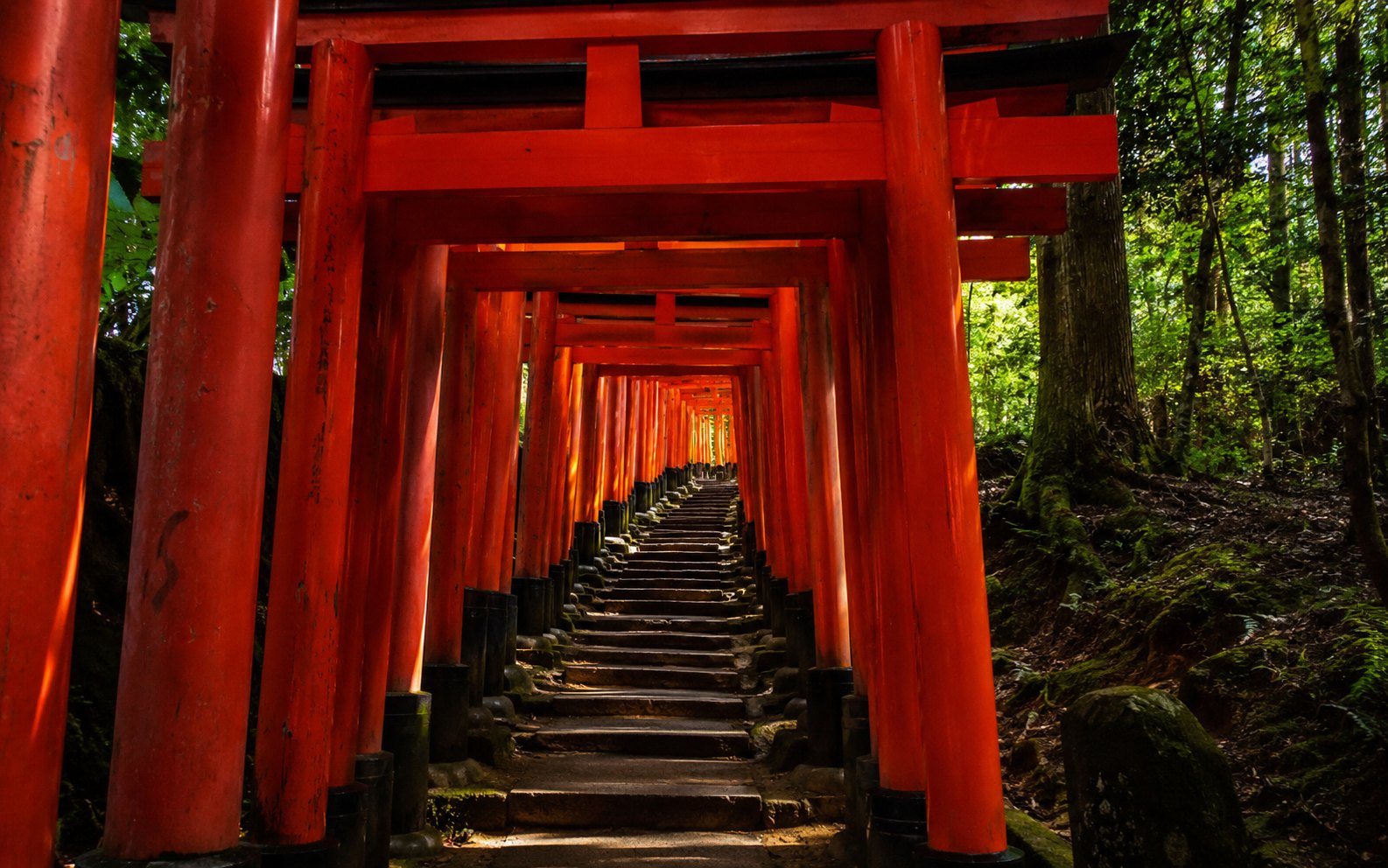
By K. YamaShinto has no founder, no scripture, and no commandments. What Japan's native 'way of the kami' actually is — shrines, torii, purity, and the sacred in nature.
Continue reading → -
Matsuri (祭り): What Japan's Festivals Are Really About
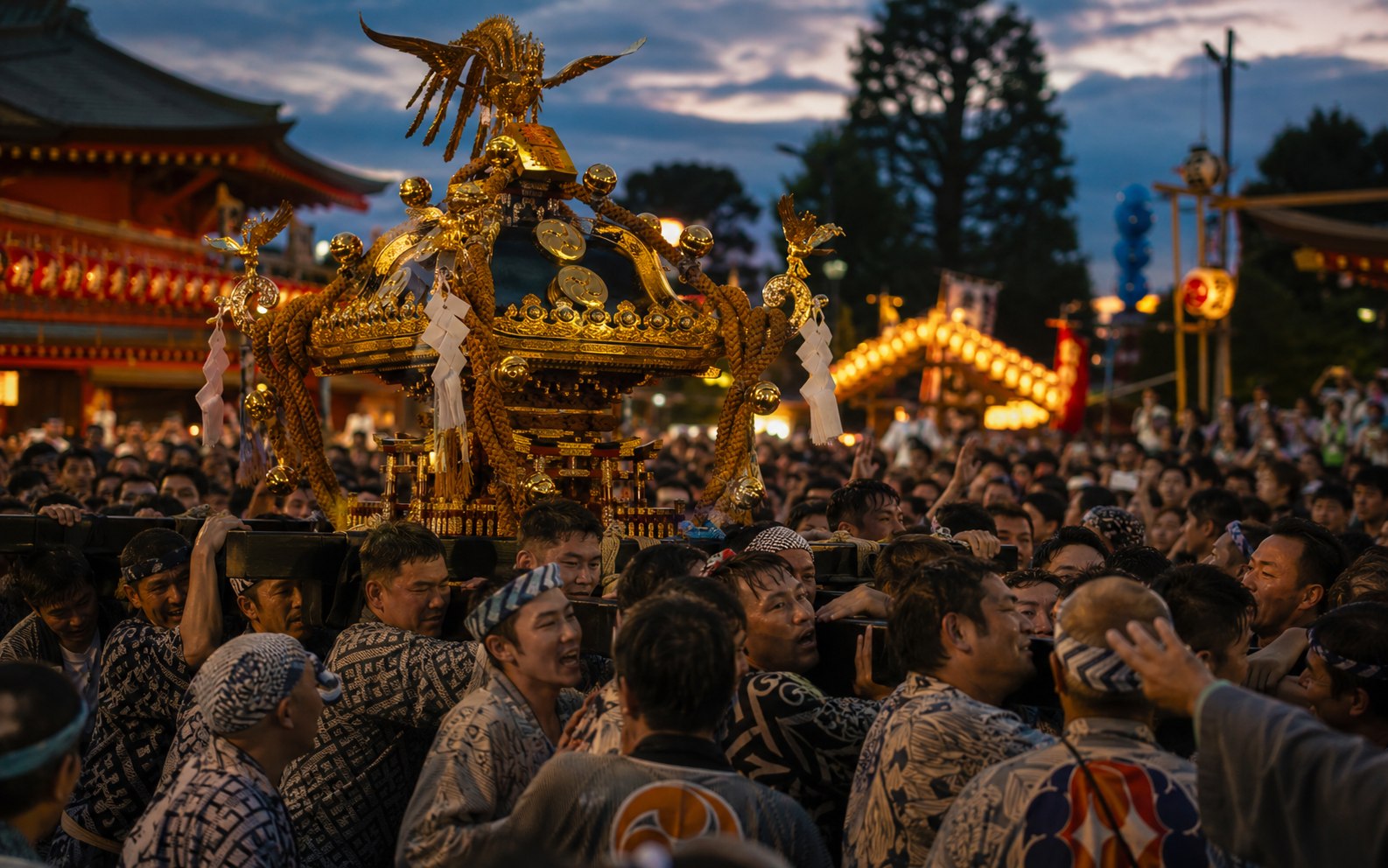
By K. YamaA matsuri looks like a street party with food stalls and fireworks. At its root it is a Shinto rite — a portable shrine carrying a god through the streets.
Continue reading → -
The Tale of Genji (源氏物語): The World's First Novel
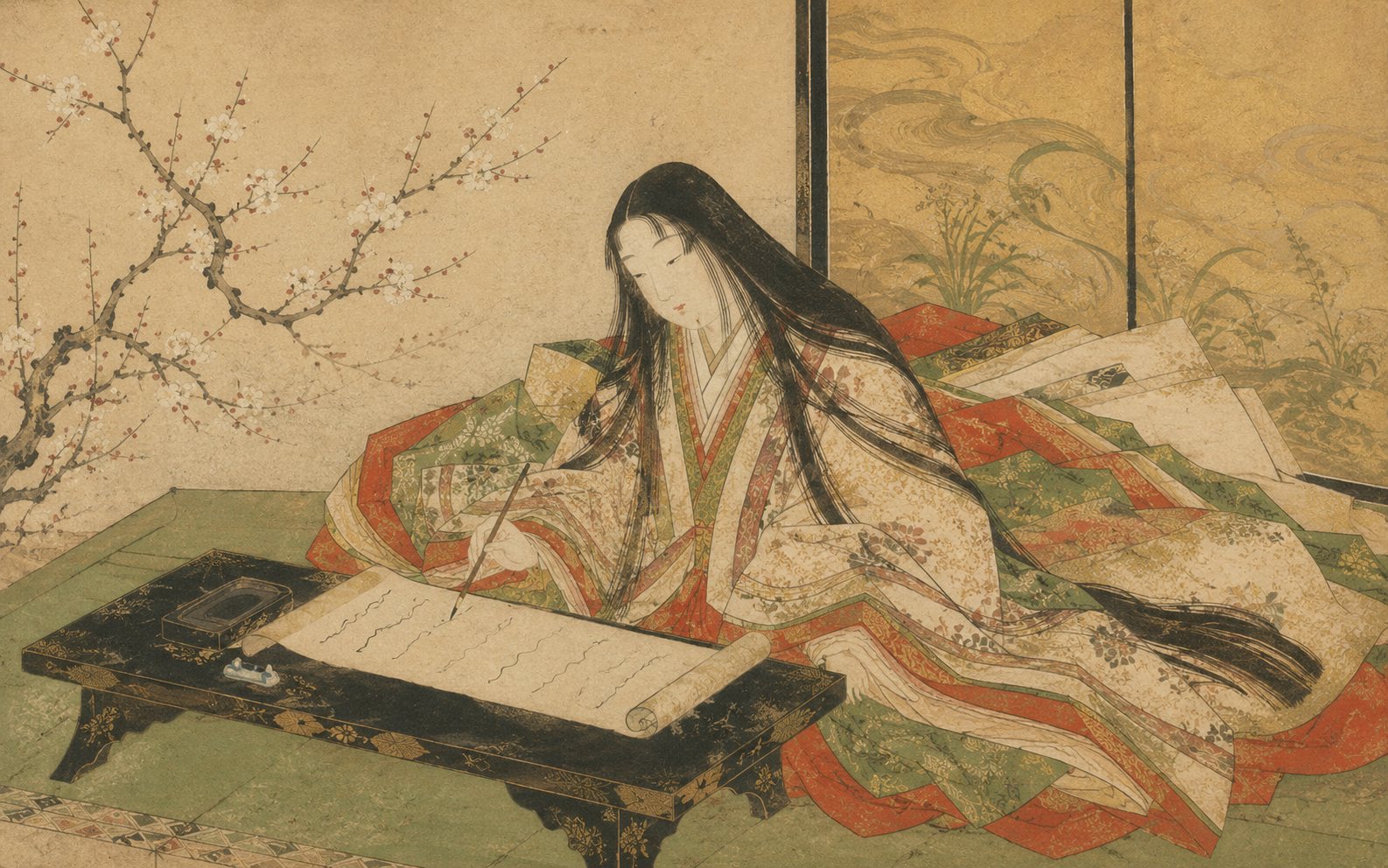
By K. YamaA thousand years ago a Japanese court woman wrote what many call the world's first novel — in the script men dismissed as beneath them. The story of Genji.
Continue reading → -
Bushidō (武士道): The Samurai Code, and the Myth Around It
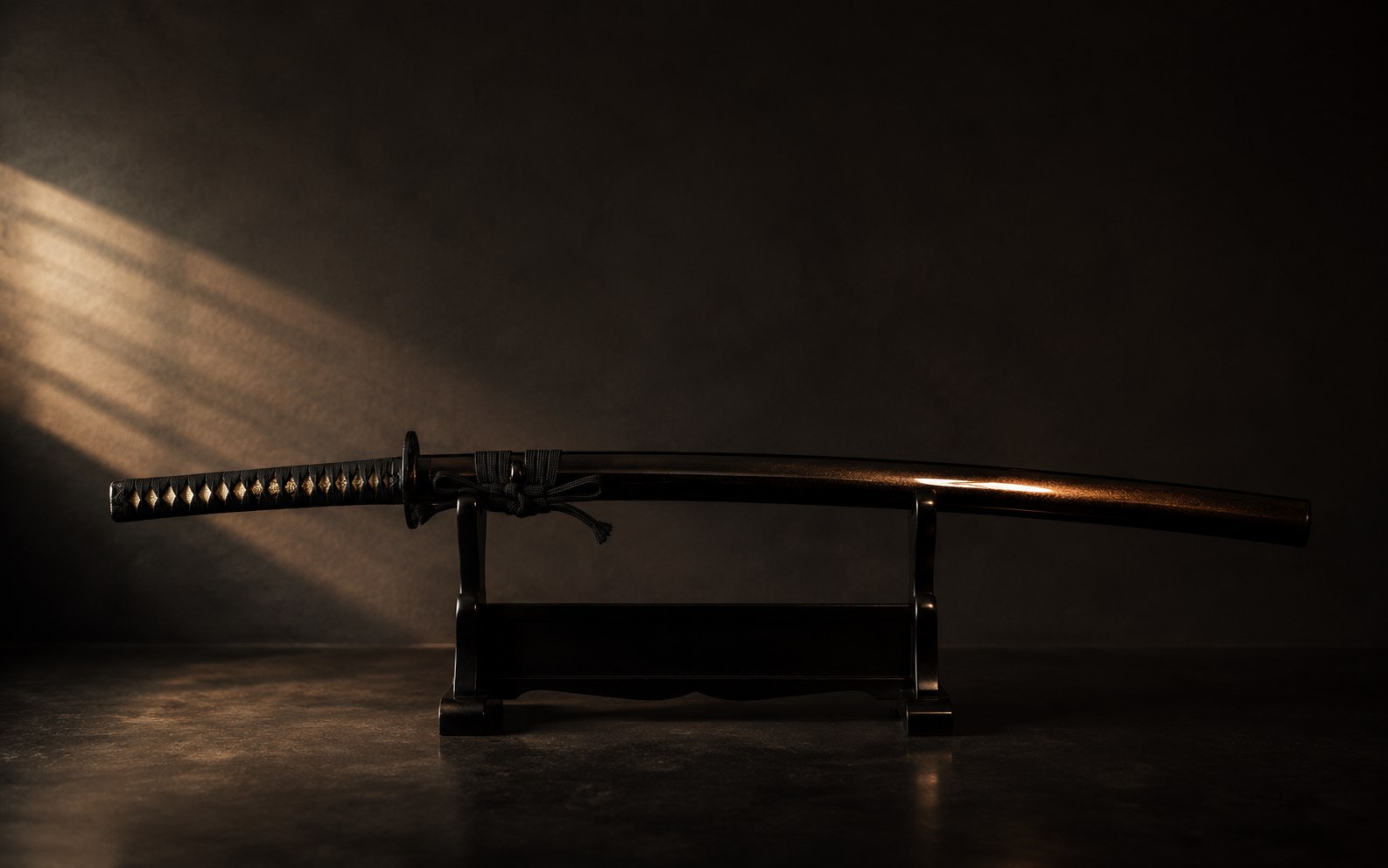
By K. YamaBushidō means 'the way of the warrior' — but the single ancient samurai code most people picture was largely assembled late and sold to the West in 1900.
Continue reading → -
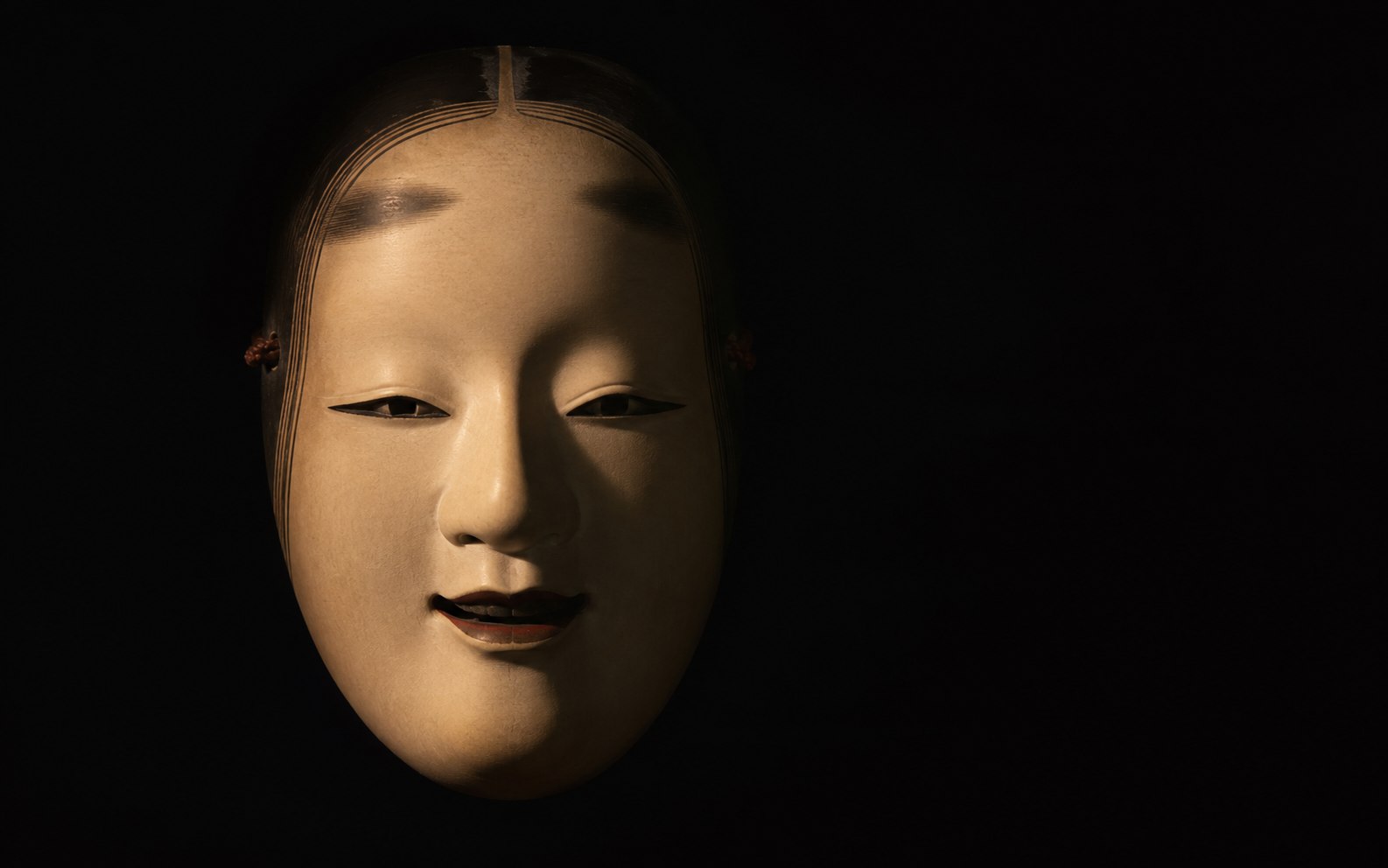
Noh (能): Japan's Oldest Theater and the Power of Less
By K. YamaNoh is the 650-year-old masked theater where a tilt of the head does what kabuki would shout. What makes it the slowest, subtlest stage in the world.
Continue reading → -
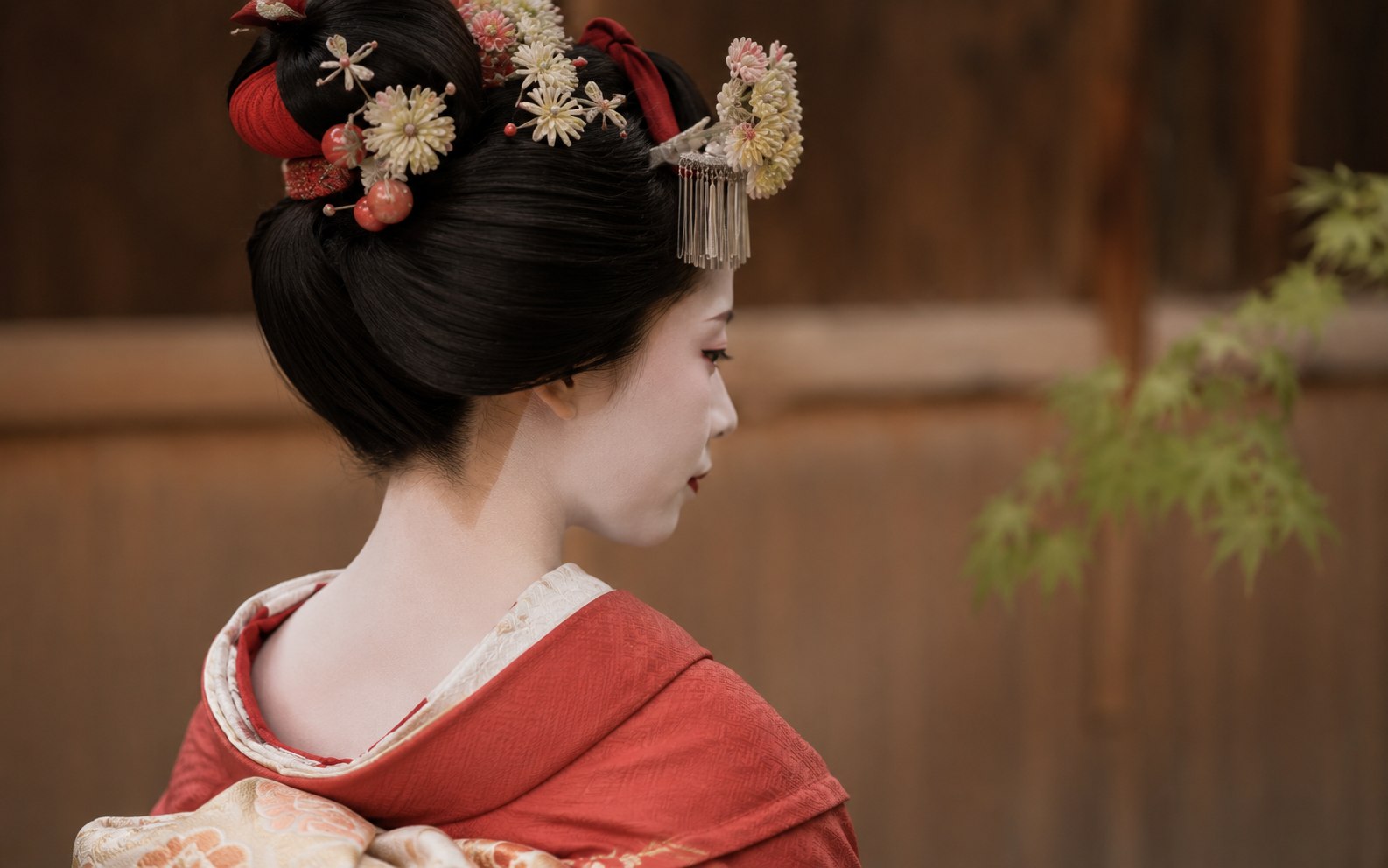
Geisha (芸者): What a Geisha Really Is (and Isn't)
By K. YamaGeisha means 'artist,' not what the West imagines. What geisha really do, how they differ from courtesans and from maiko, and why the first geisha were men.
Continue reading → -
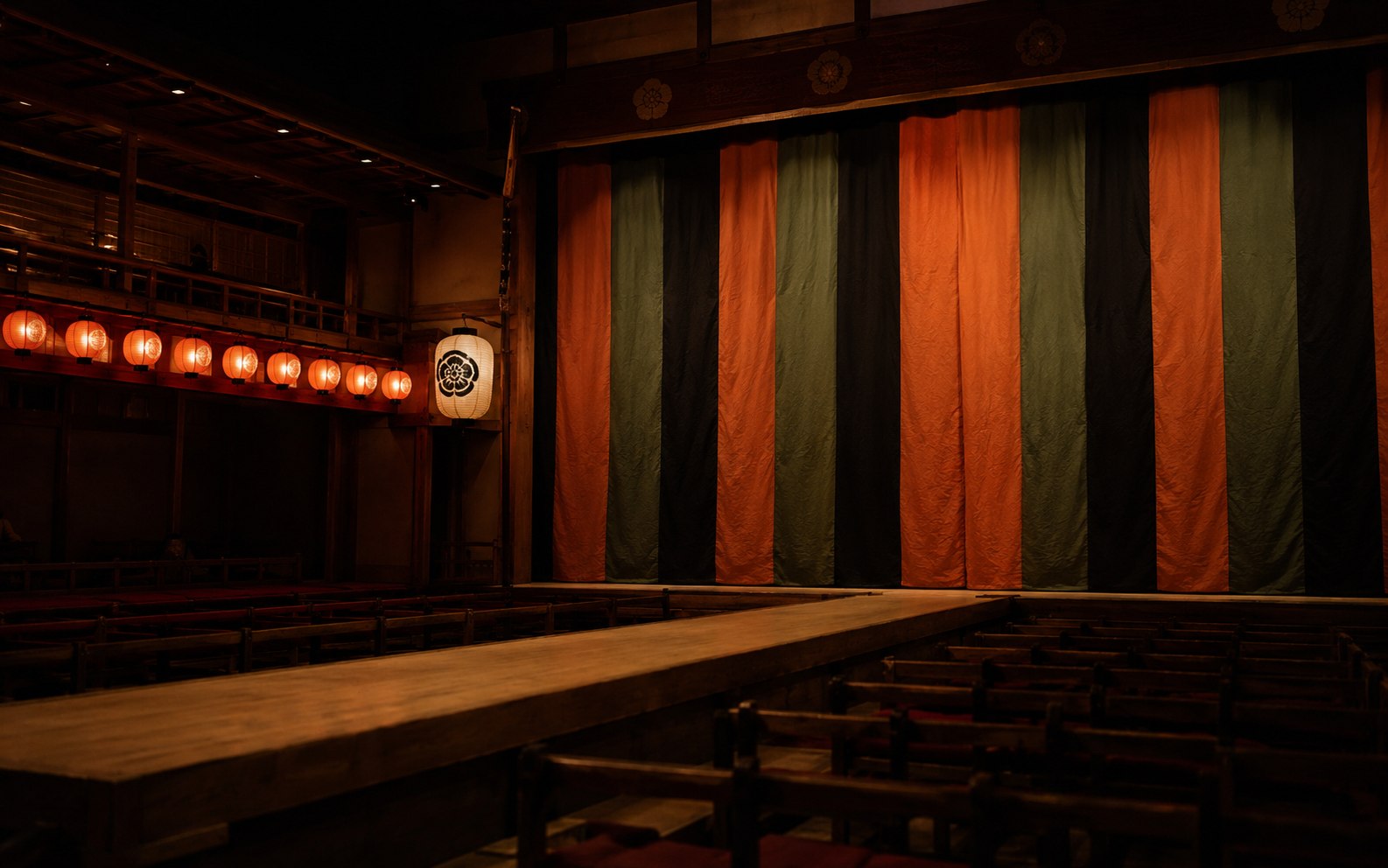
Kabuki (歌舞伎): Japan's Wild Theater, Started by a Woman
By K. YamaKabuki means 'the art of the outlandish.' Founded by a woman, forced all-male by government bans, and built as raucous pop entertainment for Edo's commoners.
Continue reading → -
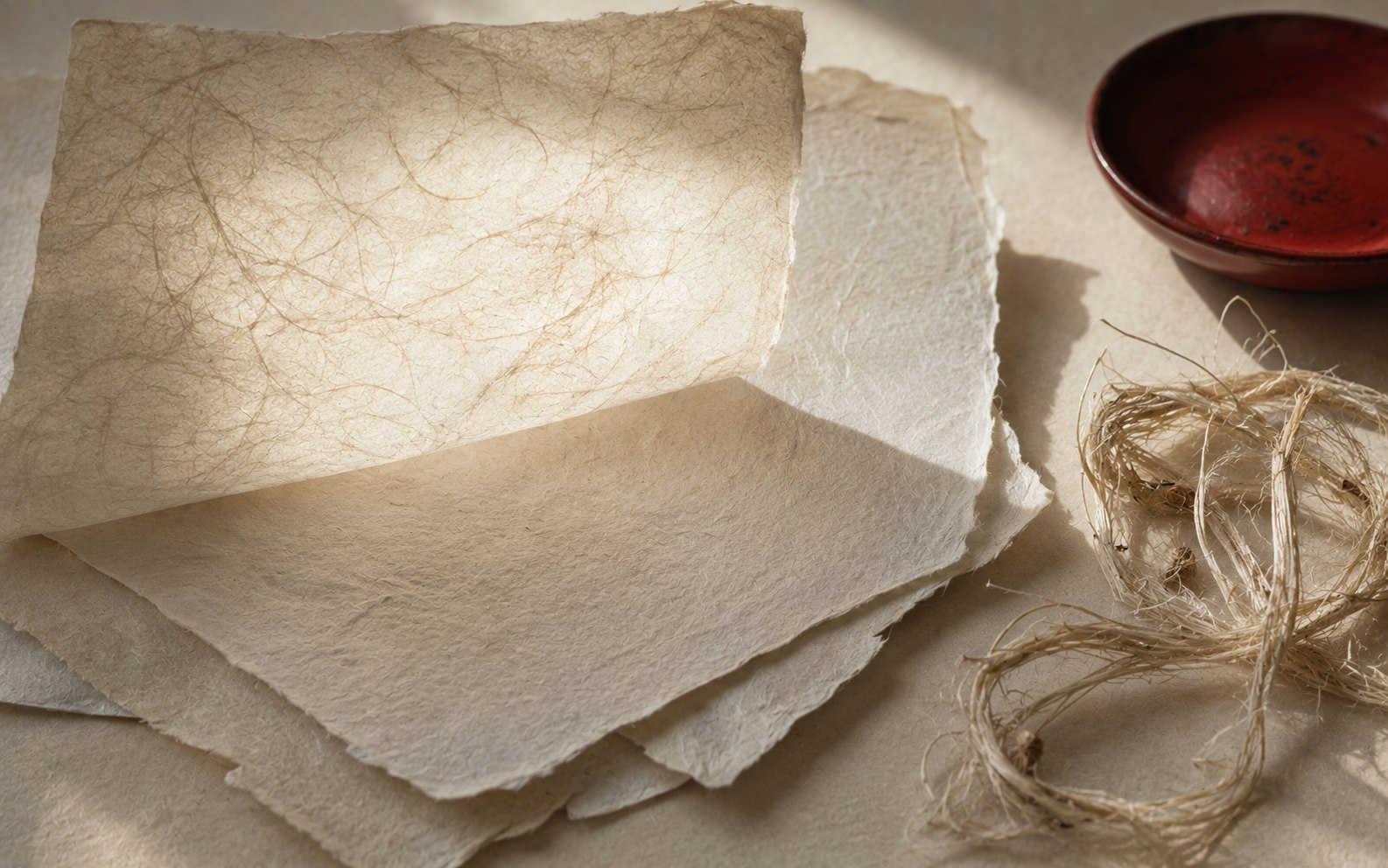
Washi (和紙): The Japanese Paper That Lasts a Thousand Years
By K. YamaWashi is made from shrub bark, not wood pulp, which is why it survives a thousand years. Why museums repair Western masterpieces with Japanese paper.
Continue reading → -
Ukiyo-e (浮世絵): Mass-Made Art That Conquered the West
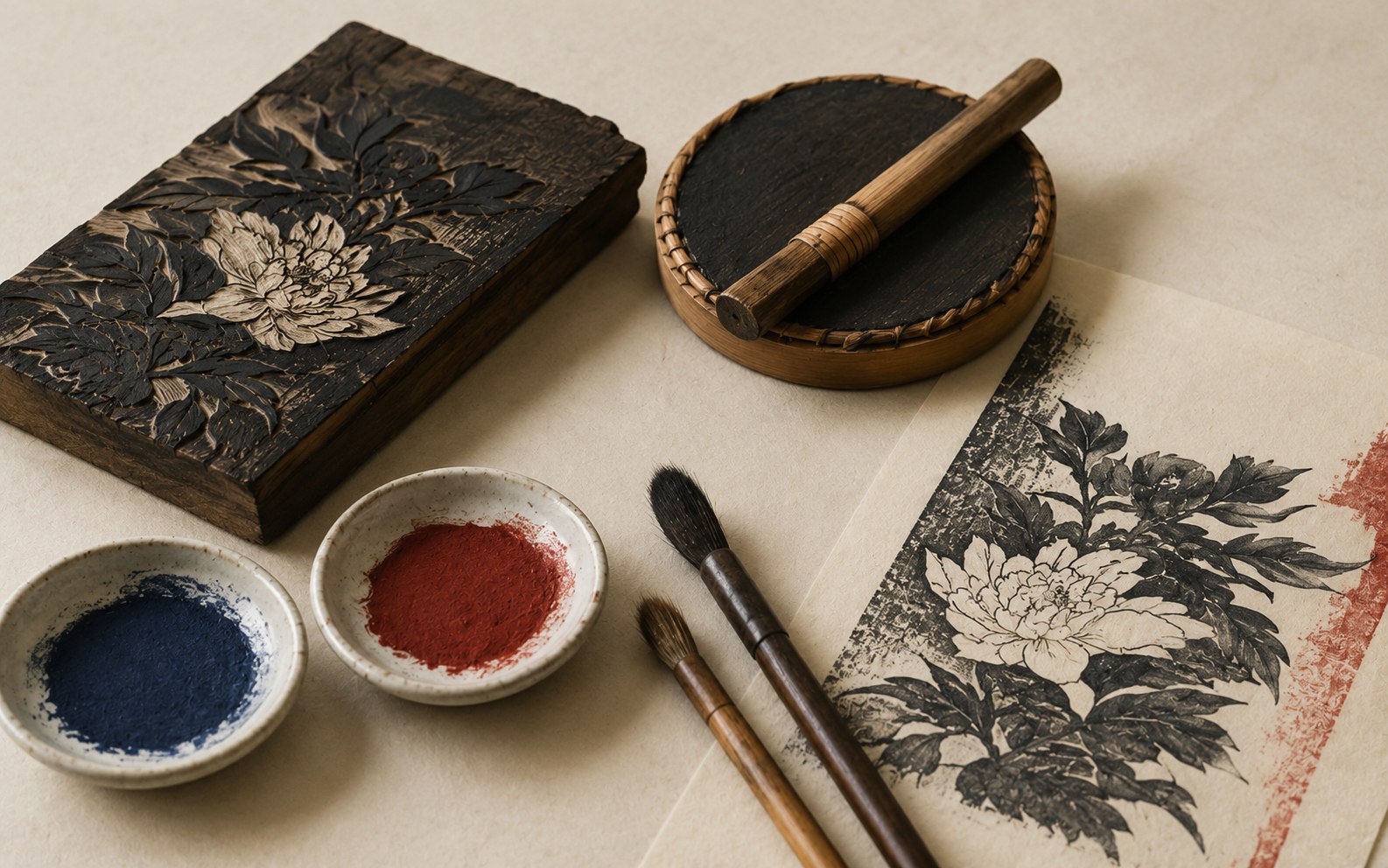
By K. YamaUkiyo-e were Edo Japan's throwaway pop prints: actor posters, pin-ups, travel scenes by a team of four. How the floating world went on to remake Western art.
Continue reading → -
Happiness Kanji (幸): Meaning, Dark Origins & How to Write It
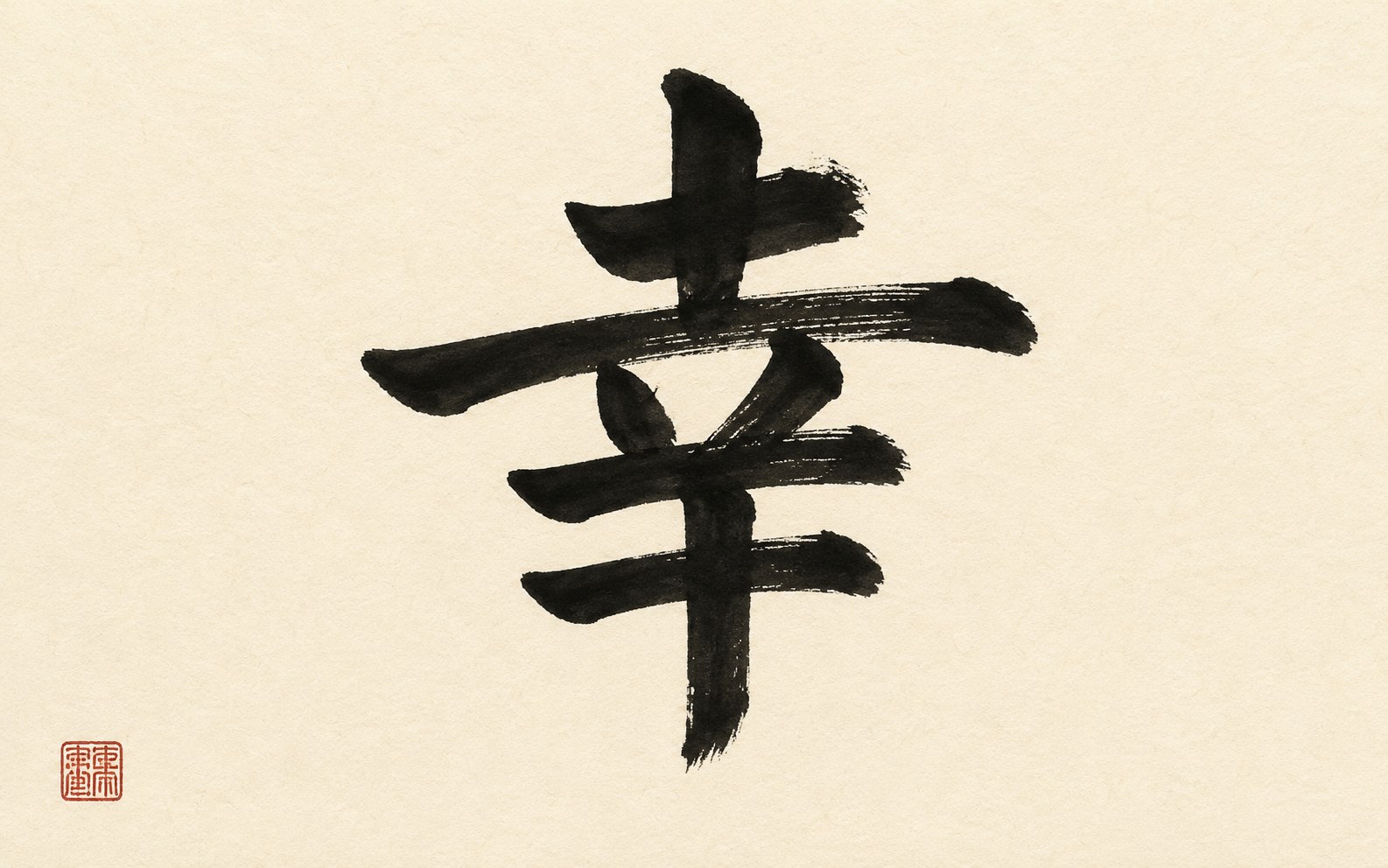
By K. YamaHappiness kanji (幸): its oldest forms point to handcuffs and escaped death. Why, in Japanese, good fortune turns out to be the calamity that didn't happen.
Continue reading → -
Japanese Tea Ceremony (茶道): What Sadō Is Really About
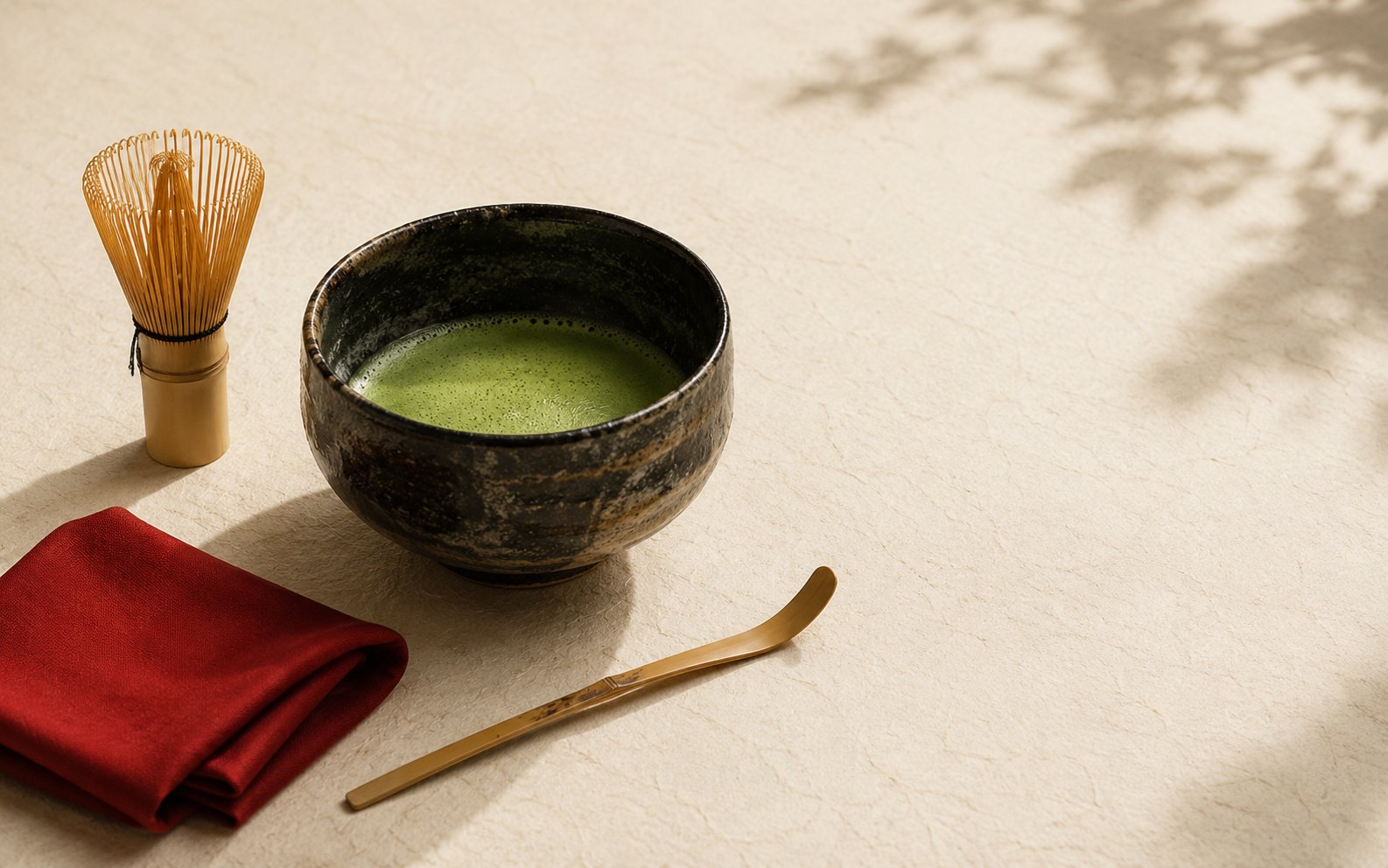
By K. YamaThe Japanese tea ceremony (sadō) was never really about the tea. What chanoyu actually is: a discipline of hospitality, impermanence, and one unrepeatable meeting.
Continue reading → -
Bonsai (盆栽): The Real Meaning of Japan's Miniature Trees
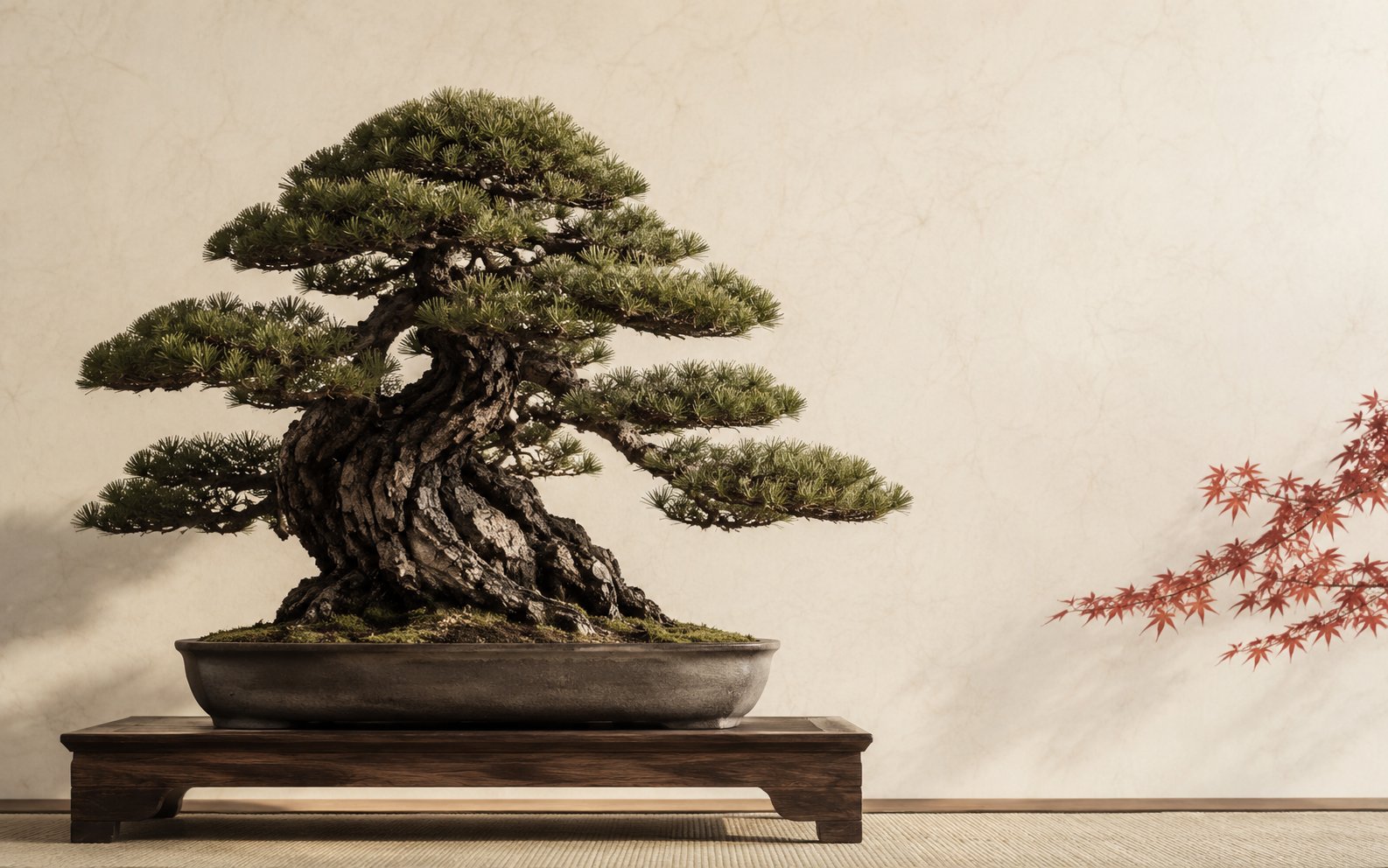
By K. YamaBonsai means 'planted in a tray' — ordinary trees kept small by patient cultivation, some tended for centuries. The real art behind the miniature tree.
Continue reading → -
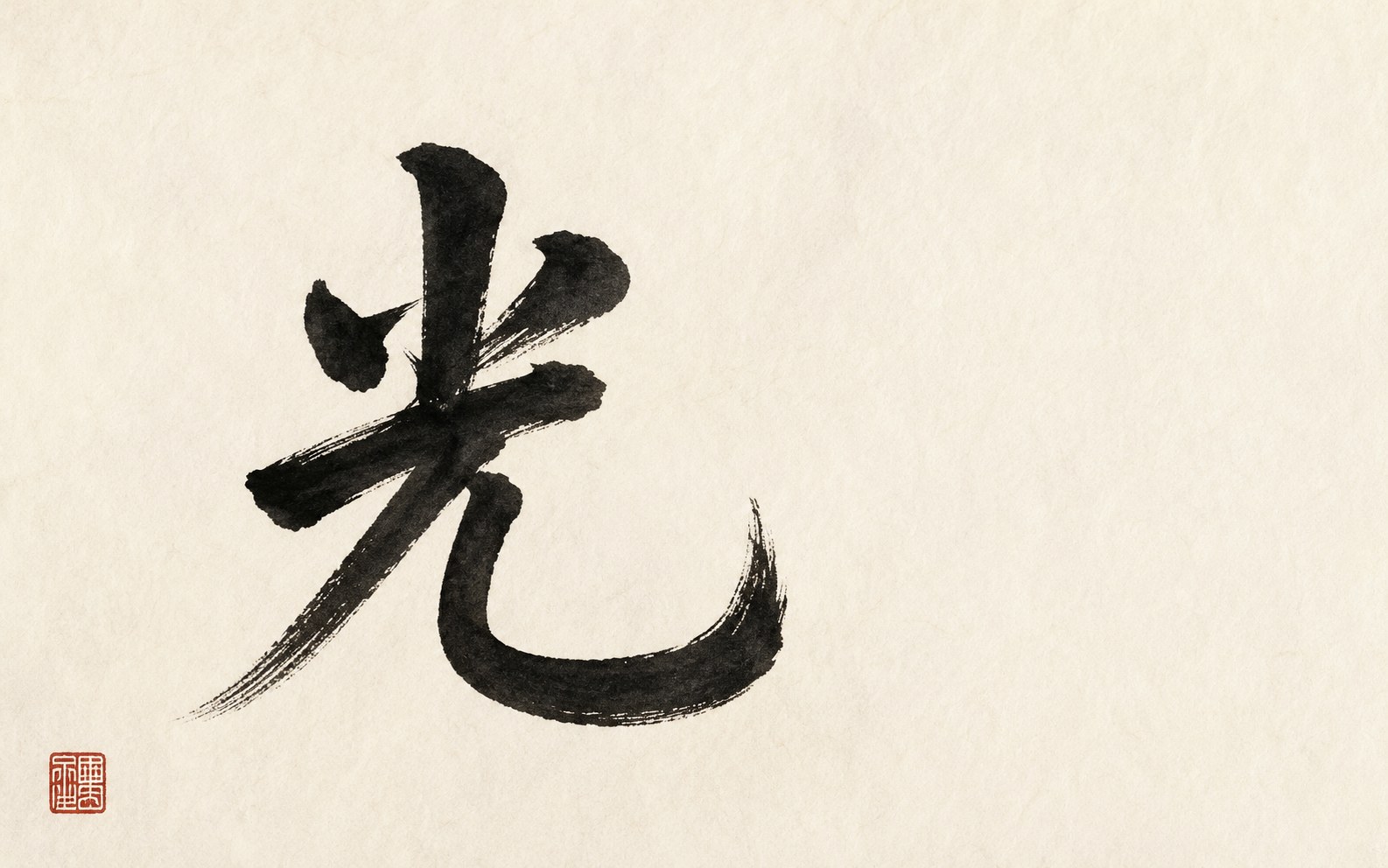
Light Kanji (光): Meaning, the Shining Prince, and How to Write It
By K. Yama光 means light — a fire carried by a person, the hikari of moonlight and glory, and the name of Japan's Shining Prince. Its meaning and how to write it.
Continue reading → -
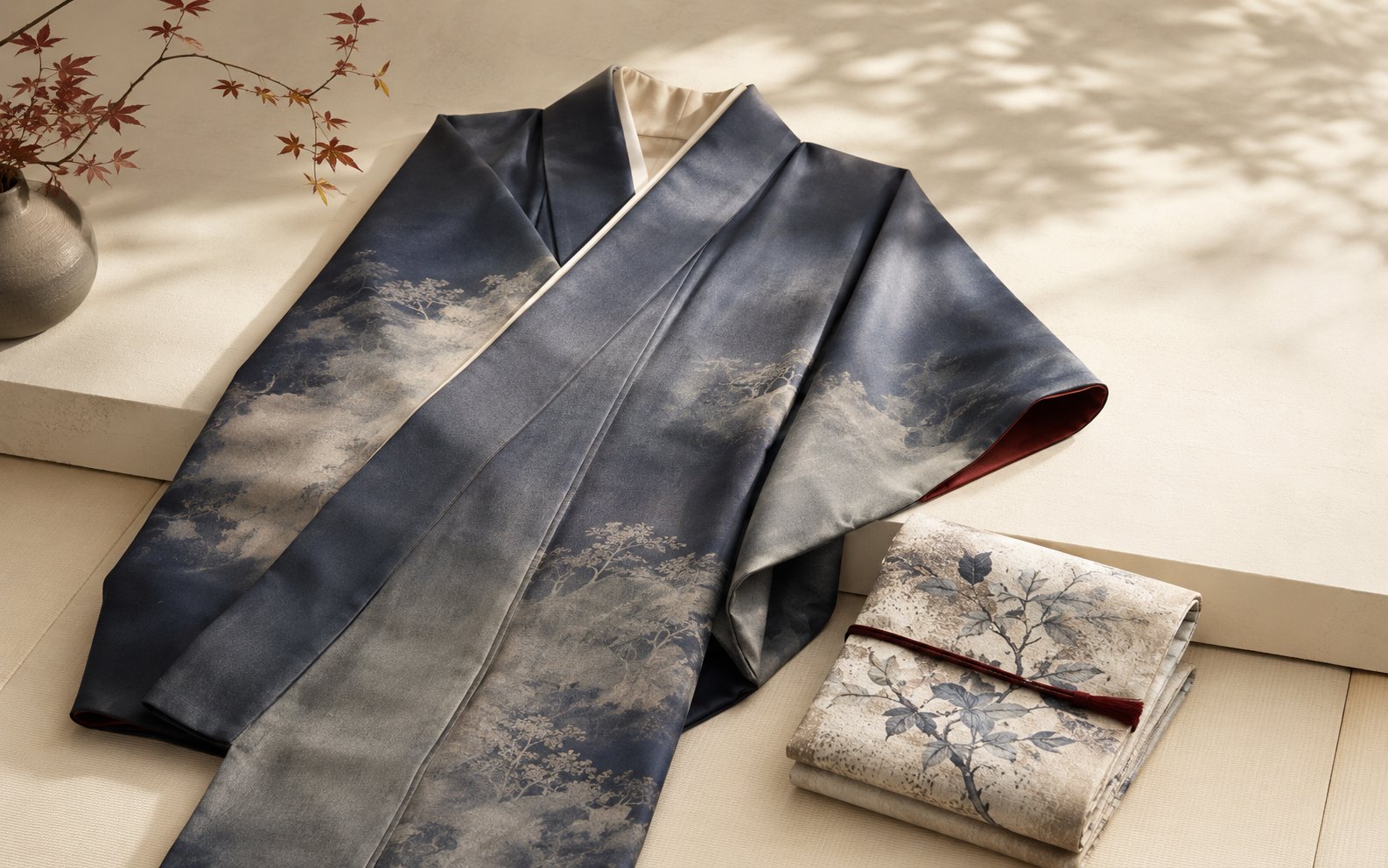
Kimono (着物): What Japan's 'Thing to Wear' Really Means
By K. YamaKimono means, literally, 'a thing to wear' — a living garment with seasonal rules and one detail you must never get wrong. The real story, not the costume.
Continue reading → -
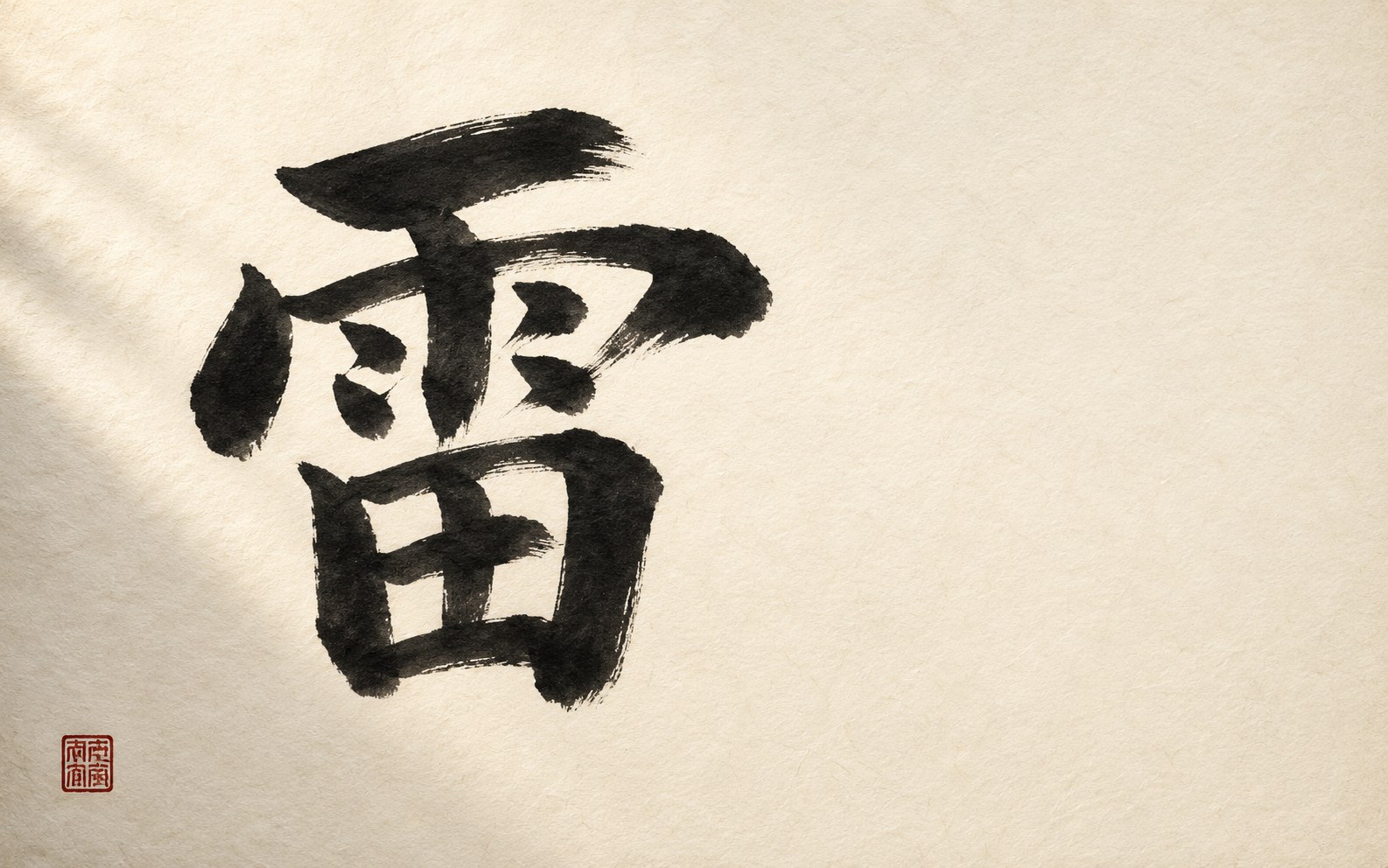
Thunder Kanji (雷): Meaning, Raijin, and How to Write It
By K. Yama雷 means thunder: rain over a field, the drum-beating god Raijin, and a word that began as 'the cry of the gods.' Its meaning, readings, and writing.
Continue reading → -
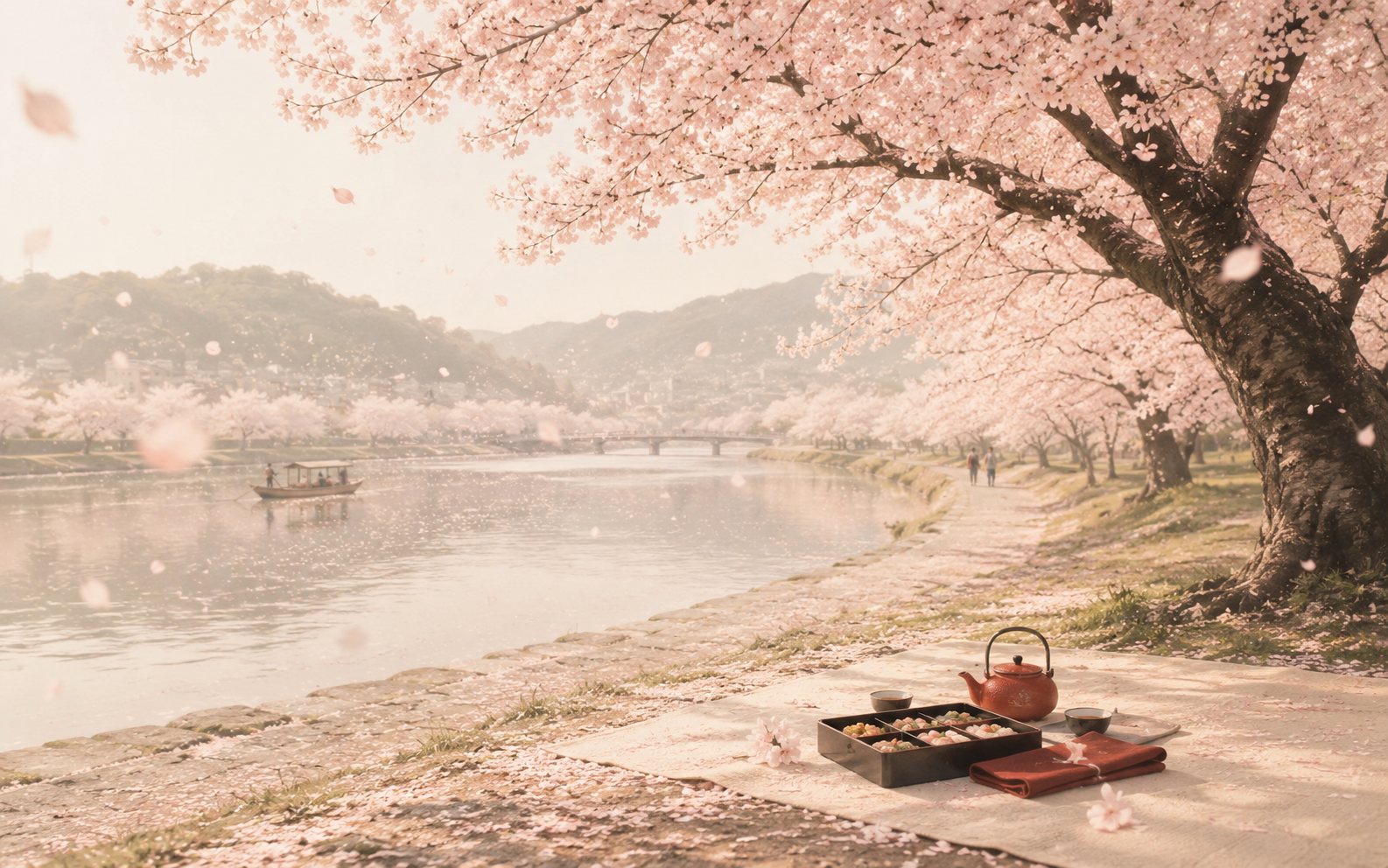
Hanami (花見): Japan's Cherry Blossom Viewing, Explained
By K. YamaUpdated:Hanami (花見), Japan's cherry blossom viewing, began with plum. Its 1,300-year history, how the picnic works, and why the falling petals are the point.
Continue reading → -
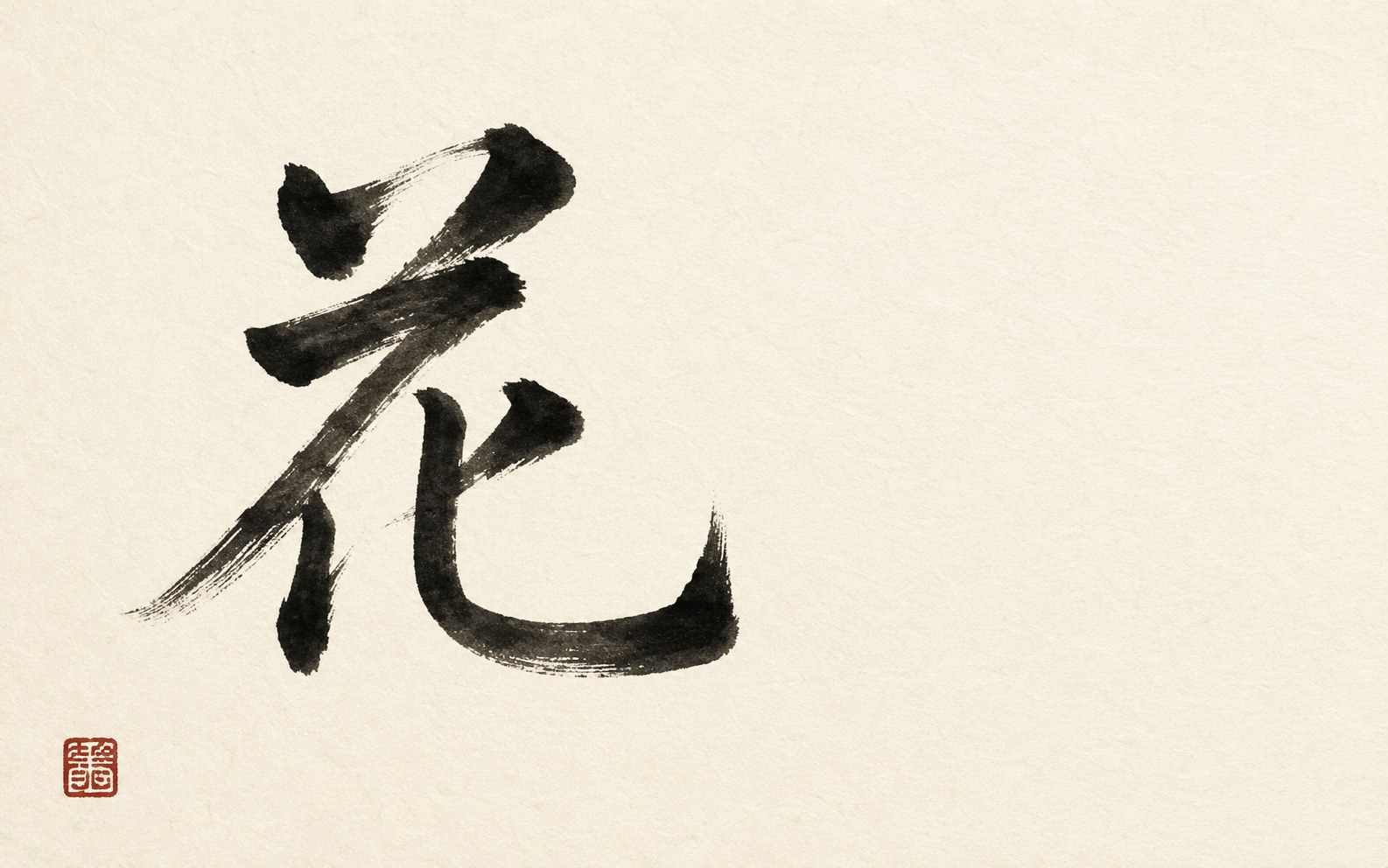
Flower Kanji (花): Meaning, Hanami, and How to Write It
By K. YamaUpdated:花 (hana) means flower — a kanji with 'change' hidden inside it, and the character behind hanami and ikebana. Meaning, readings, and how to write it.
Continue reading → -
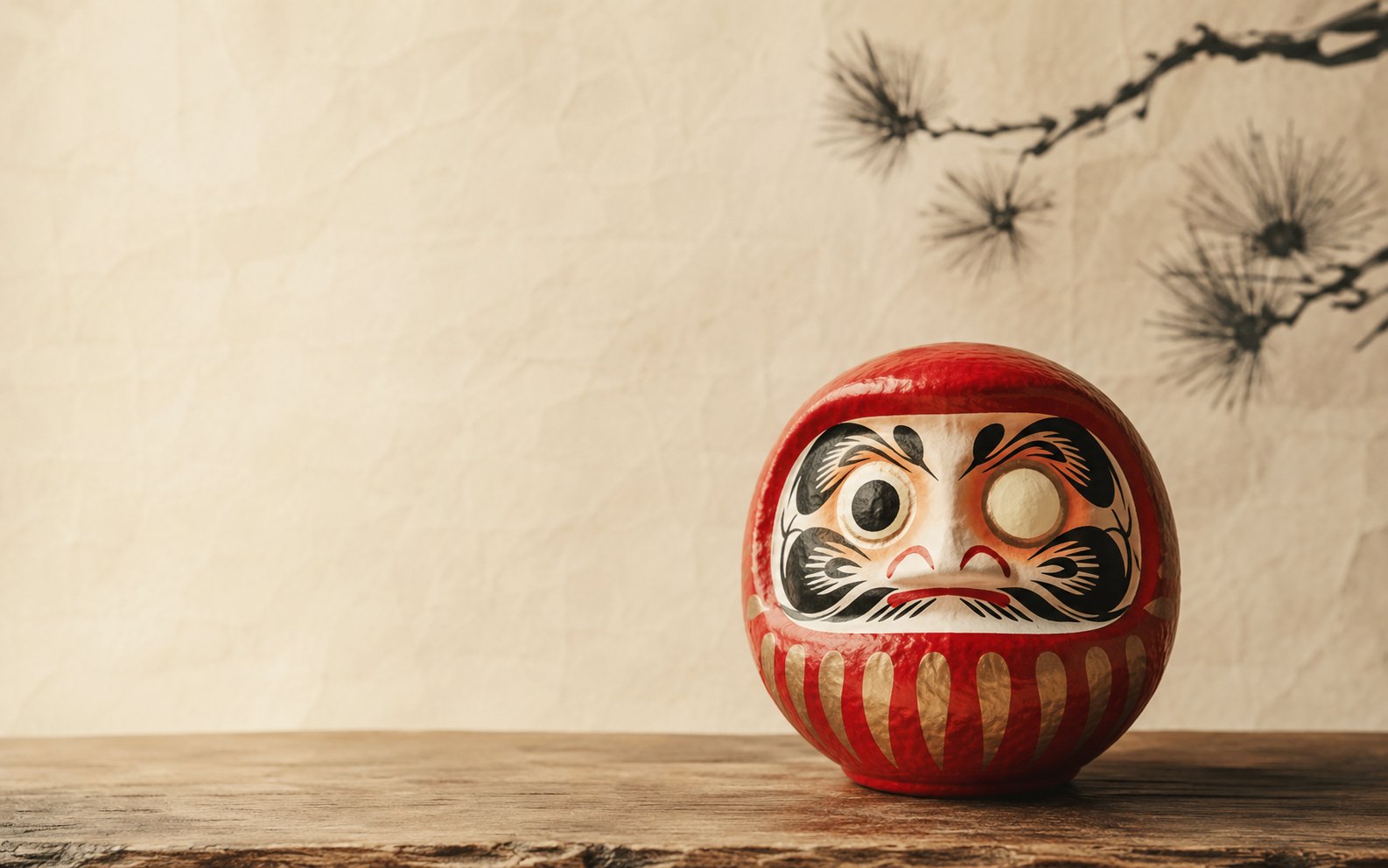
Daruma (達磨): The Zen Founder Behind Japan's Lucky Doll
By K. YamaUpdated:The red Daruma doll isn't just a lucky charm — it's Bodhidharma, the founder of Zen. The story of the doll, the eye-painting ritual, and what it means.
Continue reading → -
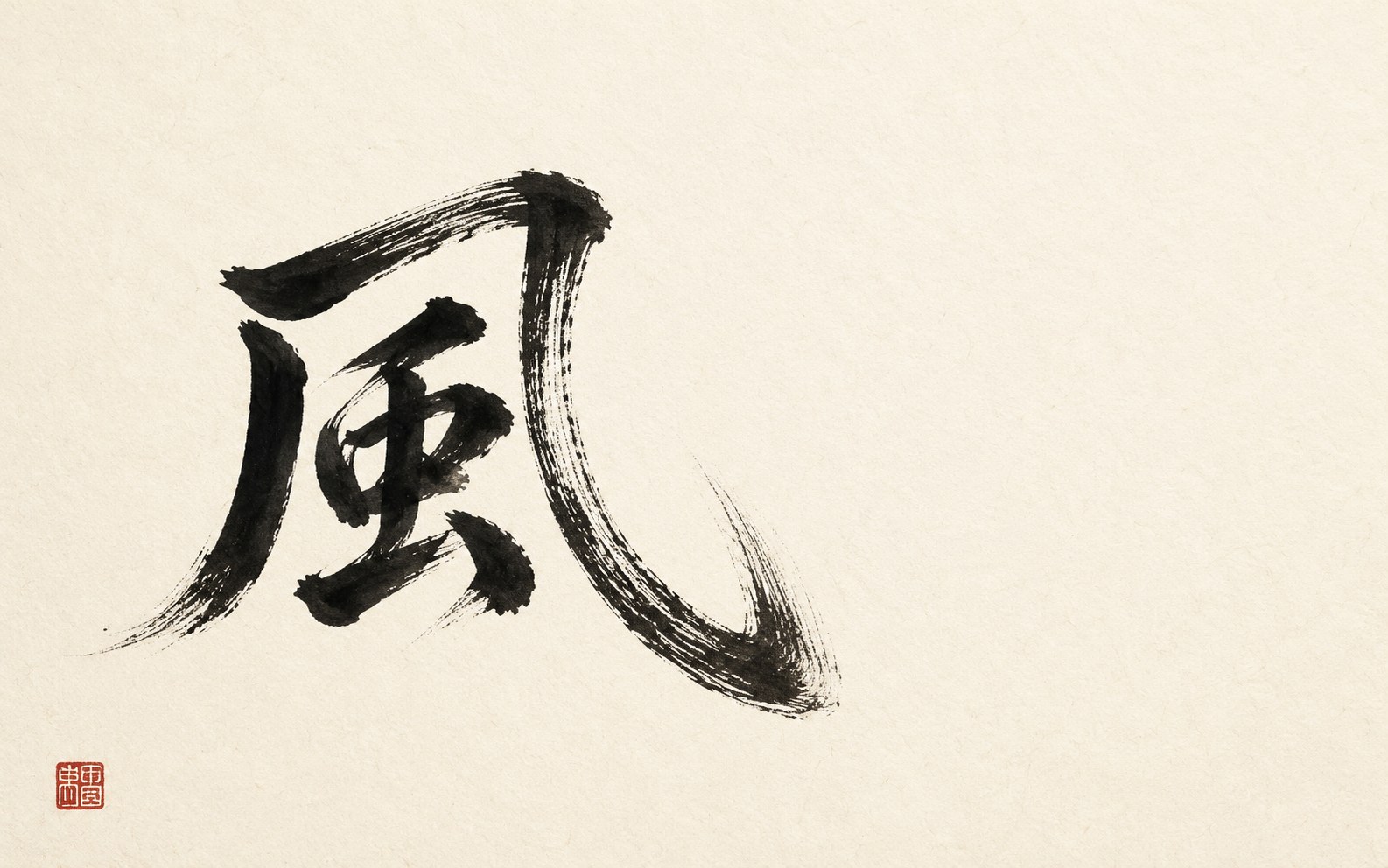
Wind Kanji (風): Wind, Style, and How to Write It
By K. Yama風 (kaze) means wind — and also style, manner, and atmosphere. The 'wind' of 風林火山: what it carries in Japanese, and how to write it with movement.
Continue reading → -
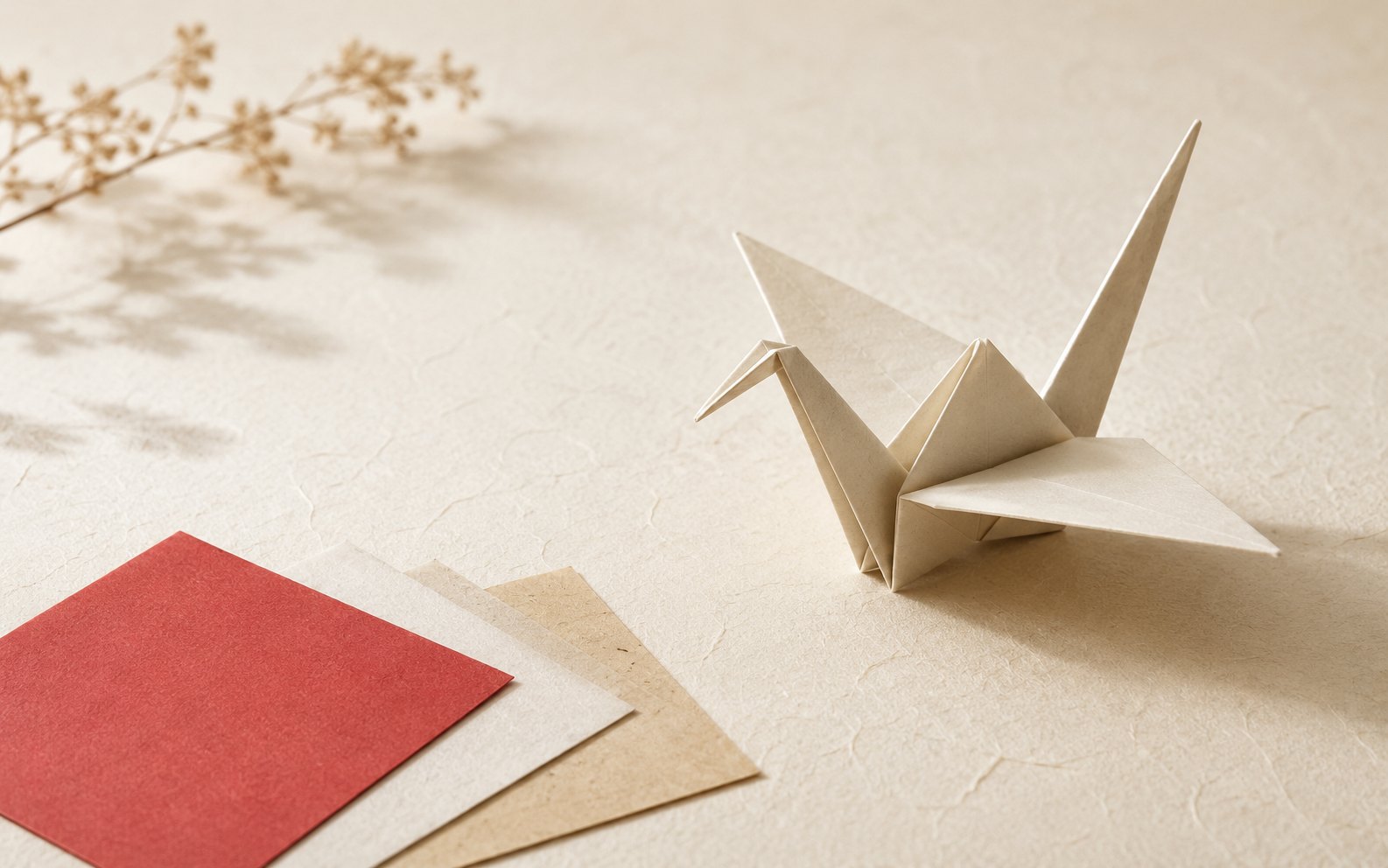
Origami (折り紙): The Japanese Art of Paper Folding, Explained
By K. YamaUpdated:Origami isn't an ancient mystical art — creative paper folding was shaped in the 20th century by one master. The real story, and why the crane matters.
Continue reading → -
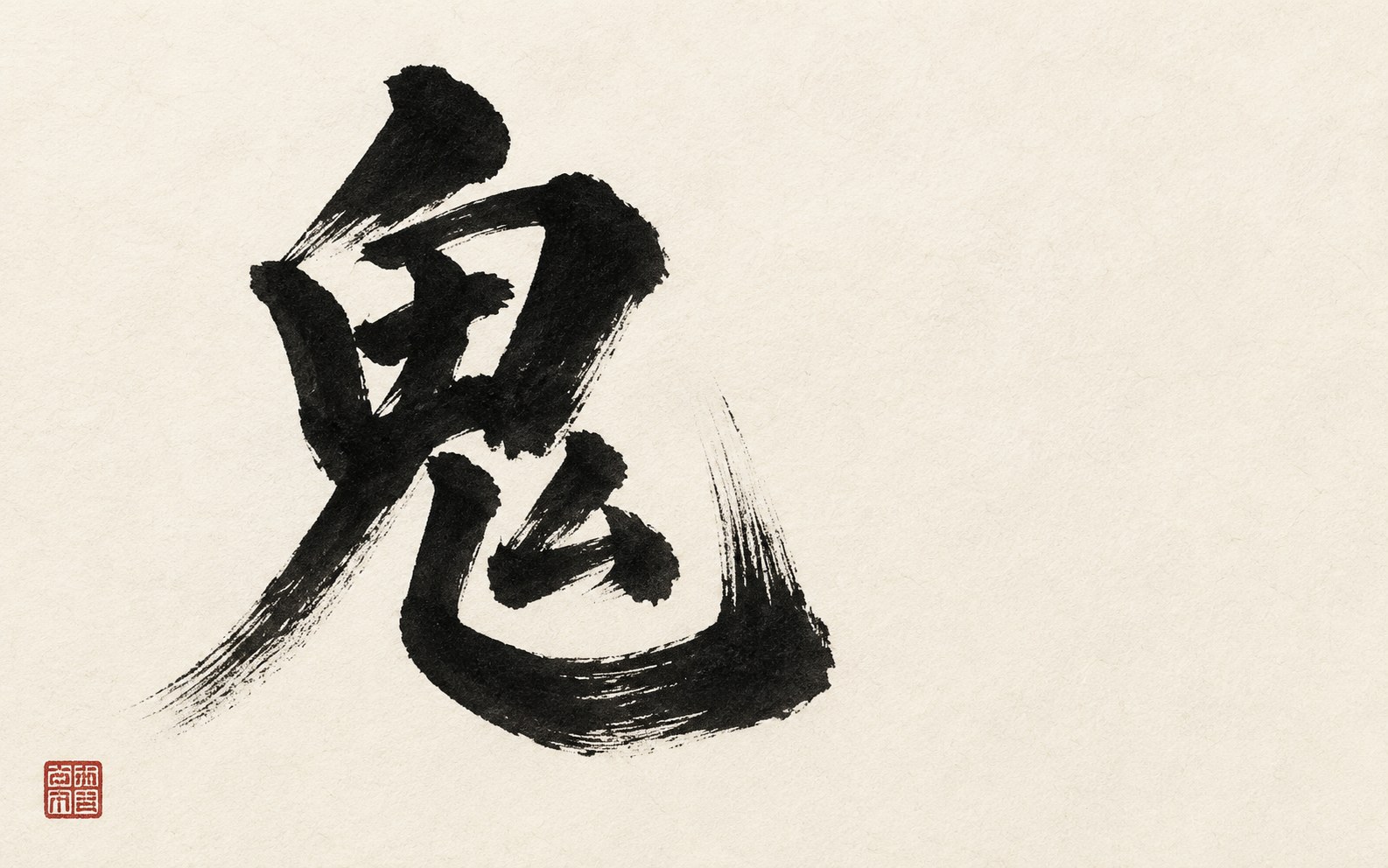
Oni Kanji (鬼): Demon, Protector, and How to Write It
By K. YamaUpdated:鬼 (oni) means demon — but oni guard rooftops as well as haunt tales, and the character once meant 'ghost.' Its double life, and how to write it.
Continue reading → -
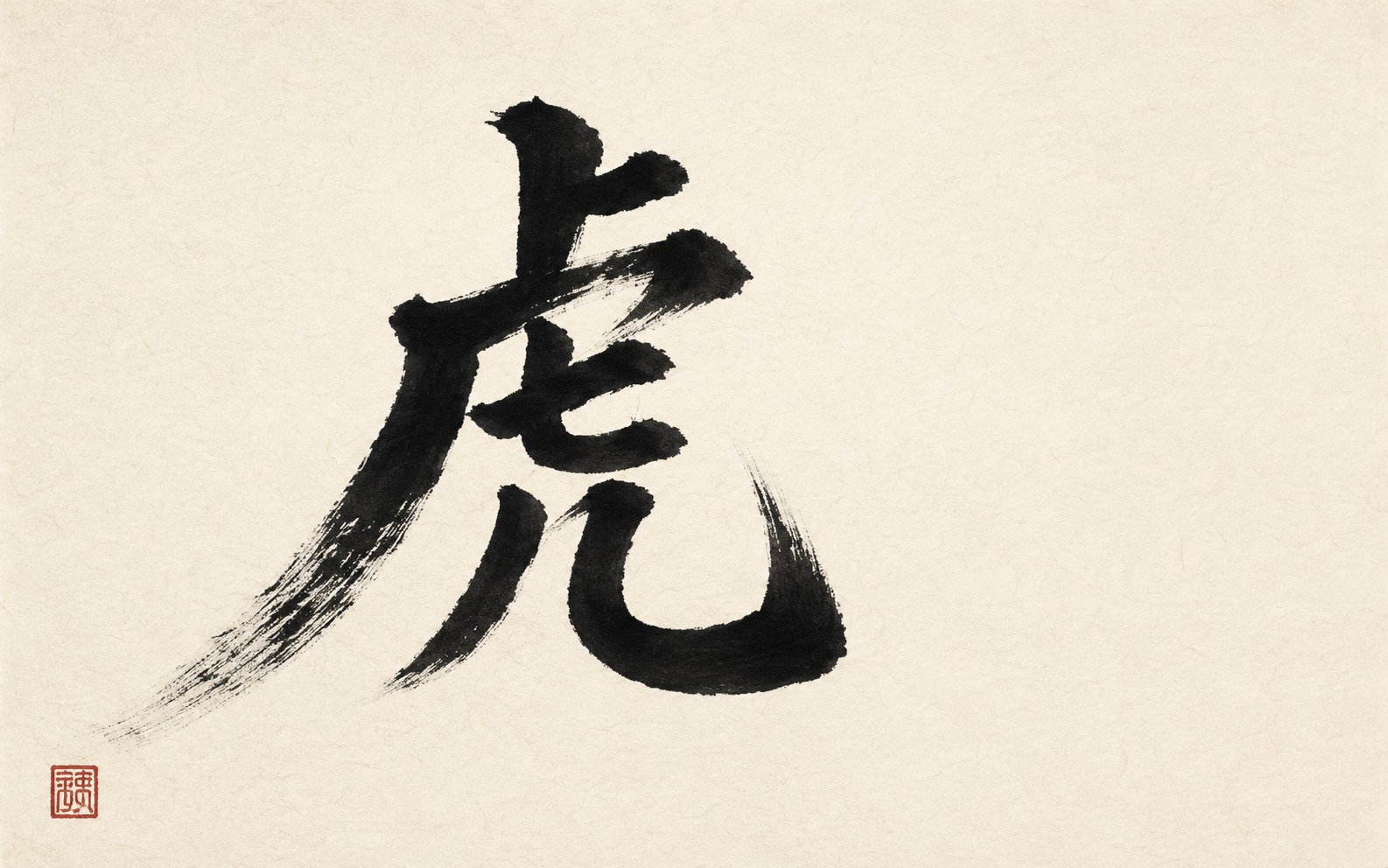
Tiger Kanji (虎): Meaning, the Dragon-Tiger Pair, and How to Write It
By K. YamaUpdated:虎 (tora) means tiger: courage, protection, and the dragon's eternal partner in art and tattoo. Meaning, the 龍虎 pairing, and how to write it.
Continue reading → -
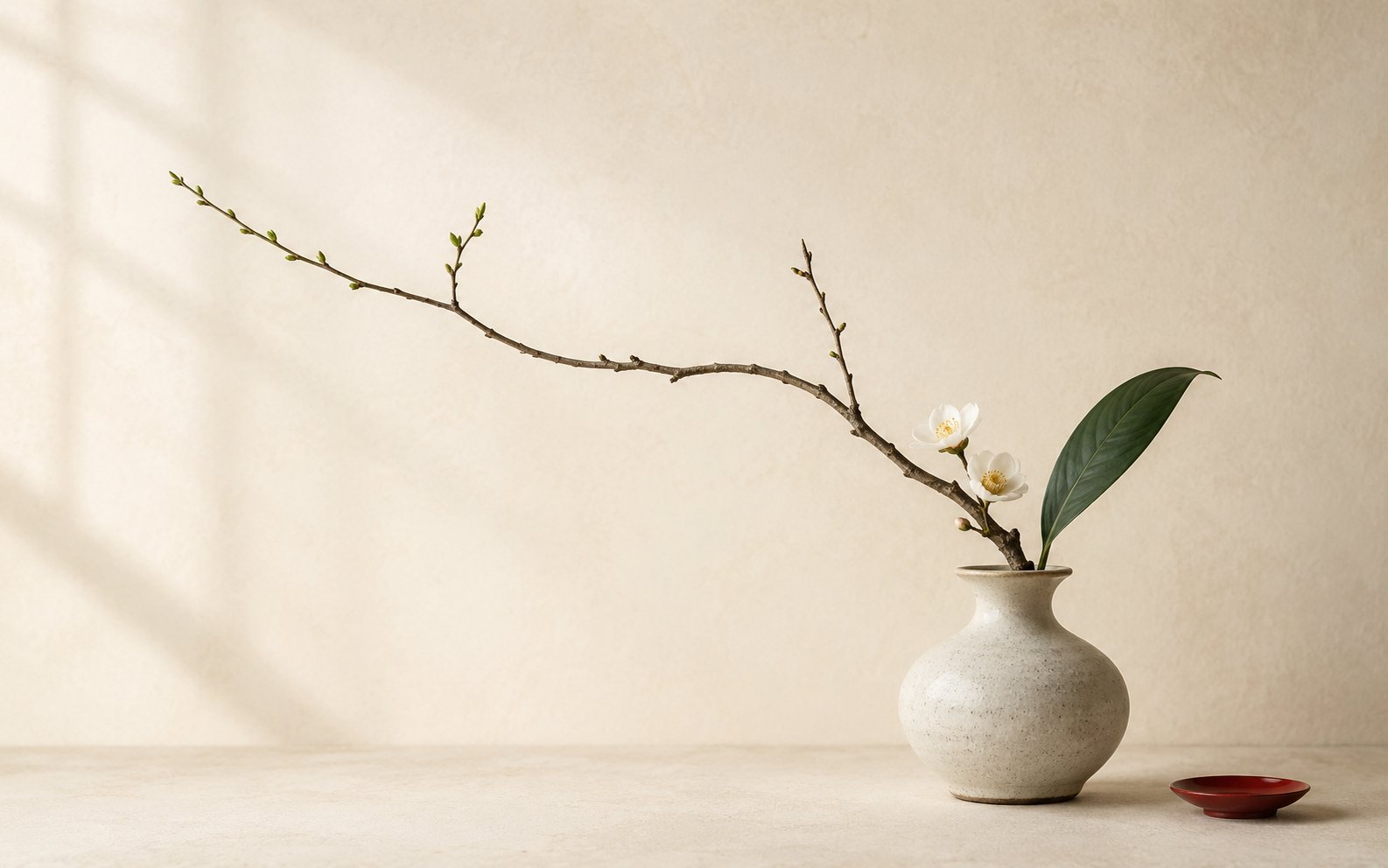
Ikebana (生け花): The Japanese Art of Flowers and Empty Space
By K. YamaUpdated:Ikebana isn't a fancy bouquet. It's the Japanese 'way of flowers,' built on line, asymmetry, and empty space — and the emptiness is the point.
Continue reading → -
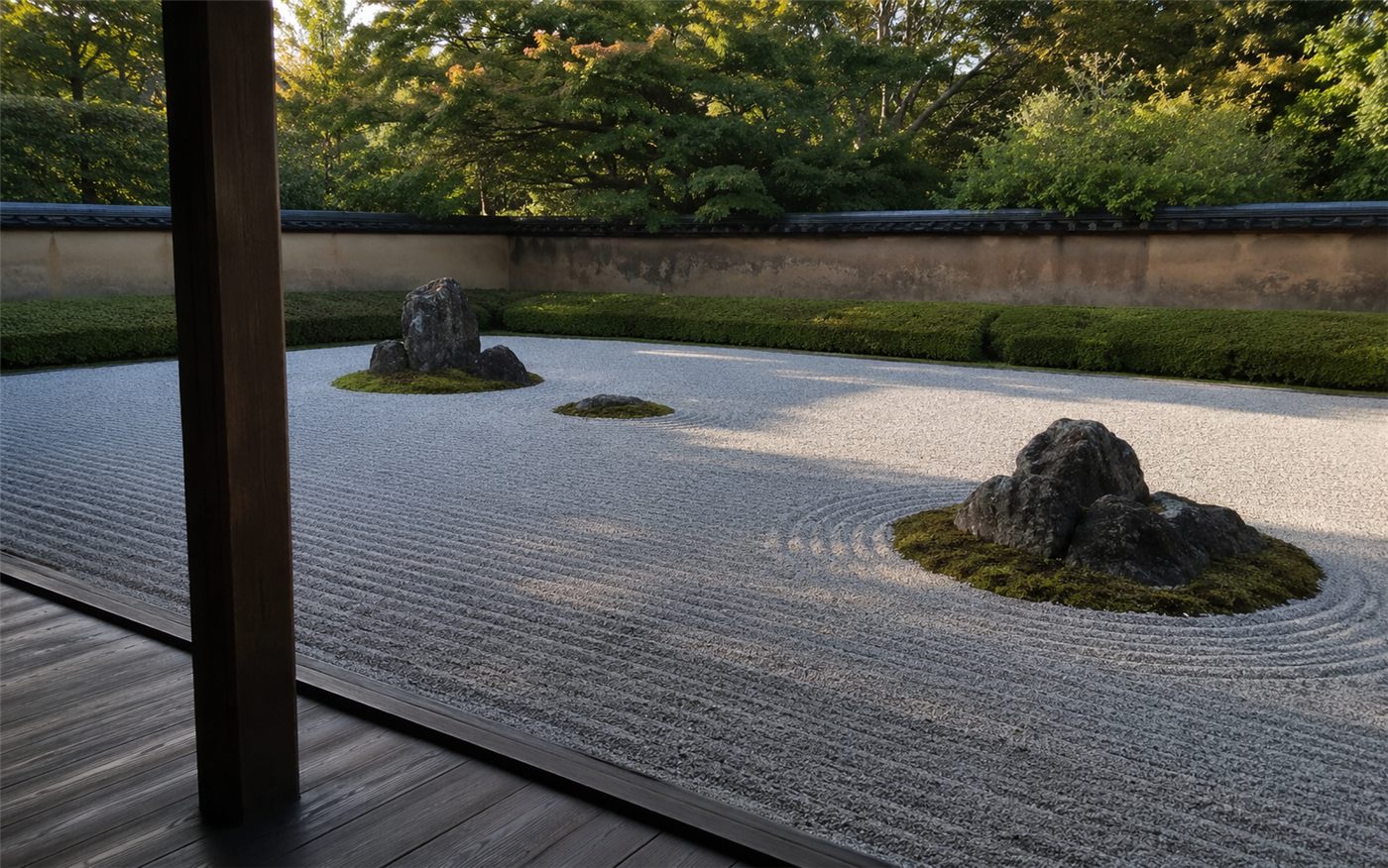
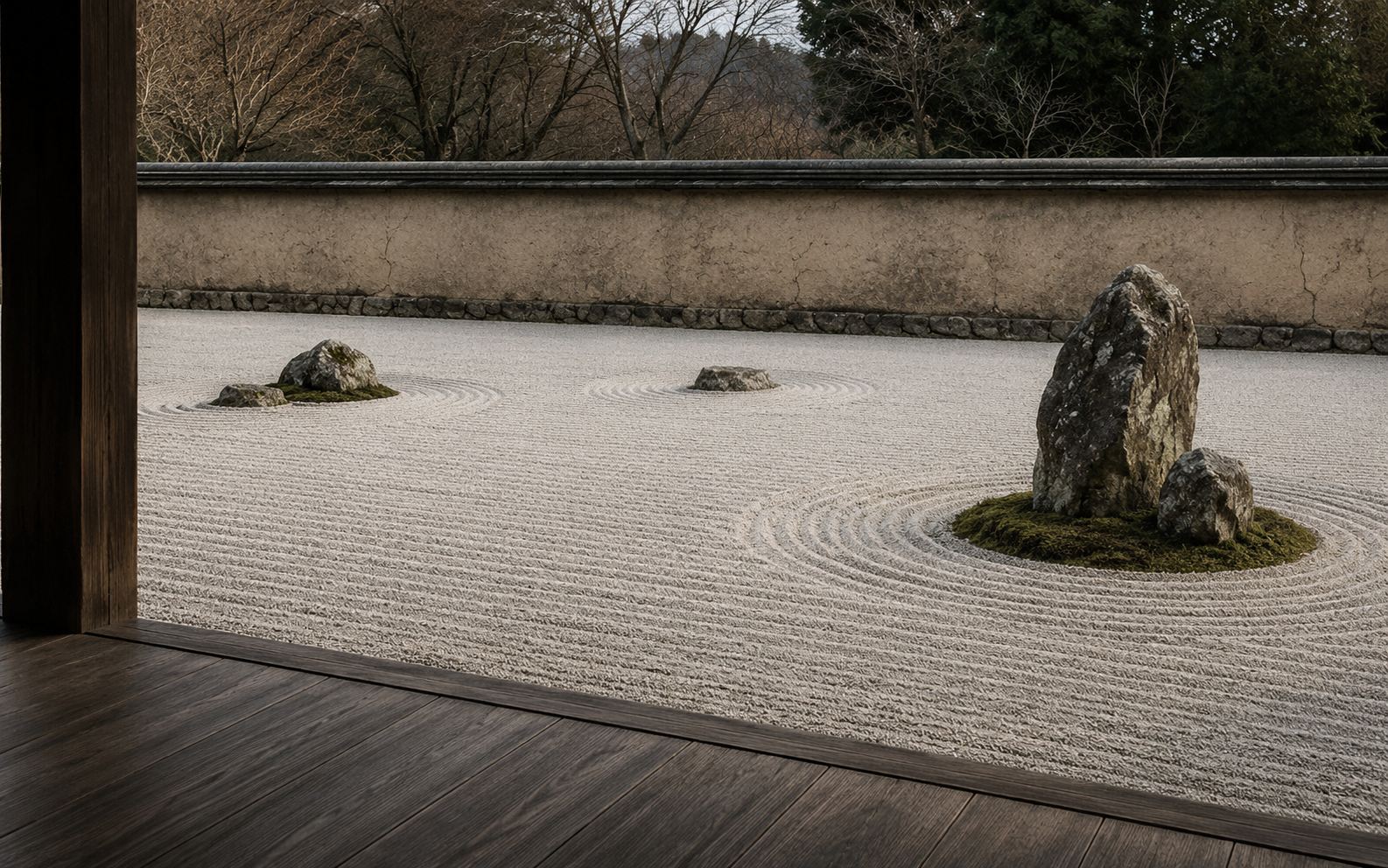
Zen Garden (枯山水): What a Japanese Rock Garden Really Is
By K. YamaUpdated:A Zen garden isn't a desktop stress toy. Karesansui is a dry landscape of raked gravel and stone, built for contemplation — water with no water in it.
Continue reading → -
Shinrin-yoku (森林浴): What Japanese Forest Bathing Really Is
By K. YamaUpdated:Shinrin-yoku, 'forest bathing,' isn't ancient Zen — it's a 1982 Japanese idea that turned out to have real science behind it. What it is, and how to do it.
Continue reading → -
Warrior Kanji (武): Meaning, Origin, and How to Write It
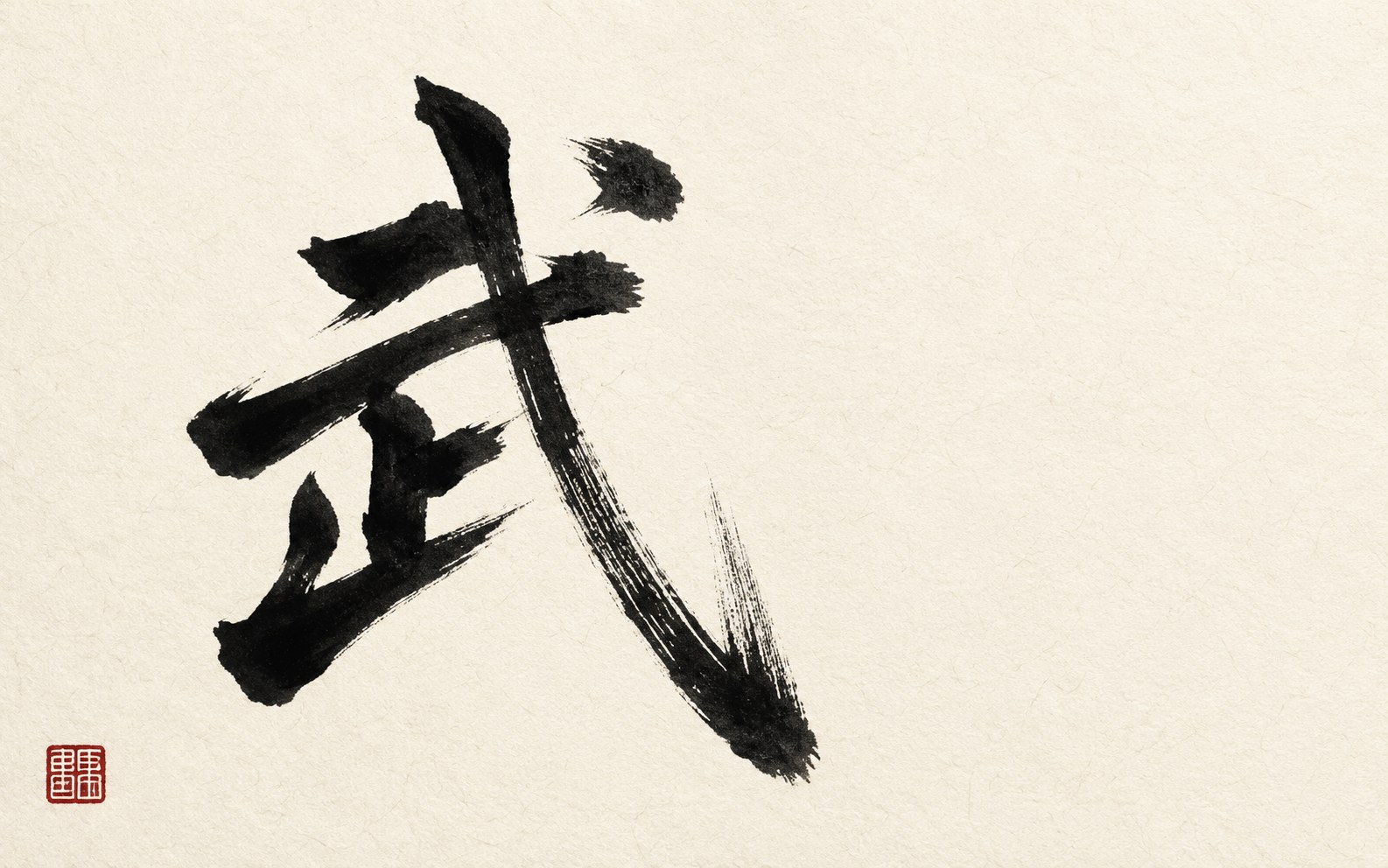
By K. YamaUpdated:武 is the real 'warrior' kanji — the bu of bushidō and budō — and it may mean 'to stop the spear.' Its two readings of power, and how to write it.
Continue reading → -
Komorebi (木漏れ日): The Japanese Word for Sunlight Through Trees
By K. YamaUpdated:Komorebi is the Japanese word for sunlight filtering through leaves — not a deep philosophy, just a precise name for a fleeting thing worth noticing.
Continue reading → -
Omotenashi: Japanese Hospitality That Isn't 'Customer Service'
By K. YamaUpdated:Omotenashi is Japanese hospitality — but it isn't customer service. No tips, no script: anticipatory care with nothing expected back, born in the tea room.
Continue reading → -
Iki (粋): Japan's Edo-Born 'Cool' — and Why It's Not Shibui
By K. YamaUpdated:Iki is Japan's aesthetic of understated cool — flirtatious, proud, and detached all at once. Born in Edo, analyzed by a philosopher. Not the same as shibui.
Continue reading → -
Mottainai: The Japanese Idea That's More Than 'Don't Waste'
By K. YamaUpdated:Mottainai is usually flattened to 'don't waste.' It really means the intrinsic worth of a thing is being lost — closer to grief than to thrift. Explained.
Continue reading →


-
Shibui (渋い): Understated Beauty, and Why It's Not Wabi-Sabi
By K. YamaUpdated:Shibui is Japan's understated, refined beauty — related to wabi-sabi but not the same thing. The difference, and why the word began as a sour taste.
Continue reading → -
Yūgen (幽玄): The Japanese Aesthetic of Suggested Depth
By K. YamaUpdated:Yūgen isn't a vague 'beauty of the universe.' It's Japan's precise aesthetic of suggested depth — born in court poetry, perfected on the Noh stage.
Continue reading → -
Best Japanese Calligraphy Wall Art: How to Buy It Right (2026)
By K. YamaUpdated:Most 'Japanese calligraphy' wall art is a computer font, sometimes with the wrong kanji. A calligrapher's guide to buying real, meaningful pieces for your wall.
Continue reading → -
Mono no Aware: The Japanese 'Pathos of Things,' Explained
By K. YamaUpdated:Mono no aware is Japan's 'pathos of things': the bittersweet awareness of impermanence, where sadness and beauty arrive together. More than melancholy.
Continue reading → -
Water Kanji (水): Meaning, the Five Elements, and How to Write It
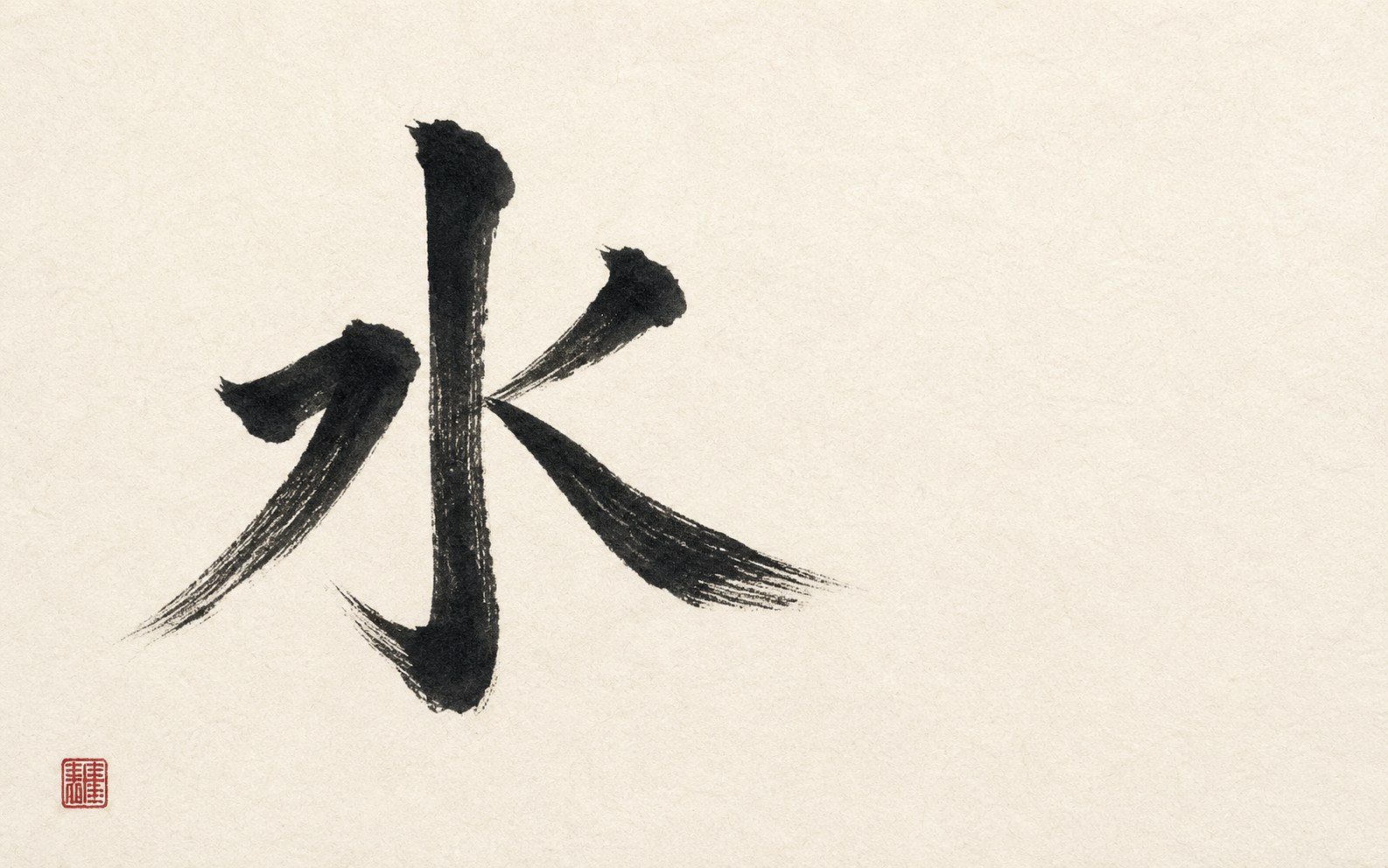
By K. YamaUpdated:The kanji 水 (mizu) means water: a four-stroke picture of a flowing stream, and one half of every drop of sumi ink. Meaning, philosophy, and brushwork.
Continue reading → -
A Daily Calligraphy Practice Routine That Actually Sticks
By K. YamaUpdated:Twenty minutes a day beats three hours on Sunday. A Japanese calligrapher's honest daily shodō practice routine — the setup, the warm-up, and what to actually do.
Continue reading → -
Ma (間): The Japanese Art of Negative Space and the Pause
By K. YamaUpdated:Ma (間) is Japan's meaningful emptiness in space AND time — not 'negative space' but the charged interval holding music, rooms, and the page together.
Continue reading → -
Mu Kanji (無): Nothingness, the Zen Kōan, and No-Mind
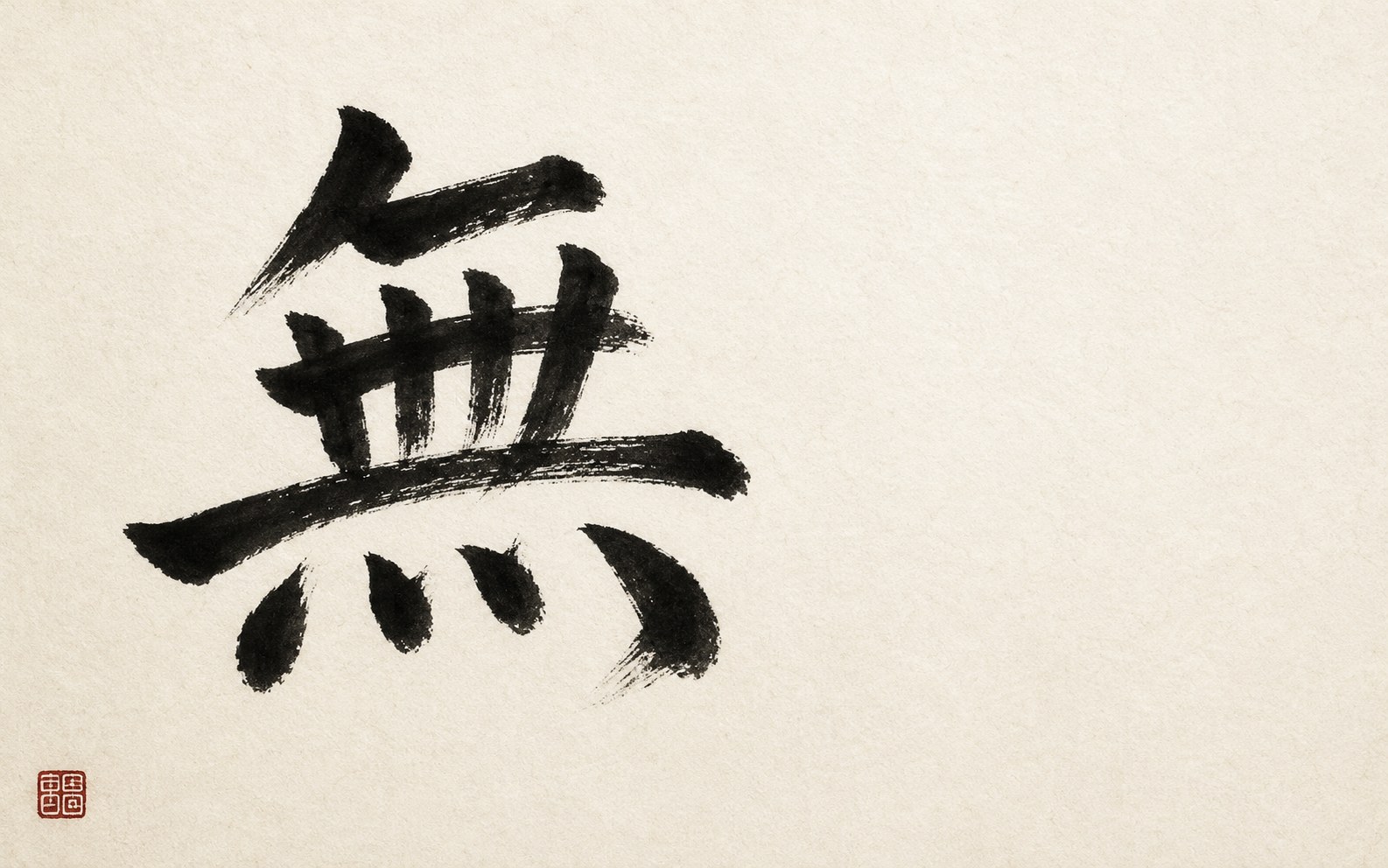
By K. YamaUpdated:無 (mu) means nothing — yet it began as a dancer, and became Zen's most famous kōan. The strangest origin story in the kanji, and how to write it.
Continue reading → -
Japanese Aesthetics Glossary: 14 Terms Every Japan Lover Should Know
By K. YamaUpdated:A clear, accurate glossary of 14 Japanese aesthetic terms — wabi-sabi, ikigai, ma, yūgen, mono no aware, kintsugi, and more — with the myths corrected.
Continue reading → -
Beauty Kanji (美): The 'Big Sheep' Character, Explained
By K. YamaUpdated:The kanji 美 (beauty) is built from 'big' and 'sheep' — and grew into the root of art, aesthetics, even 'delicious.' Its history and how to write it.
Continue reading → -
Best Gifts for Japan Lovers: A Calligrapher's Honest Picks (2026)
By K. YamaUpdated:What to give someone who loves Japan — and what to skip. Honest, useful picks across calligraphy, tea, and craft, plus the tourist junk to avoid.
Continue reading → -
Kintsugi: The Japanese Art of Golden Repair (Not Gold Glue)
By K. YamaUpdated:Kintsugi is the Japanese art of repairing broken pottery with gold — slow lacquer craft, not gold glue. How it's really done, and what the seams mean.
Continue reading → -
Emptiness Kanji (空): Sky, Void, and the Heart Sutra
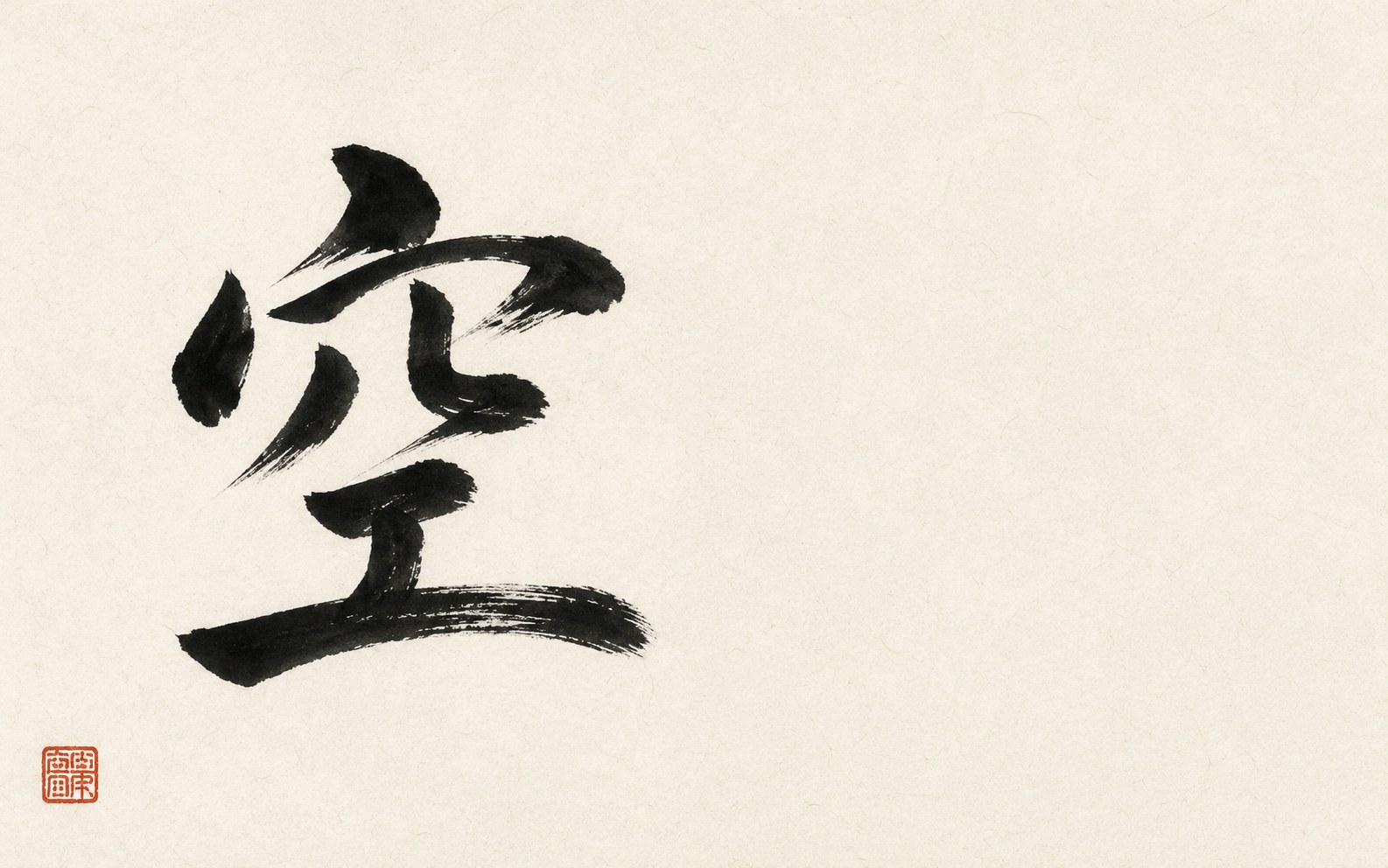
By K. YamaUpdated:空 means both 'sky' and 'emptiness,' and in Zen it carries the Heart Sutra's śūnyatā. How one character holds the heavens and the void, and how to write it.
Continue reading → -
Ikigai: What the Japanese Word Really Means (Not the Diagram)
By K. YamaIkigai is your reason to get up in the morning — but the famous four-circle diagram isn't Japanese. A look at what ikigai actually means in everyday Japan.
Continue reading → -
Dragon Kanji (龍): Meaning, the Two Forms, and How to Write It
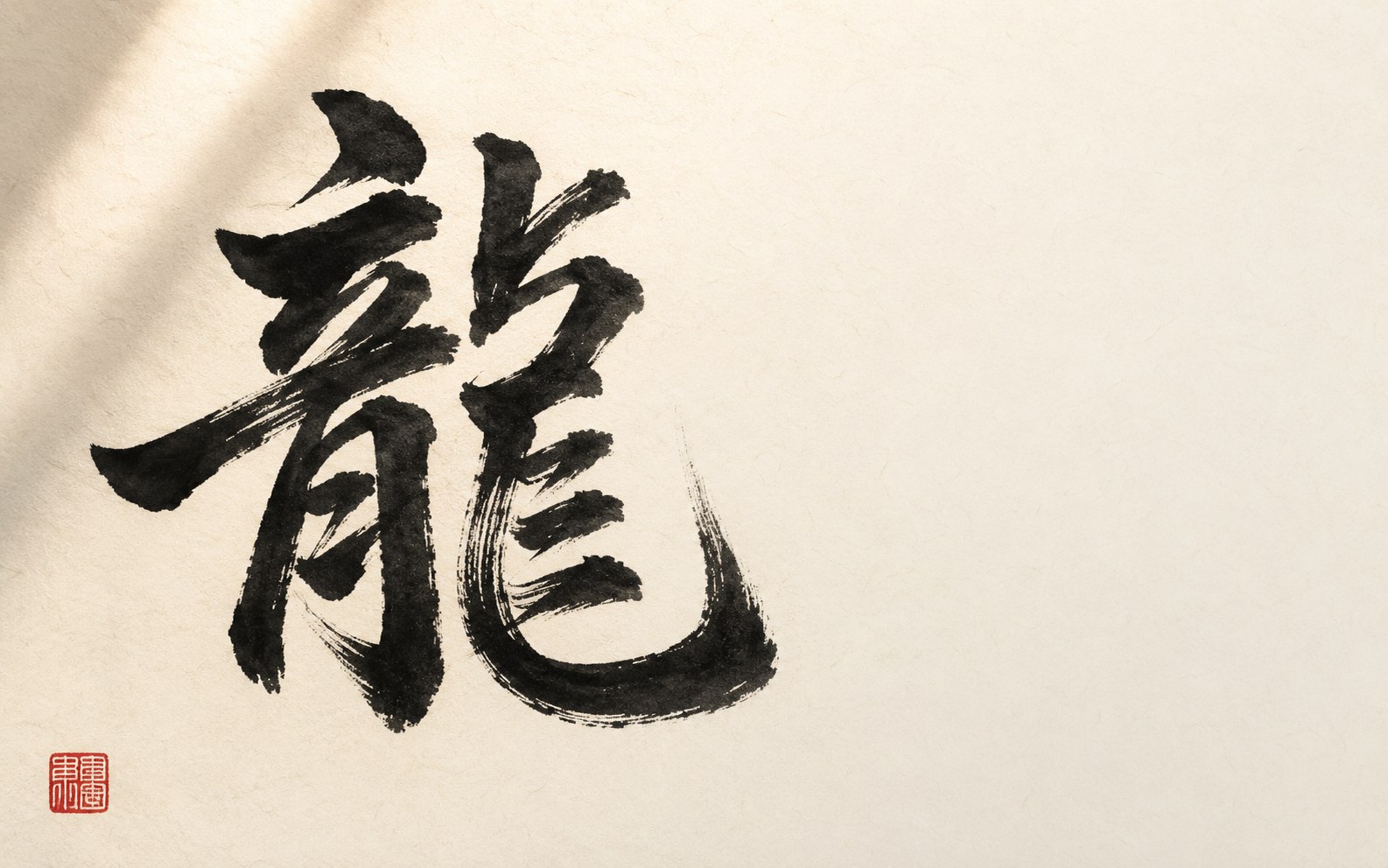
By K. YamaUpdated:The kanji 龍 means dragon — a water god, not a fire-beast. What it stands for in Japan, the two written forms 龍 and 竜, and how to write all 16 strokes.
Continue reading → -
Best Online Japanese Calligraphy Courses (2026)
By K. YamaUpdated:Want to learn shodō online but don't know where to start? A Japanese calligrapher reviews the best online Japanese calligraphy courses for beginners in 2026.
Continue reading → -
Best Japanese Calligraphy Gift Set for Japan Lovers (2026)
By K. YamaUpdated:Buying a calligraphy set as a gift is different from buying one to practice. A calligrapher's guide to gift sets that are beautiful AND actually work.
Continue reading → -
Wabi-Sabi: The Japanese Art of Imperfect Beauty
By K. YamaUpdated:Wabi-sabi is Japan's aesthetic of imperfect, impermanent beauty — and the West mostly gets it wrong. What it really means, from tea room to brush.
Continue reading → -
What Is Hiragana? The 46-Character Heart of Written Japanese
By K. YamaUpdated:Hiragana is the flowing 46-character script at the heart of written Japanese, born from cursive kanji. Where it came from, and why it's beautiful to write.
Continue reading → -
Moon Kanji (月): Meaning, Origin & How to Write It
By K. YamaUpdated:The kanji 月 means both moon and month, and the link between them is older than calendars. Meaning, origin, and how to write its hooked strokes.
Continue reading → -
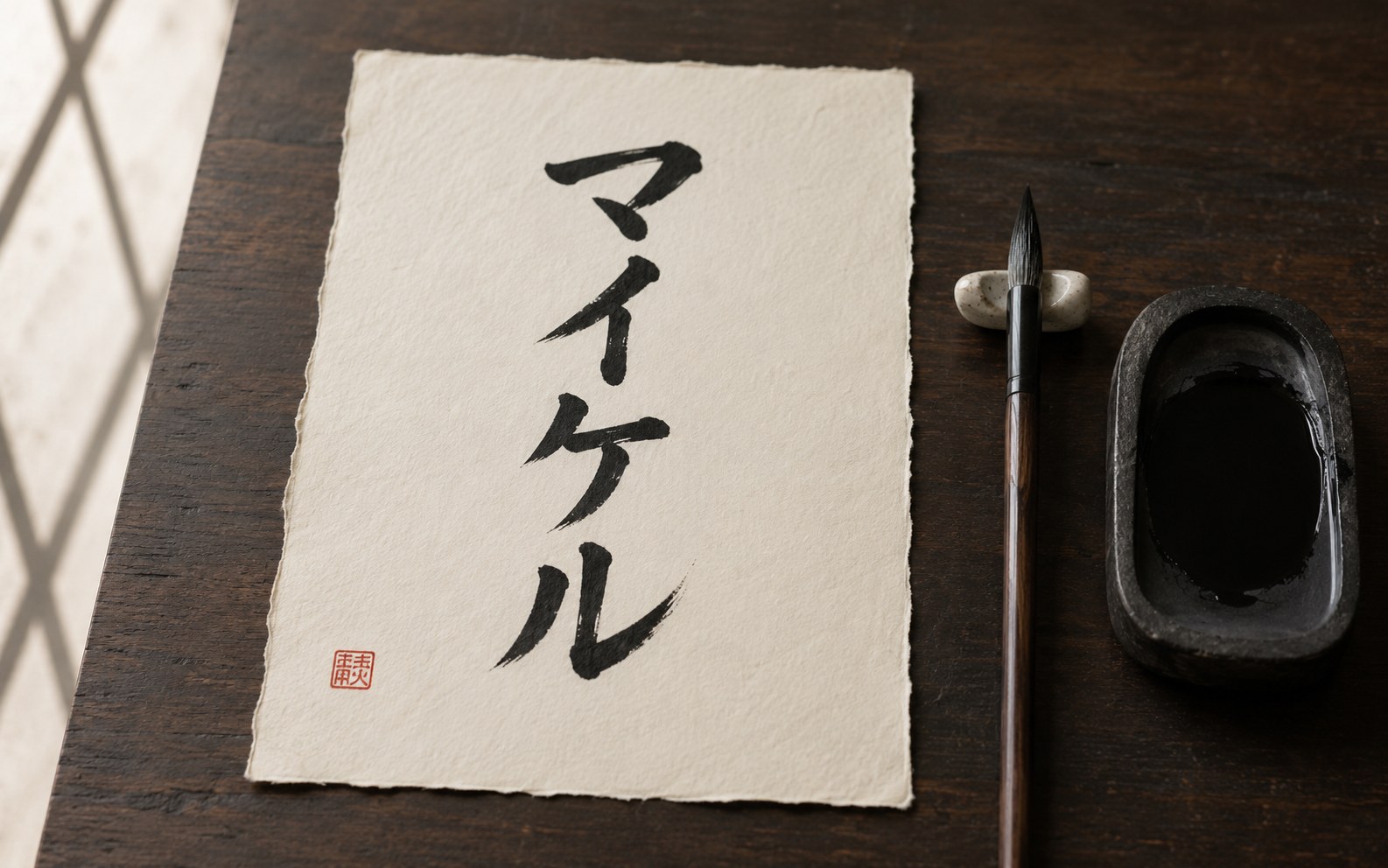
How to Write Your Name in Japanese (Katakana Guide)
By K. YamaUpdated:Your name in Japanese is written in katakana by sound, not kanji by meaning. How the conversion really works, and the mistakes that trip everyone up.
Continue reading → -
Best Inkstone (Suzuri) for Beginners (2026)
By K. YamaUpdated:Most beginners do not need an inkstone yet. Here is when you actually do, what makes a good suzuri, and which one to buy when that day comes.
Continue reading → -
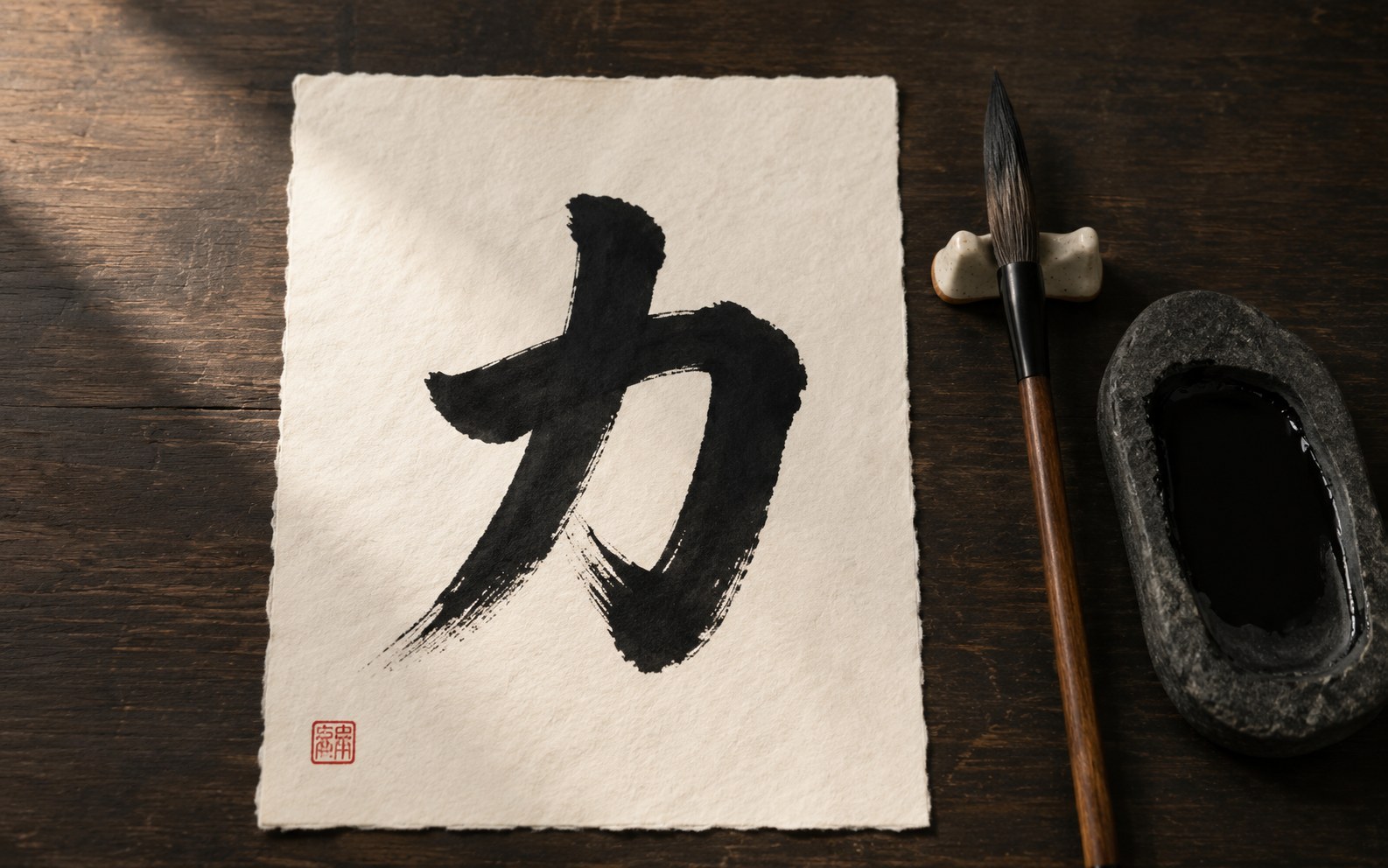
Strength Kanji (力): The 2-Stroke Power Character, Explained
By K. YamaUpdated:力 (chikara) means strength, and at two strokes it hides nothing. Why the simplest characters are the hardest to write — and how to get this one right.
Continue reading → -
The Complete Guide to Kanji Tattoos: Get One Right (2026)
By K. YamaUpdated:Most kanji tattoos are subtly wrong in ways their owners never learn. A Japanese calligrapher's complete guide to choosing, writing, and getting a kanji tattoo right.
Continue reading → -
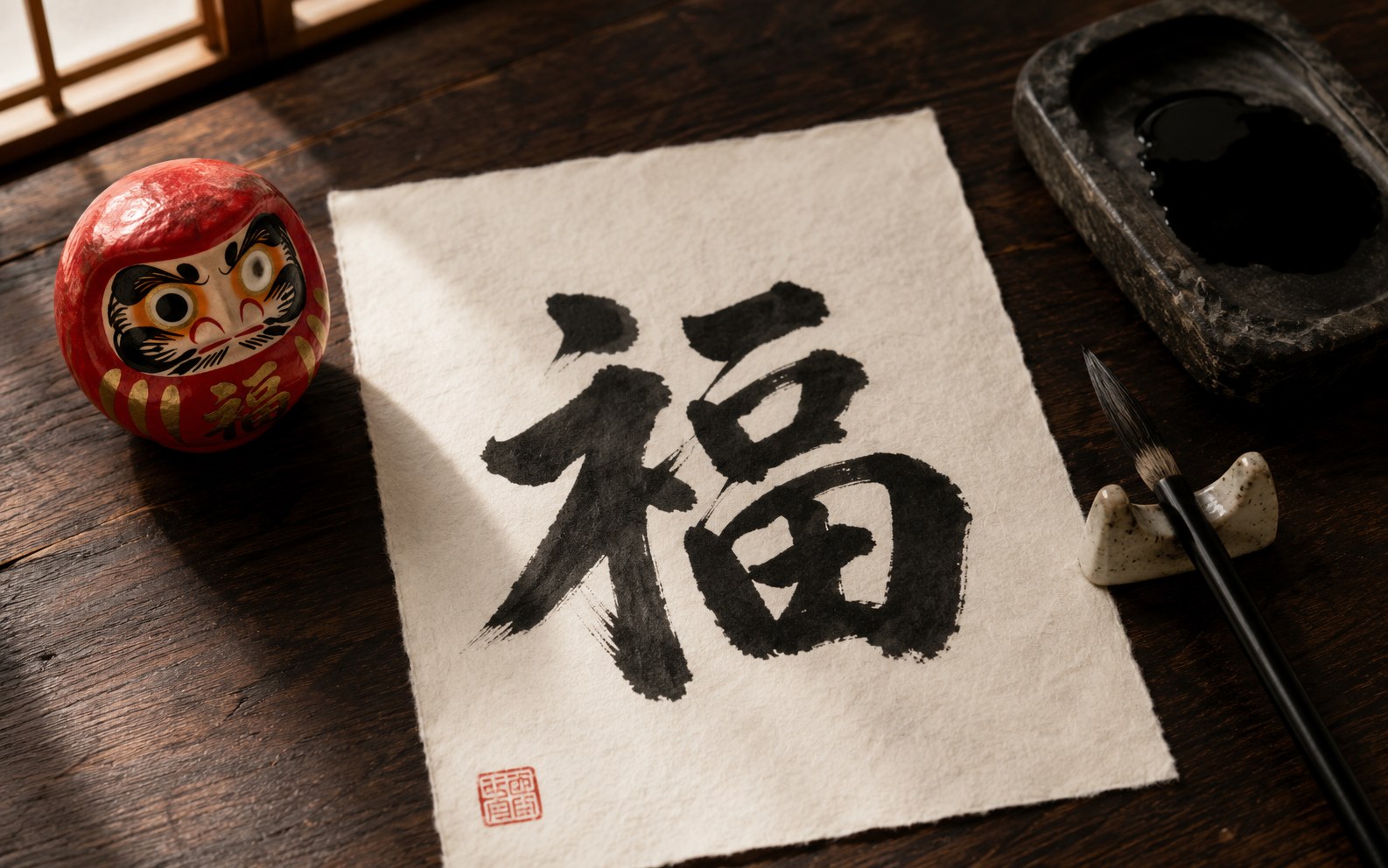
Fortune Kanji (福): Meaning, Luck & How to Write It
By K. YamaUpdated:The kanji 福 (fuku) is the luck character Japan hangs everywhere at New Year. Where it comes from, what it promises, and how to write it well.
Continue reading → -
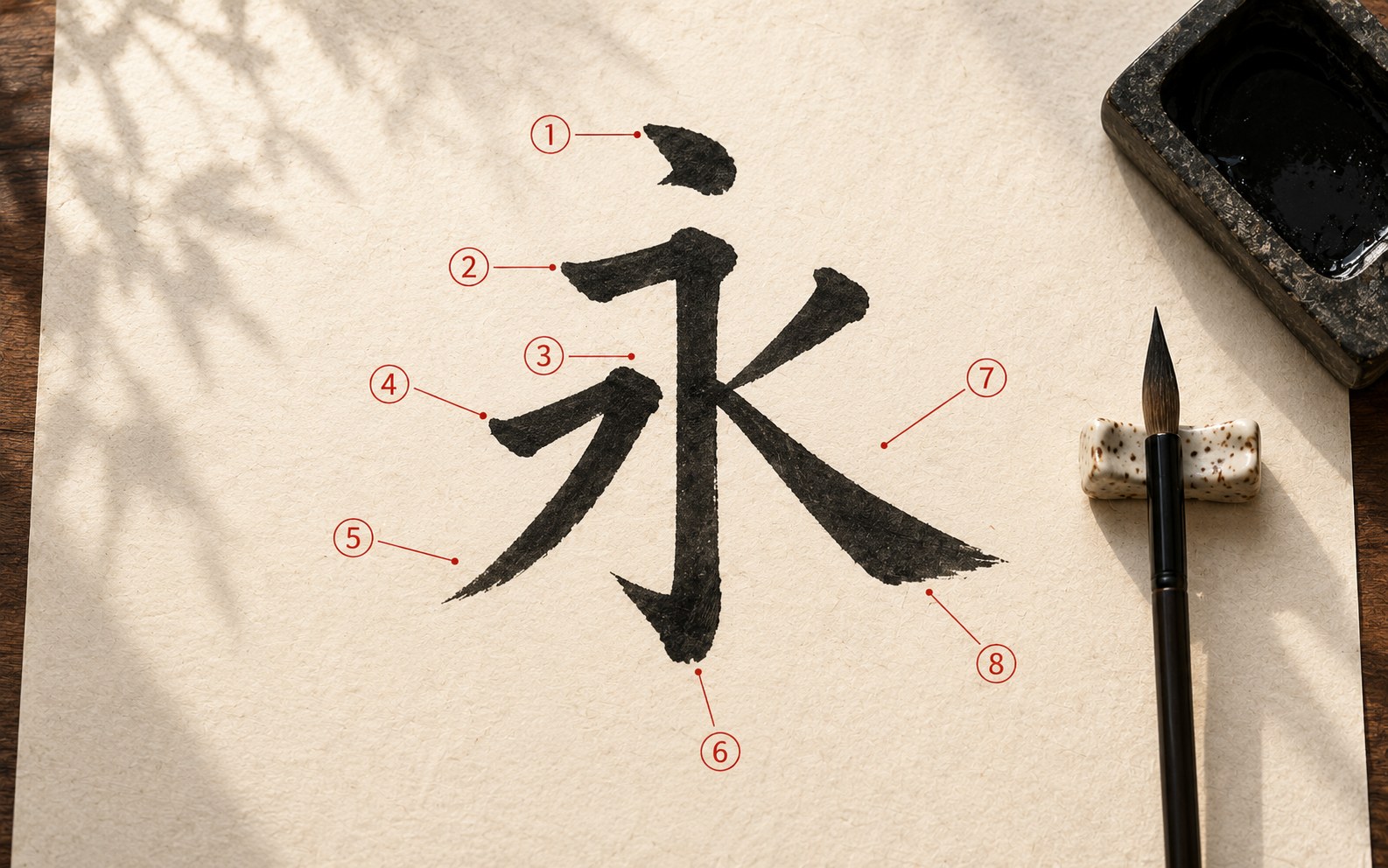
The Eight Principles of Yong (永字八法), Explained
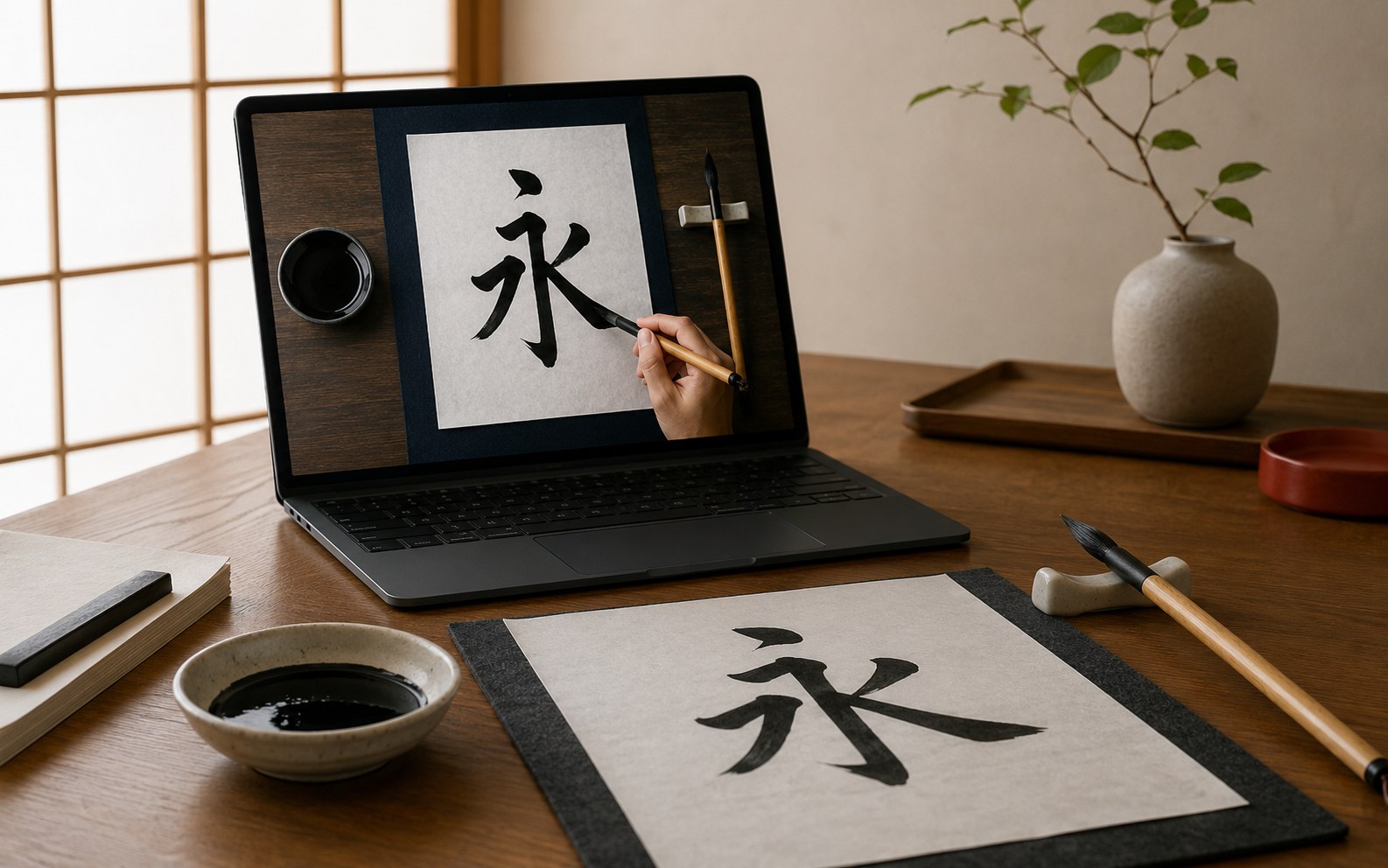
By K. YamaThe kanji 永 (eternity) contains all eight basic brushstrokes of Japanese calligraphy. A practitioner explains the Eight Principles of Yong and how to use them.
Continue reading → -
Best Japanese Calligraphy Brush for Beginners (2026)
By K. YamaUpdated:Most beginner calligraphy brushes are sold by people who don't write with one. A Japanese calligrapher compares the three brushes worth your first purchase.
Continue reading → -
Best Japanese Calligraphy Book for Beginners (2026)
By K. YamaUpdated:Most calligraphy books for beginners pad pages with theory you can't use. A Japanese calligrapher's picks for the three books actually worth buying first.
Continue reading → -
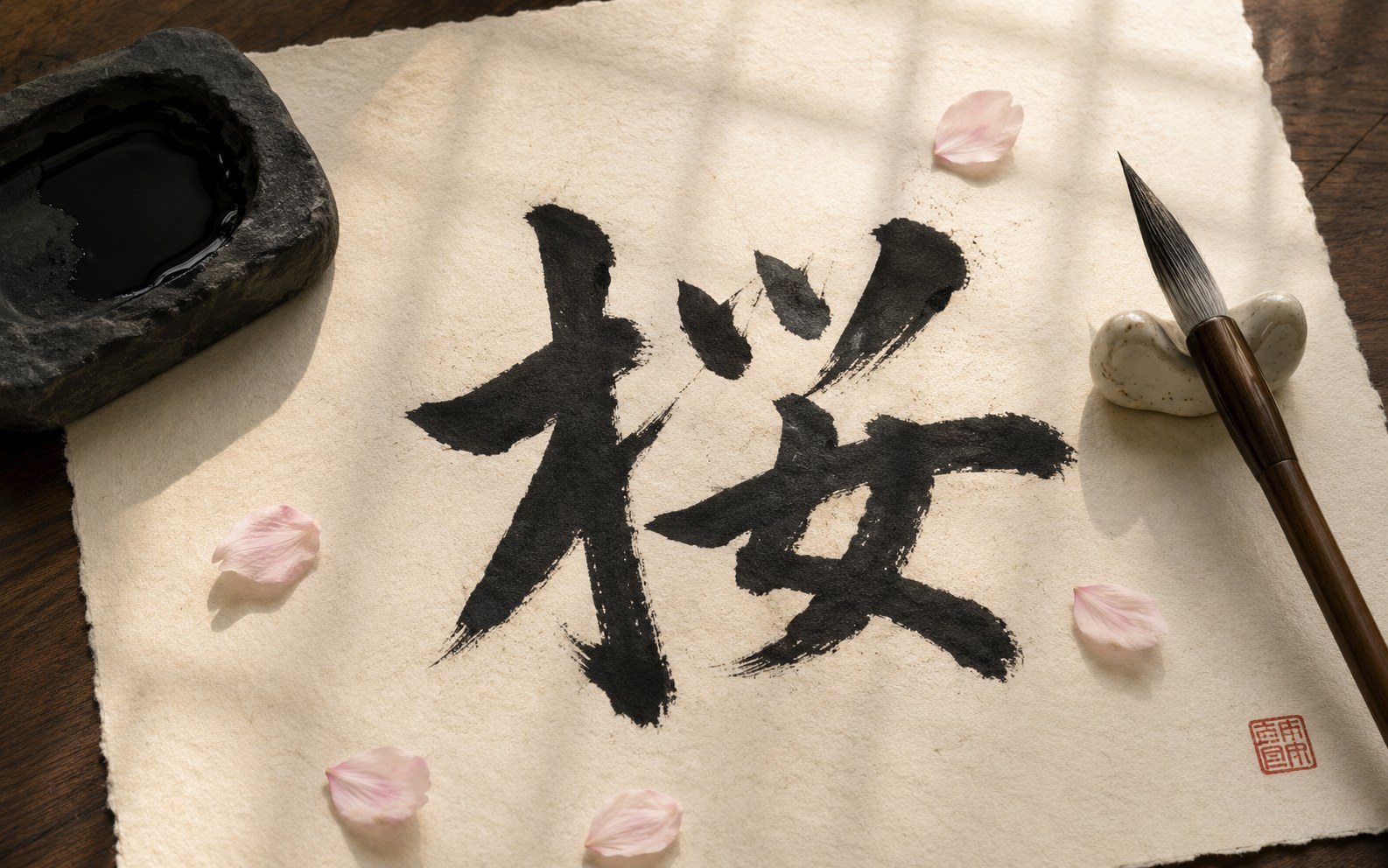
Sakura Kanji (桜): Meaning, Origin & How to Write It
By K. YamaUpdated:Sakura kanji (桜) is one of the most loved characters in Japanese. A Japanese calligrapher on what it really means, its etymology, and how to write the 10 strokes.
Continue reading → -
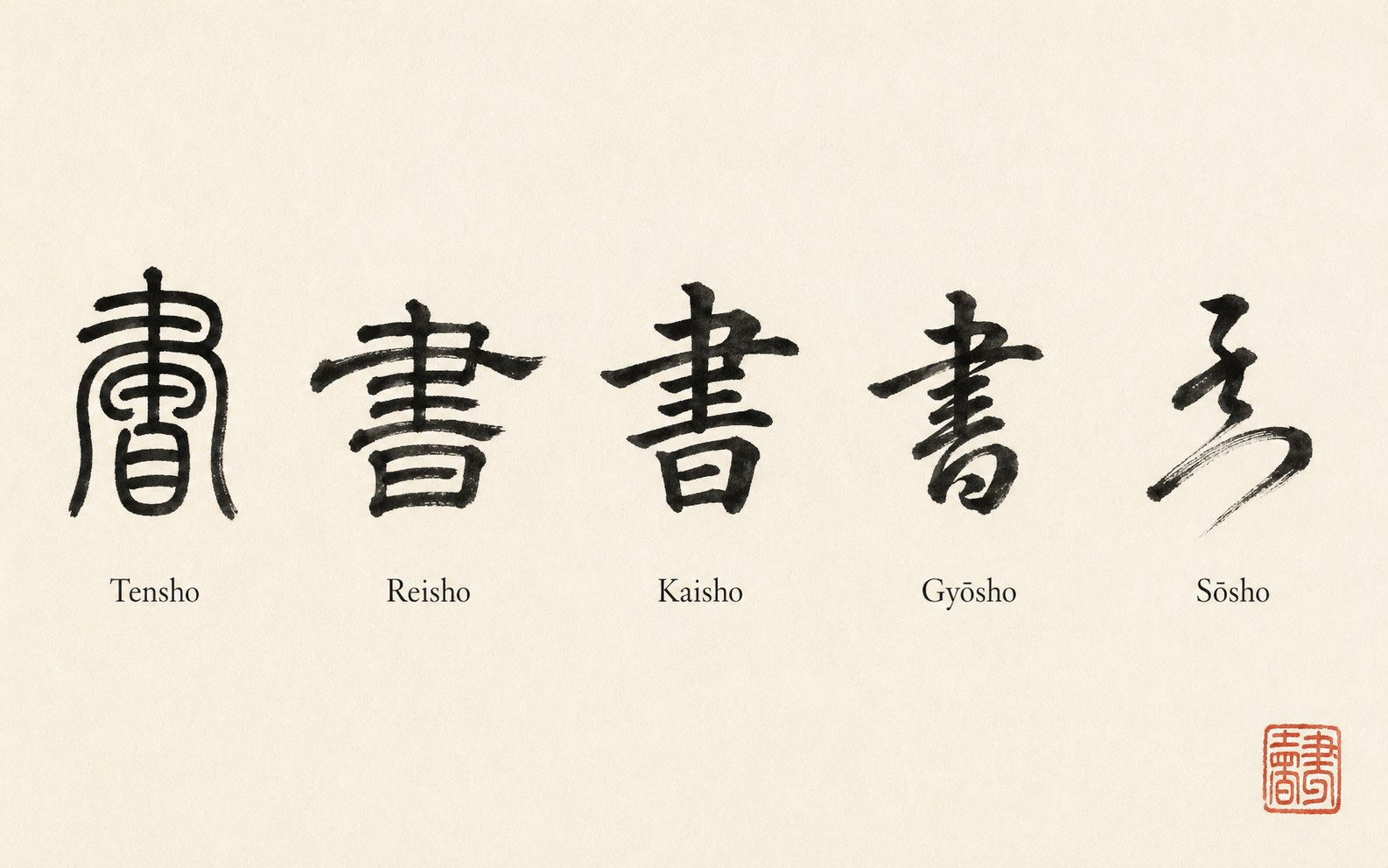
The Five Styles of Japanese Calligraphy, Explained
By K. YamaKaisho, gyōsho, sōsho, reisho, tensho — the five classical styles of Japanese calligraphy explained, compared, and ranked for beginners by a practitioner.
Continue reading → -
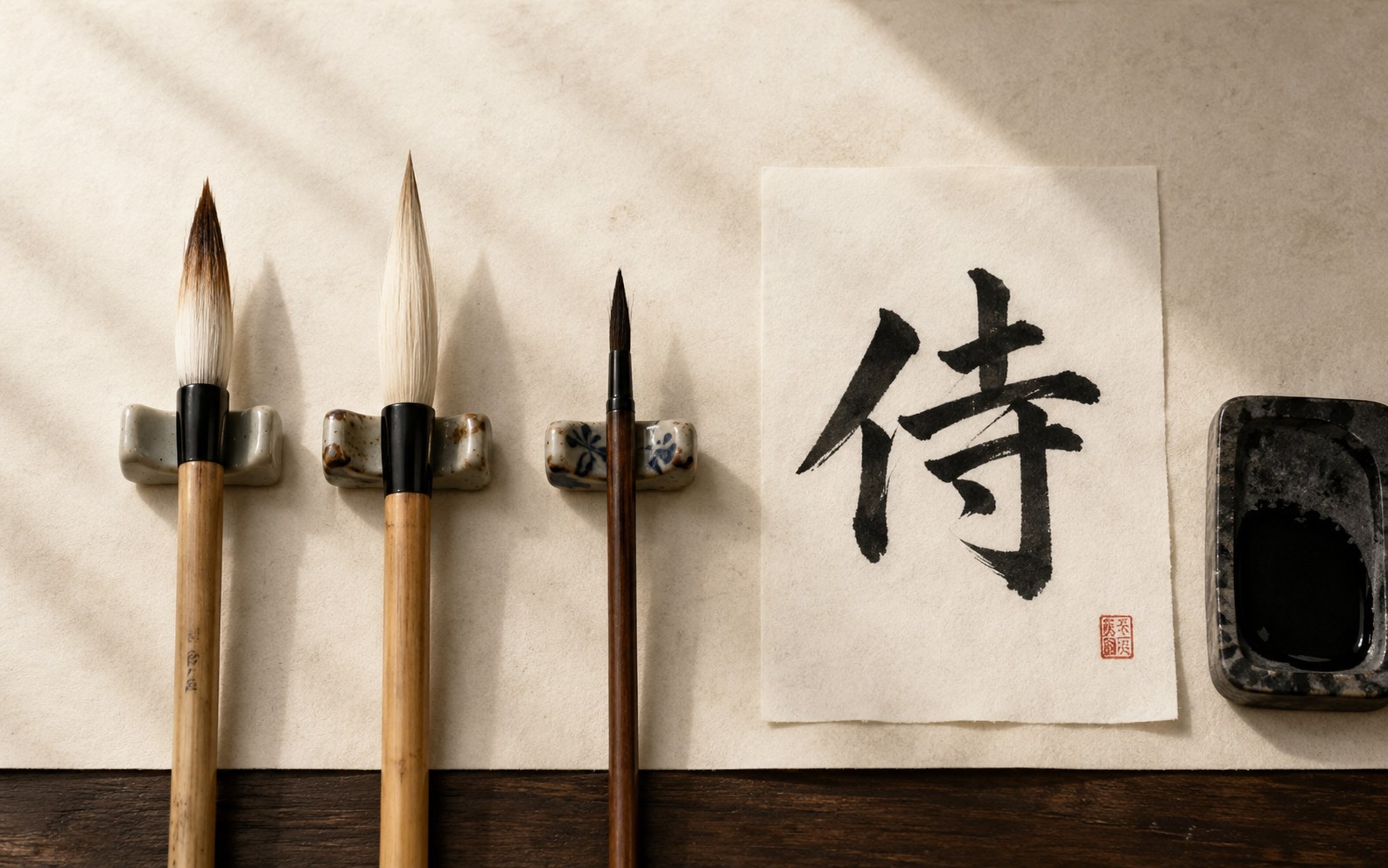
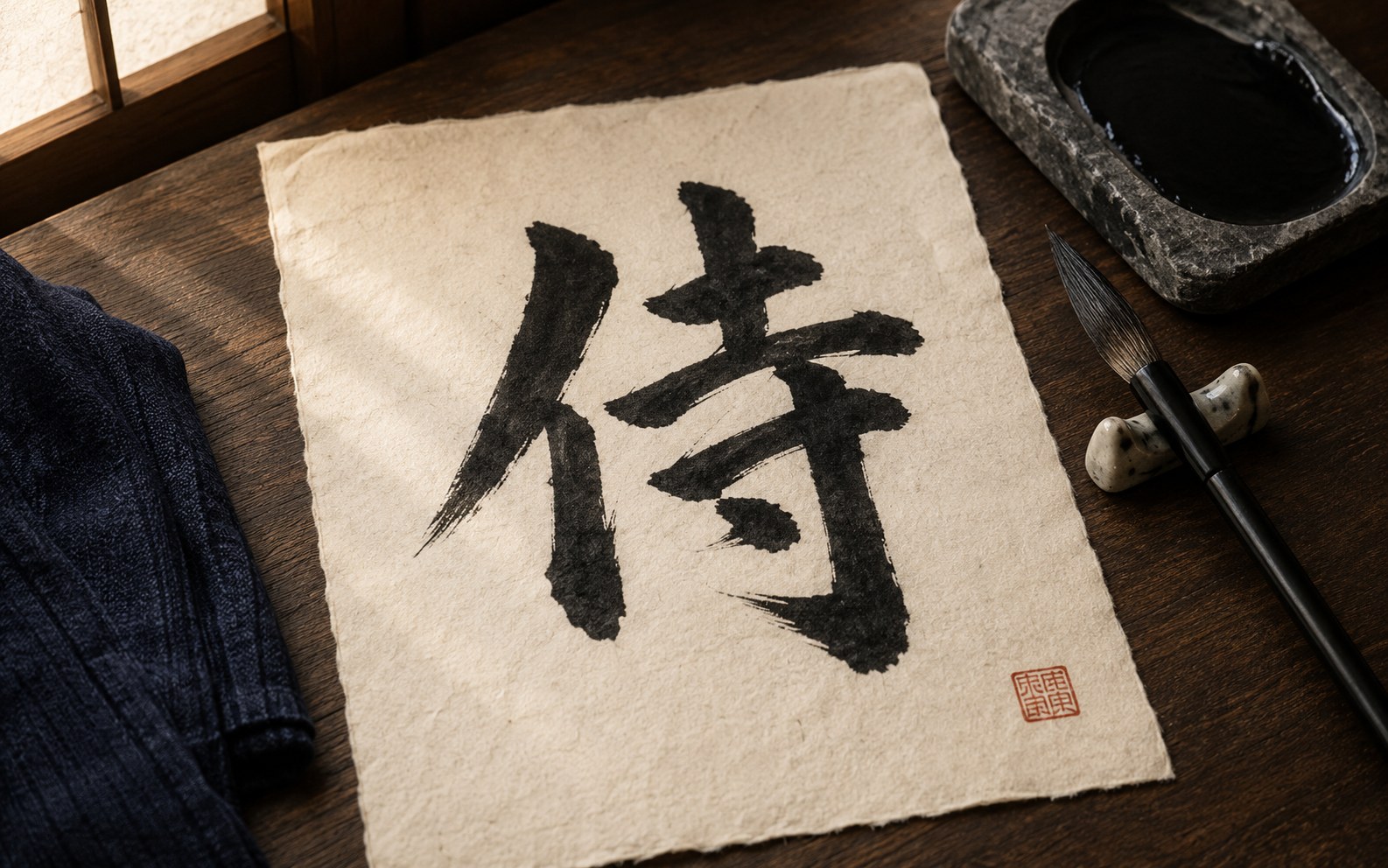
Samurai Kanji (侍): What It Really Means & How to Write
By K. YamaUpdated:The samurai kanji (侍) does not mean warrior — it means 'one who serves.' What the character actually says, and the right kanji if warrior is what you want.
Continue reading → -
A Brief History of Japanese Calligraphy, in 1,500 Years
By K. YamaJapanese calligraphy has 1,500 years of continuous tradition. A Japanese calligrapher's guide to the people, periods, and turns that made shodō what it is today.
Continue reading → -
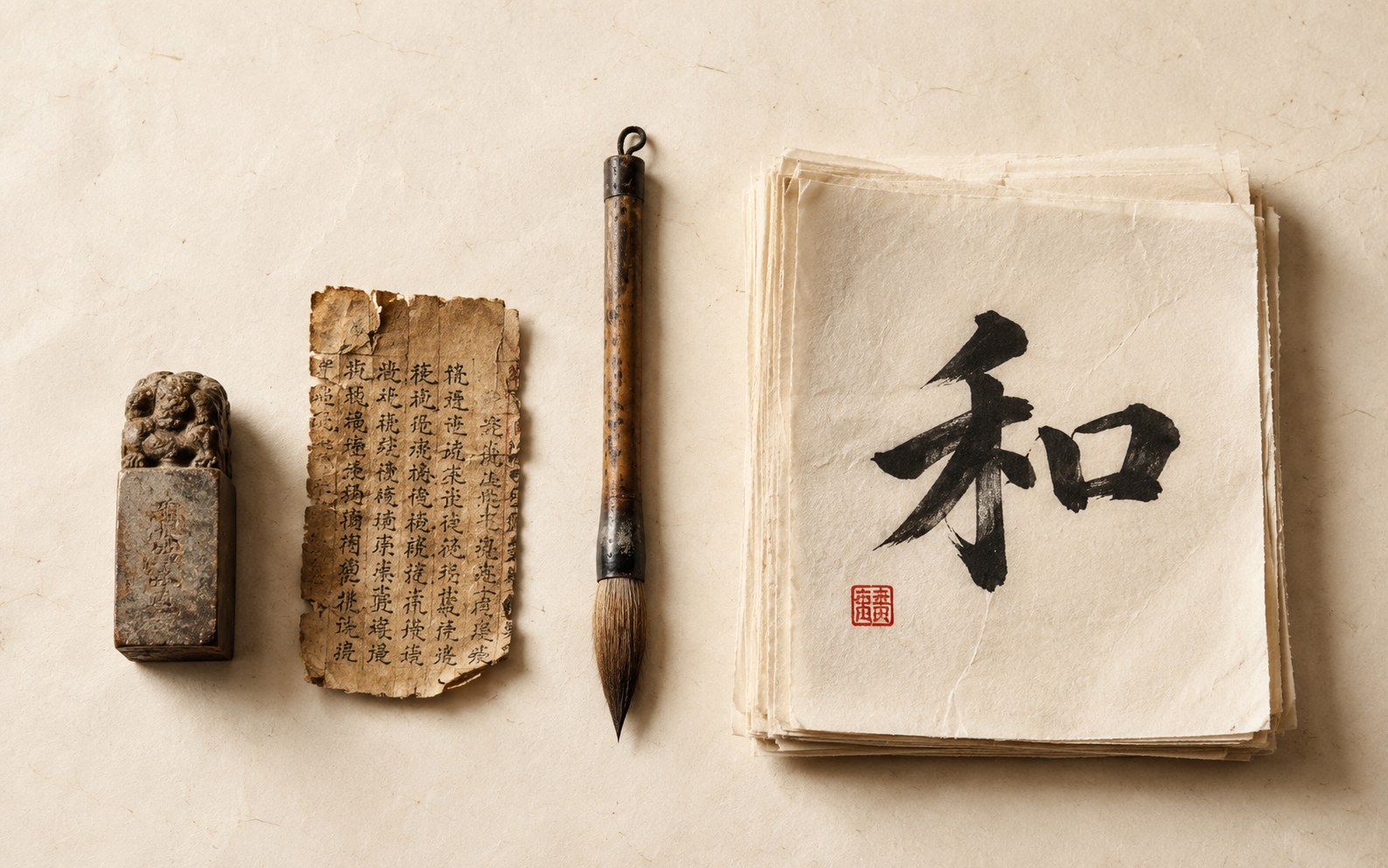
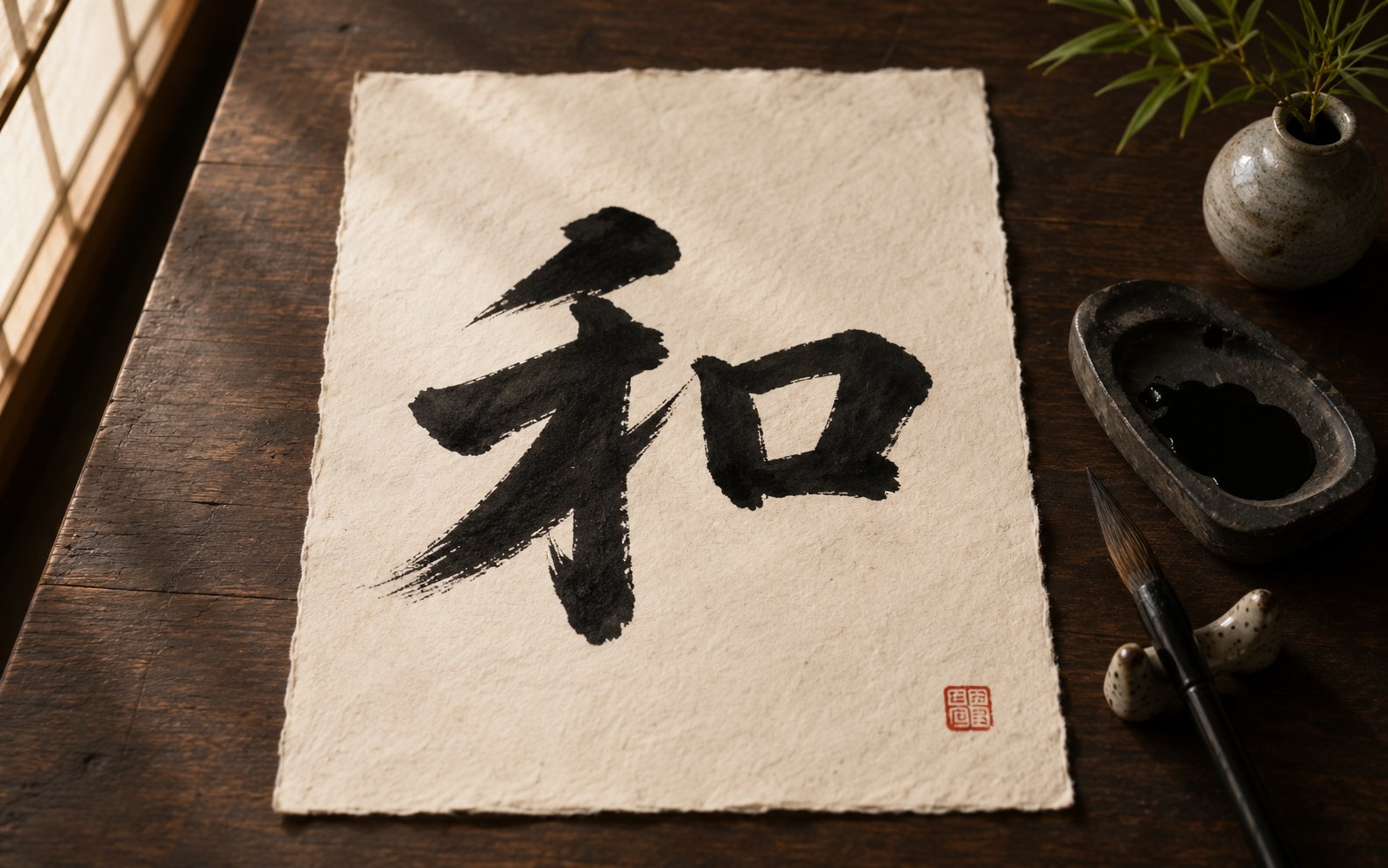
Harmony Kanji (和): Meaning & Why It Defines Japan
By K. YamaUpdated:The kanji 和 means harmony — and doubles as the name for Japan itself. Why one character carries both, and how to write it with the balance it preaches.
Continue reading → -
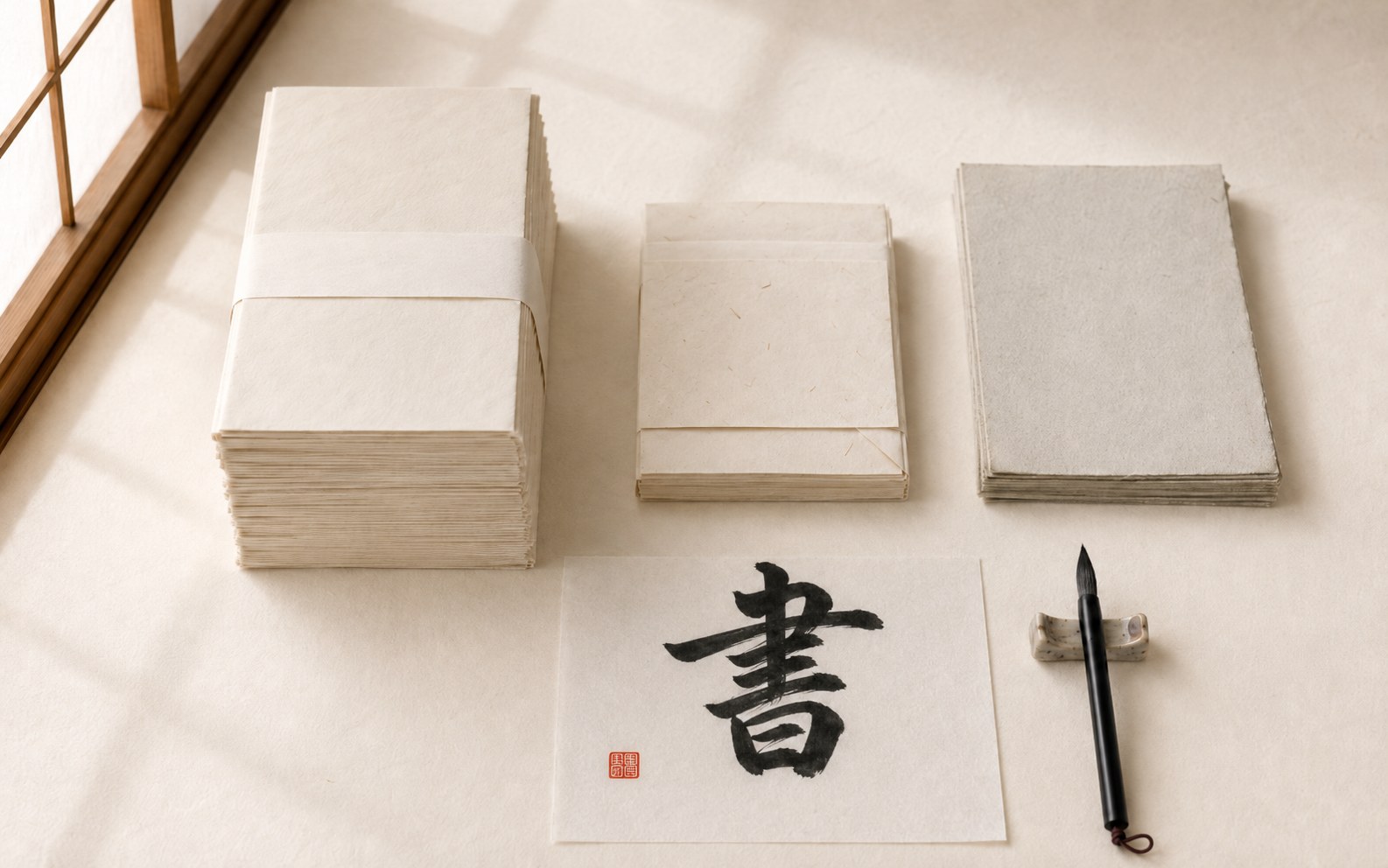
Best Calligraphy Paper for Practice (2026): 3 Picks
By K. YamaUpdated:Practice paper is the cheapest thing in shodō and the easiest to buy wrong. A Japanese calligrapher compares what to buy for your first months at the brush.
Continue reading → -
What Is Hanshi Paper? 5 Things Beginners Should Know
By K. YamaUpdated:Hanshi is the standard practice paper for Japanese calligraphy. What it is, which side to write on, how to store it, and what to buy first.
Continue reading → -
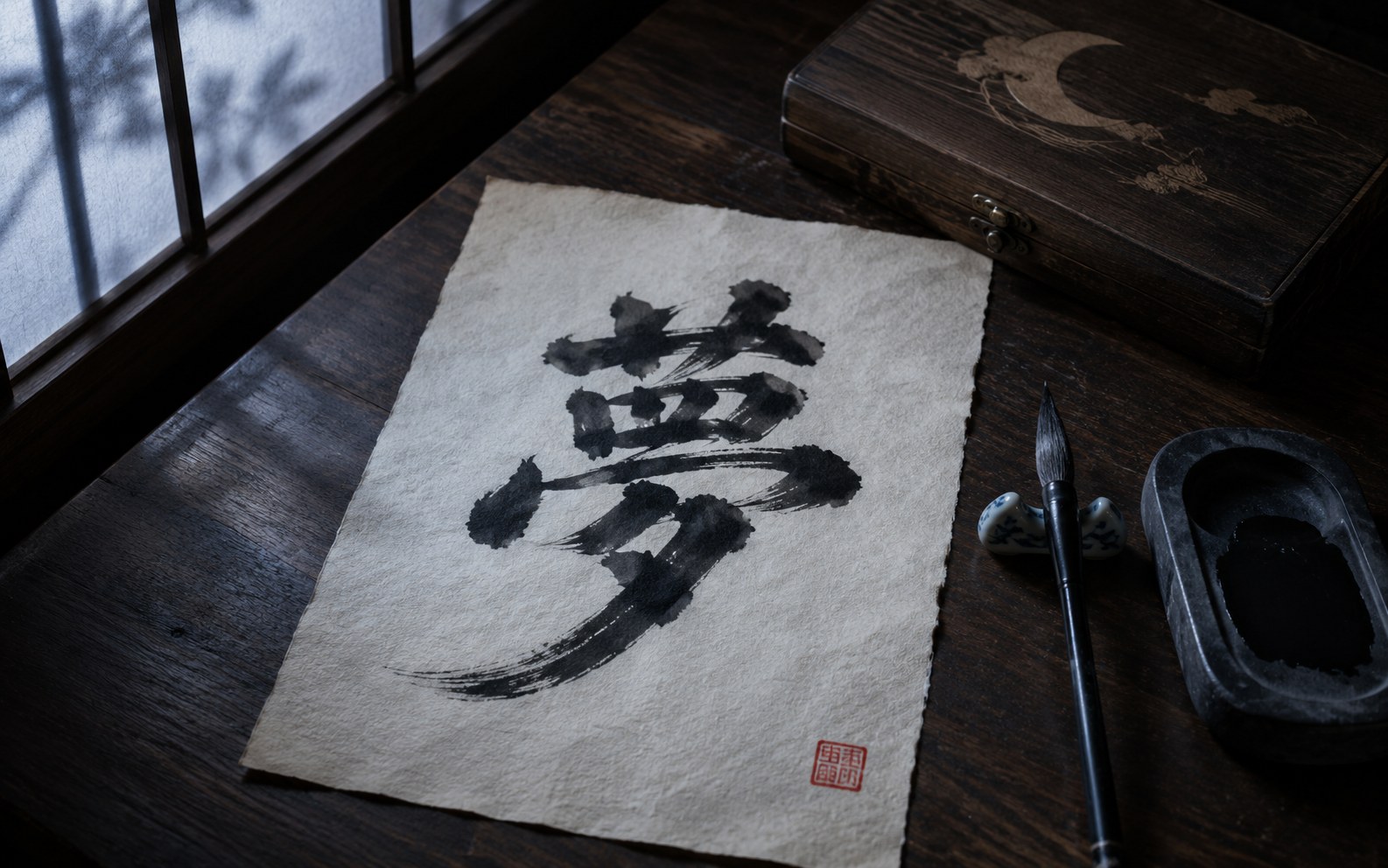
Dream Kanji (夢): Meaning, Etymology, and How to Write It
By K. YamaUpdated:The kanji for dream (夢) holds two meanings English splits apart: the dream you sleep through and the one you chase. Its origin and how to write it.
Continue reading → -
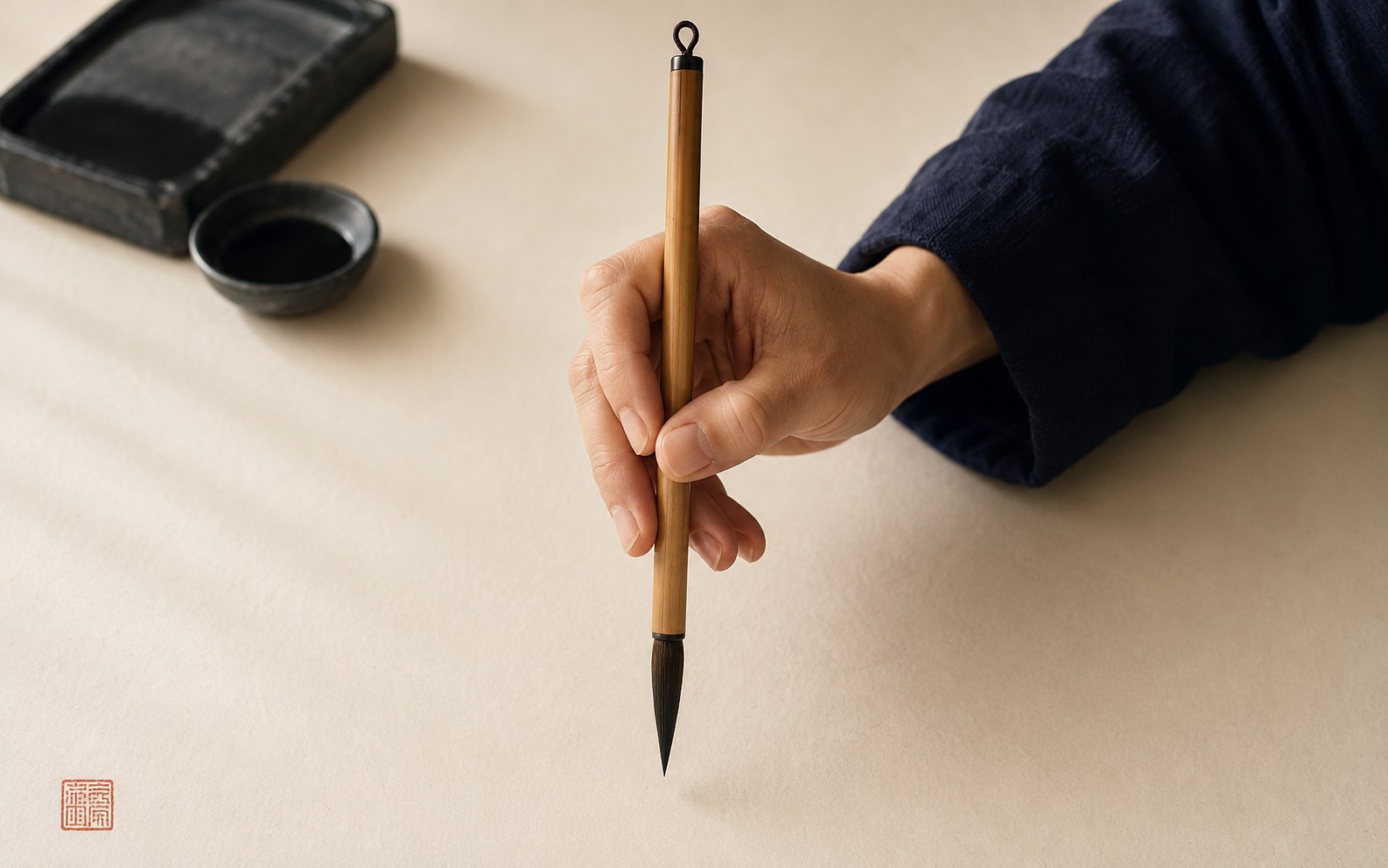
How to Hold a Japanese Calligraphy Brush (7 Steps)
By K. YamaMost shodō goes wrong before the brush touches paper — because of how the brush is held. A Japanese calligrapher's step-by-step guide to the correct grip.
Continue reading →
-
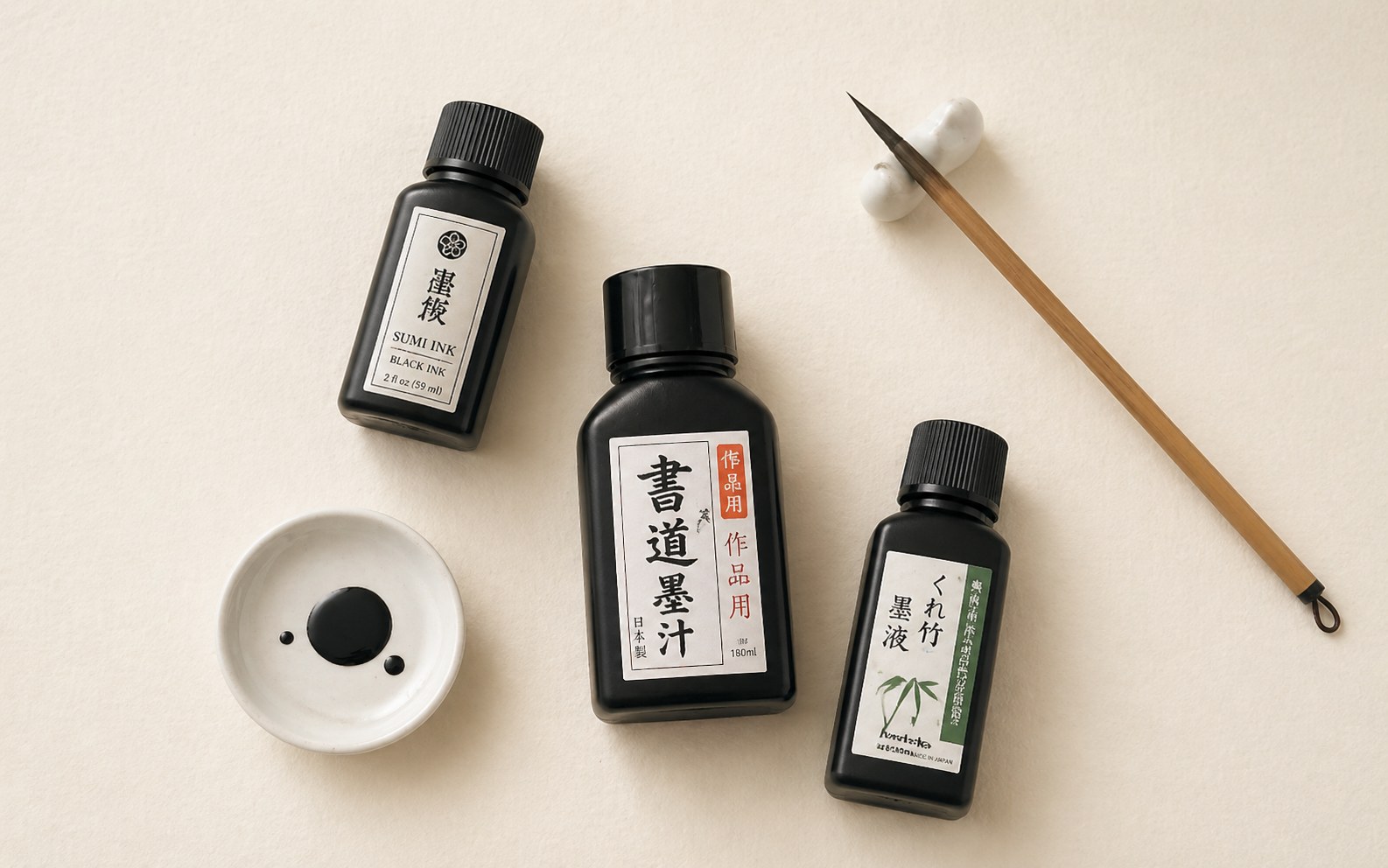
Best Sumi Ink for Beginners (2026): 3 Bottles Compared
By K. YamaUpdated:A Japanese calligrapher compares the three bottled sumi inks beginners meet most often — what each is like to use, and which to start with.
Continue reading → -
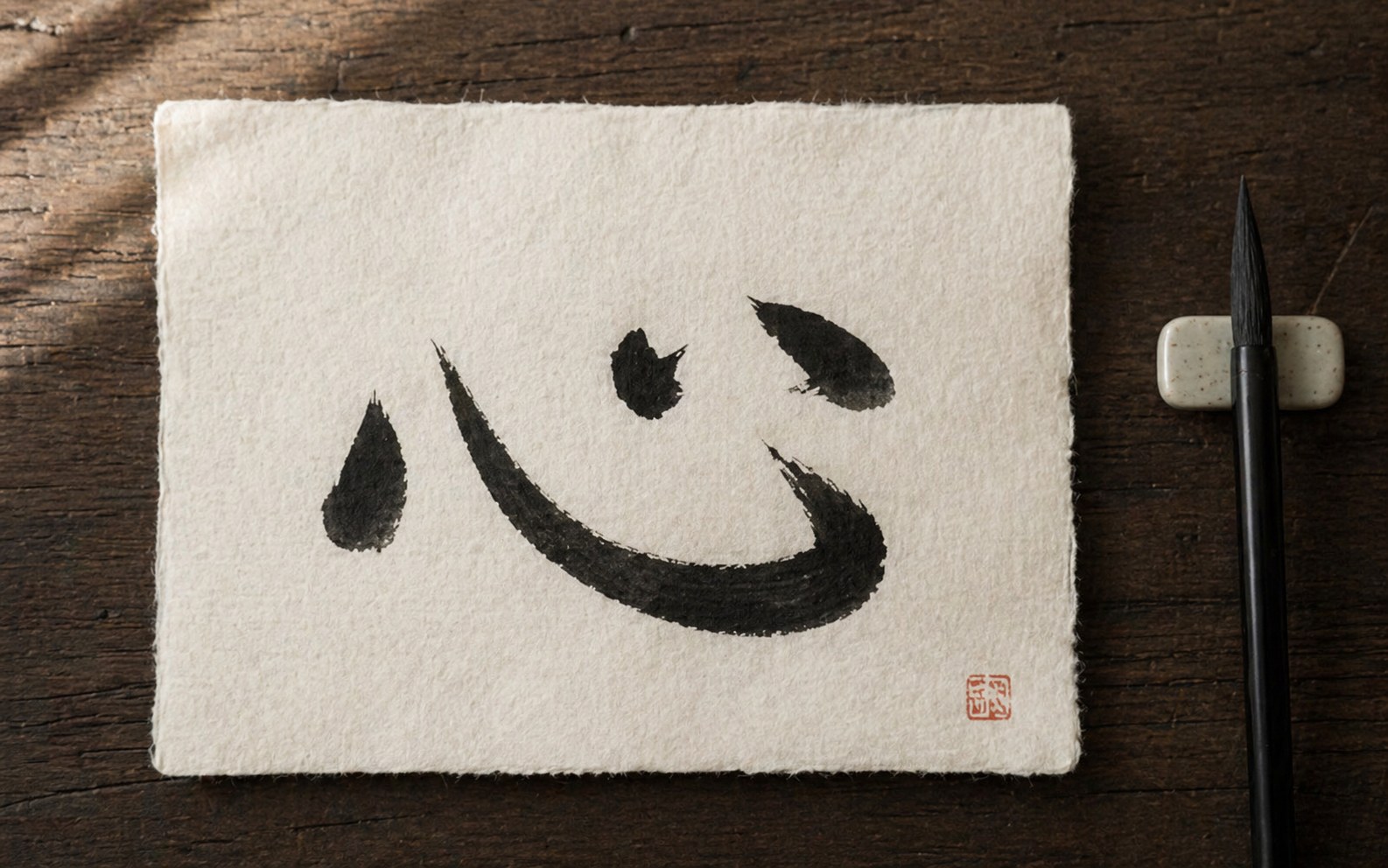
Heart Kanji (心): Meaning, Stroke Order & Why It's Hard
By K. YamaUpdated:Heart kanji (心, kokoro) means heart, mind, spirit, and sincerity at once. A Japanese calligrapher on what it really means and why 4 strokes are the hardest in shodō.
Continue reading → -
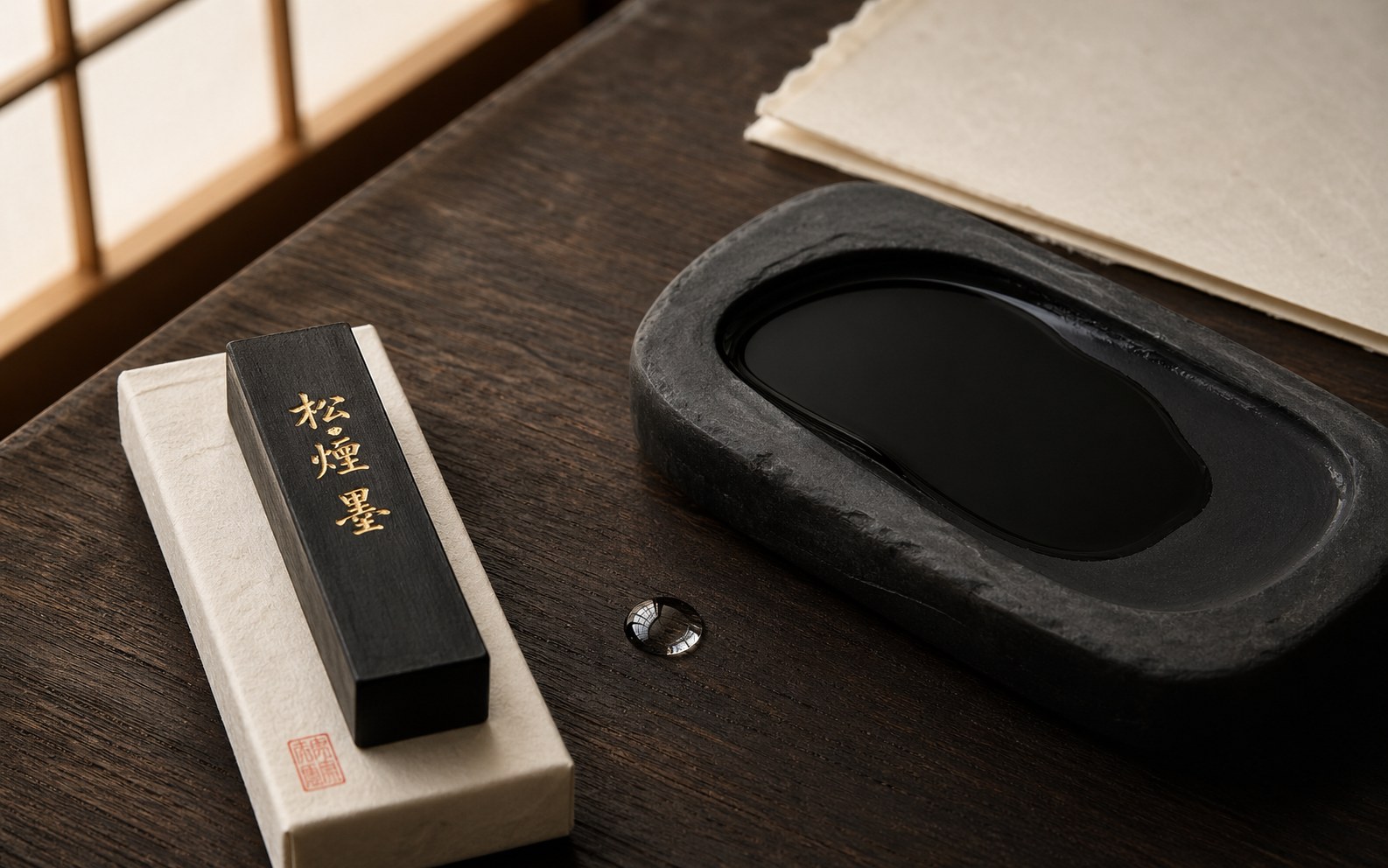
What Is Sumi Ink? Stick vs Bottle: A Beginner's Guide (2026)
By K. YamaUpdated:Sumi ink covers everything from $4 bottles to $400 inksticks under one name. A practitioner's guide to what sumi actually is and what beginners should buy.
Continue reading → -
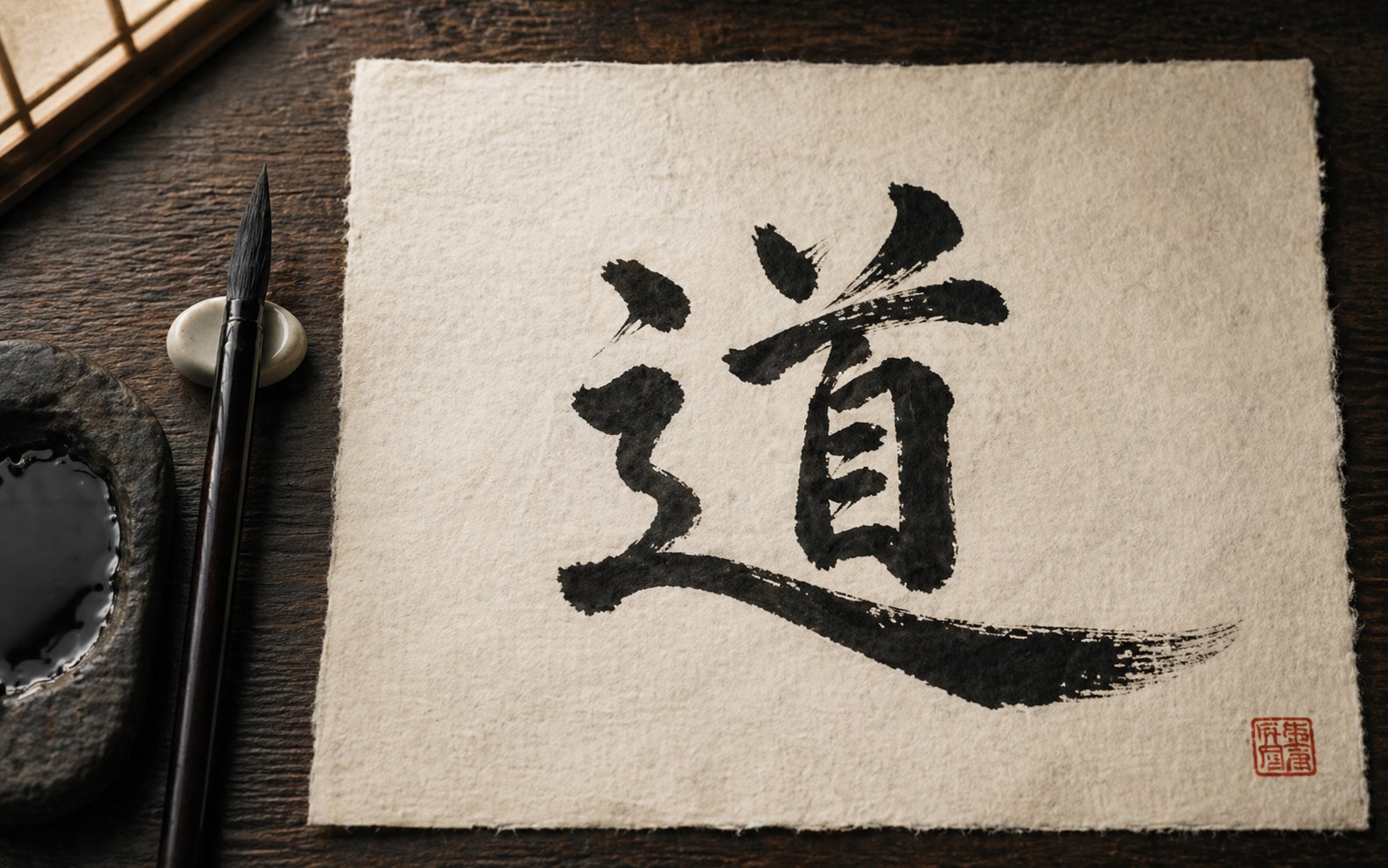
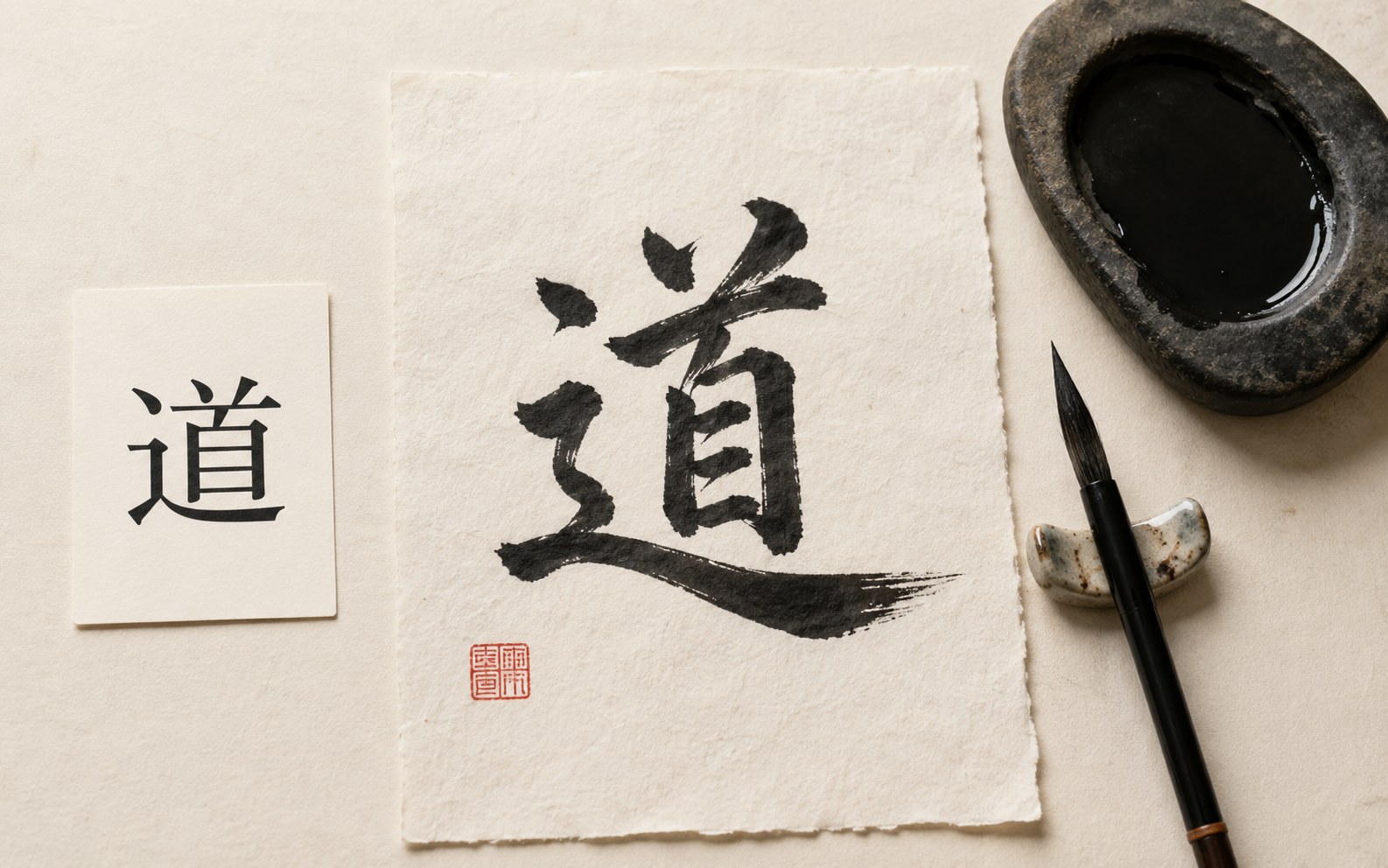
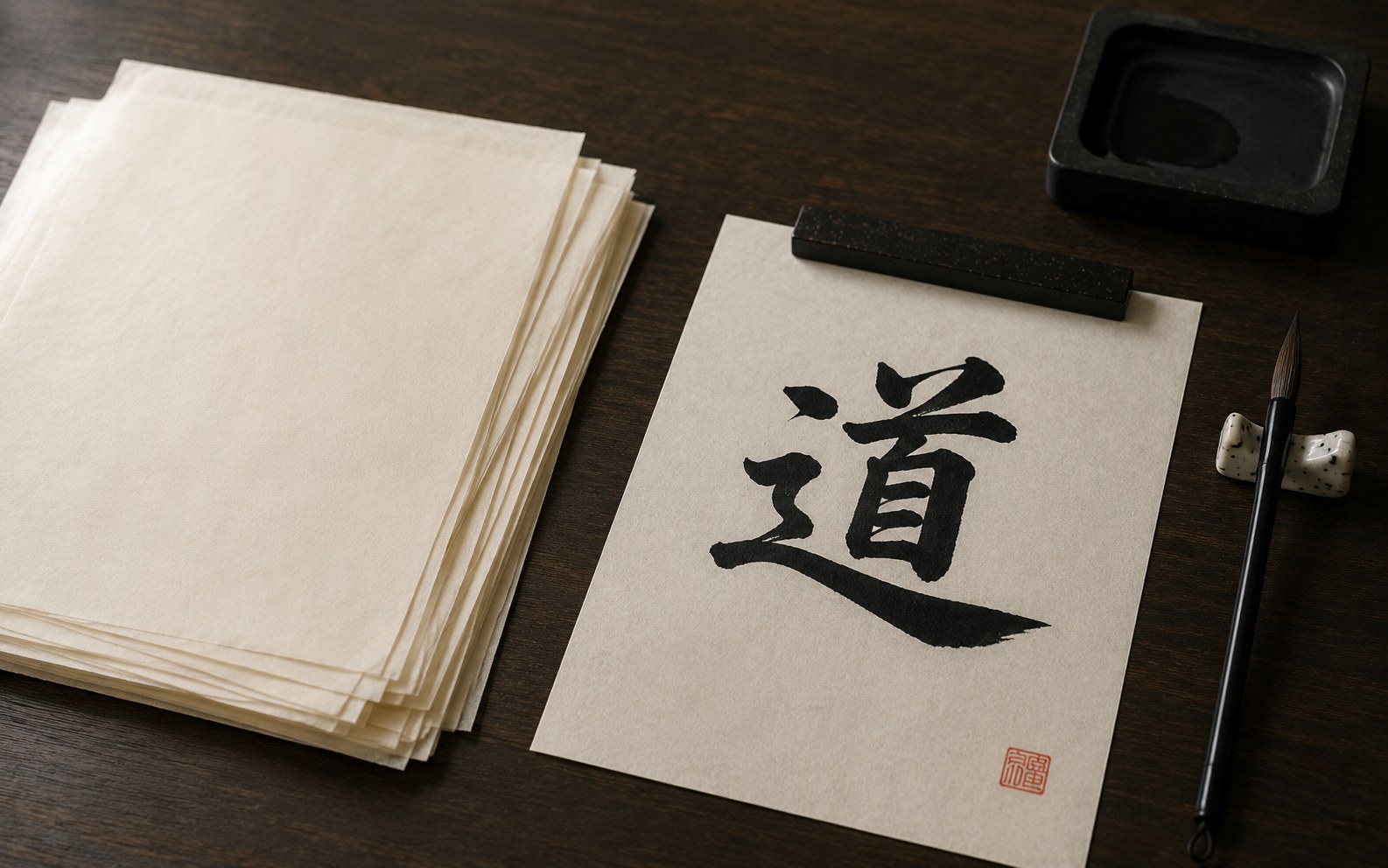
Way Kanji (道): Meaning, Stroke Order & How to Write It
By K. YamaUpdated:The kanji 道 (dō) ends karate, judo, aikido, and shodō alike. What 'the way' really means in Japanese, and how to write the character that names a lifetime.
Continue reading → -
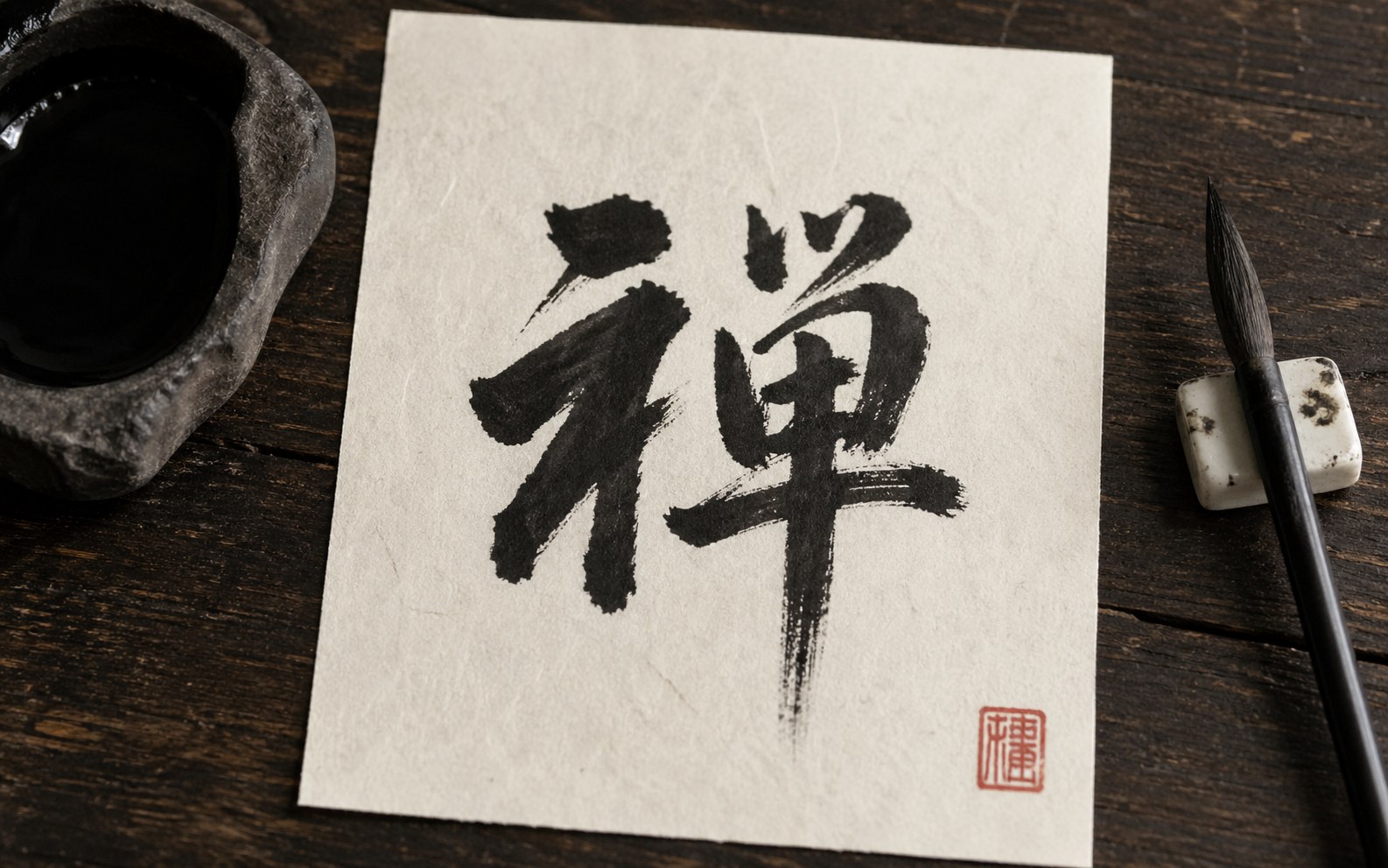
Zen Kanji (禅): Real Meaning, Origin, and How to Write It
By K. YamaUpdated:Zen kanji (禅) means far more than 'calm' — it names a school, a practice, and a centuries-long argument about the mind. Real meaning and how to write it.
Continue reading → -
Love Kanji (愛): Meaning, Etymology & How to Write It
By K. YamaUpdated:Love kanji (愛) doesn't mean what English 'love' means — it runs steadier and deeper. The real meaning, the heart hidden mid-character, and how to write it.
Continue reading → -
Japanese Calligraphy: The Complete Beginner's Guide (2026)
By K. YamaA practitioner's complete introduction to Japanese calligraphy (shodō): its history, the five styles, the tools you need, and a realistic 30-day practice plan.
Continue reading → -
Best Japanese Calligraphy Set for Beginners (2026)
By K. YamaUpdated:A calligrapher's honest look at the best Japanese calligraphy starter sets for beginners in 2026 — what to buy, what to skip, and which kits are actually good.
Continue reading → -
Welcome to The Slow Brush
By K. YamaAn introduction to The Slow Brush — a quiet corner of the internet for Japanese calligraphy and the slow arts.
Continue reading →